Three people hiking on Indonesia's Mount Dukono have died after the volcano erupted on Friday morning.
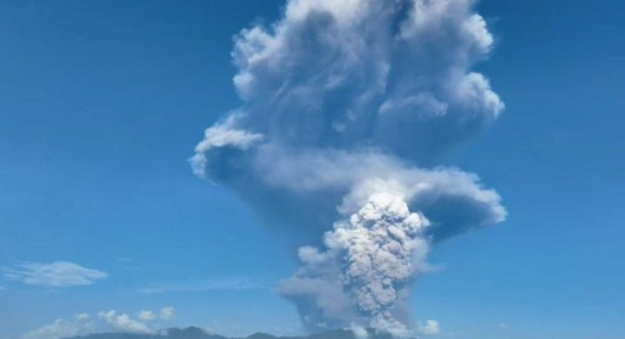
Videos and pictures of the eruption show the volcano, located on North Maluku island, spewing a column of ash stretching 10km (six miles) into the sky.
The three victims were part of a group of 20 Singaporeans and Indonesians hiking on the mountain despite restrictions. The rest of the group was eventually located by rescuers and evacuated from the mountain.
The volcano has erupted more than 200 times since last March. Officials had previously issued warnings against climbing the mountain due to safety concerns.
The latest eruption took place at 07:41 local time (22:41 GMT Thursday), when there were several people on the mountain on early morning hikes.
Indonesian officials said two Singaporeans and one local resident from the nearby city of Ternate had died.
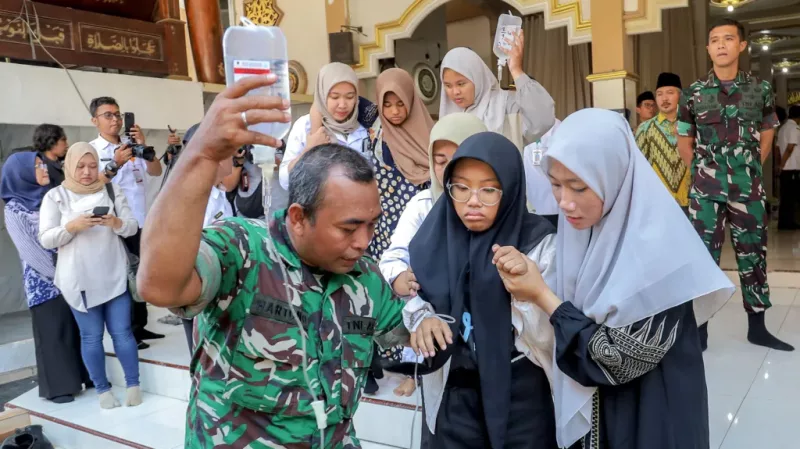
Rescuers eventually located the rest of their hiking group. Most of them were safely evacuated from the mountain and sent to a hospital to have their injuries treated.
Two members of the group, who are porters, stayed behind on the mountain to help rescue workers locate the bodies.
On Friday afternoon, Mount Dukono was still emitting volcanic material from its crater, according to one local resident assisting rescuers.
Aldy Salabia told BBC Indonesian that they were at a local shelter on the mountain preparing for the rescue operation.
"From the shelter, we can see ash and rock material continuously being ejected," he said.
North Halmahera police chief Erlichson Pasaribu said that retrieval of the bodies, which are located at higher elevations, has been hampered by repeated eruptions, difficult terrain and strong blasts from the volcano.
Besides the 20-member hiking group, eyewitness accounts indicate there were other hikers on the mountain as well.
One guide who was on Mount Dukono with two clients at the time of the eruption told BBC Indonesian that he believed high pressure had been building up inside the volcano for several days.
"When Dukono hasn't erupted for a few days, you have to be careful," he said, describing the eruption as "major" and "very strong".
As they were hiking up, he saw one group of people at the edge of the crater, as well as another group about 50m from the crater who were filming drone videos.
Then, "I heard deep tremors. So I decided to immediately descend with the guests. And in the end, the three of us were safe."
As they were descending he saw many hikers were still at the summit, he added.
Indonesian officials said they had issued warnings against climbing Mount Dukono which were widely disseminated through social media as well as on banners at trail entrances, but some hikers had ignored them.
Indonesian's search and rescue agency Barsanas said that initial discussions among authorities found there may have been "possible negligence by tourism operators or individuals" who proceeded with climbing Mount Dukono despite the warnings.
"The government is continuing to gather information to establish a complete account of the incident," it said.
Mount Dukono is currently listed at level two out of the Volcanological Survey of Indonesia's four-tier volcano alert system, which indicates increased activity and a need for caution.
The agency said that since December 2024, it has recommended tourists and climbers to refrain from activities within a 4km radius of Mount Dukono's main crater, where there are threats of ejected rocks, ash and lava.
Still, that has not deterred hikers from heading up the 1,335m-tall mountain.
Dr Daryono, from the Indonesian Association of Disaster Experts, said that the incident "once again demonstrated that active volcanoes can never be treated as ordinary tourist destinations".
"Dukono is a mountain with almost continuous eruptive activity, so any violation of the danger zone carries a fatal risk," he told the BBC.
"On social media, the public often sees videos of climbers or influencers who successfully ascend and return safely. Such content slowly creates a distorted risk perception.
"The public only sees those who successfully descend and post dramatic content, while potential threats that did not occur at the time become invisible. The real danger remains and could emerge at any time in the form of ejections of incandescent material, thick ashfall, volcanic gas, or sudden explosive eruptions."