
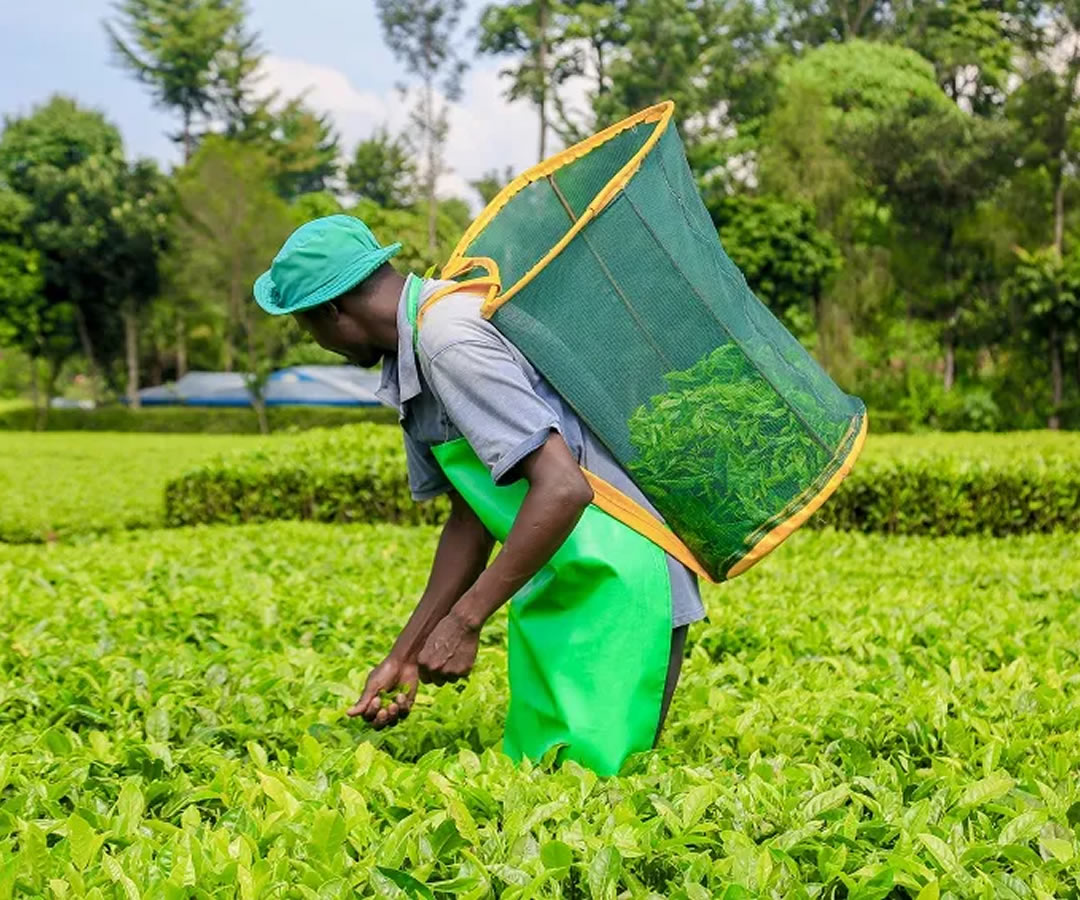
The government has defended the newly introduced tea levy, saying the move is aimed at reviving Kenya’s tea sector, boosting global competitiveness and ultimately increasing earnings for farmers.
Under the Tea (Levy) Regulations, 2026, exporters will now pay a levy equivalent to 0.8 per cent of the auction value or customs value for direct tea sales, while imported tea will attract a 100 per cent levy on the import value of every consignment of made tea.
The levy, operationalised through Gazette Notice No. 82 of April 1, 2026, is expected to finance tea marketing, research, infrastructure development and regulation of the sector.
In a statement, the Tea Board of Kenya (TBK) said the reforms are part of wider efforts to address persistent challenges facing the industry, including low tea prices, weak market promotion, declining quality and limited value addition.
“The government is revitalizing the tea industry in order to ensure the competitiveness of Kenya tea and enhance returns to tea farmers,” TBK said.
Officials insisted the levy will not be deducted from farmers’ earnings since it is charged at the point of export and import and borne by consumers.
“This being an export and import levy, it is payable by tea exporters and importers and not by the tea grower,” the ministry stated.
According to the regulations, 50 per cent of the collected levy will go toward income and price stabilization for farmers, 20 per cent toward research, 15 per cent for infrastructure development and another 15 per cent toward strengthening regulation of the sector.
The agency said the levy translates to approximately Sh2.28 per kilogramme of made tea, arguing that Kenya’s charges remain lower compared to some competing tea-producing countries.
“It is imperative to note that similar levies are charged in other tea producing and consuming countries to promote development of their tea industries,” the ministry said, citing Sri Lanka, India, Bangladesh and Pakistan as examples.
Agriculture officials say the funds collected will help Kenya penetrate emerging tea markets in China, West Africa, Russia, North America and Asia.
The Board revealed that plans are underway to establish warehousing hubs in strategic markets including the Democratic Republic of Congo, the United Arab Emirates, Ghana and China as part of an aggressive market expansion strategy.
“Enhanced market development activities and opening up of warehousing hubs in key emerging markets will strengthen Kenya tea’s global presence,” the statement said.
The levy is also expected to support value addition and branding initiatives aimed at reducing overreliance on bulk tea exports.
The government said more focus will now shift toward exporting packaged, branded and specialty teas in order to increase farmer returns under the Bottom-Up Economic Transformation Agenda.
Officials further said the funds will support research into new tea varieties and products, while strengthening oversight to curb malpractice in the sector.
The agency singled out green leaf malpractices, counterfeiting of premium Kenyan tea brands in export markets and poor governance along the tea value chain as some of the challenges the levy seeks to address.
At the same time, the government announced exemptions for value-added teas packed in containers of less than 10 kilogrammes, tea extracts and aromas, as well as Kenya tea processed within Export Processing Zones and Special Economic Zones for local consumption.
“This move is aimed at promoting local tea value addition,” the agency said.
Meanwhile, the TBK has moved to address concerns raised by exporters over contracts signed before the levy took effect on May 1.
The board said exporters who purchased tea at the auction or entered into direct sales contracts between January 1 and April 30, 2026, may apply for refunds on levy payments.
“TBK will consider refunding the tea levy for amounts paid by tea buyers and exporters in respect of teas purchased between January 1, 2026 and April 30, 2026,” the board said in a circular issued on May 4.
Exporters seeking refunds will be required to provide proof of auction purchases, evidence of levy payment and documentation showing prior contractual commitments with international buyers.
TBK said the refund arrangement is intended to cushion traders from losses linked to agreements entered before implementation of the levy.
“This is meant to address transitional challenges and ensure that traders do not incur losses arising from contractual commitments entered into prior to the commencement of the tea levy,” the statement added.
.jpg)






Comments 0
Sign in to join the conversation
Sign In Create AccountNo comments yet. Be the first to share your thoughts!