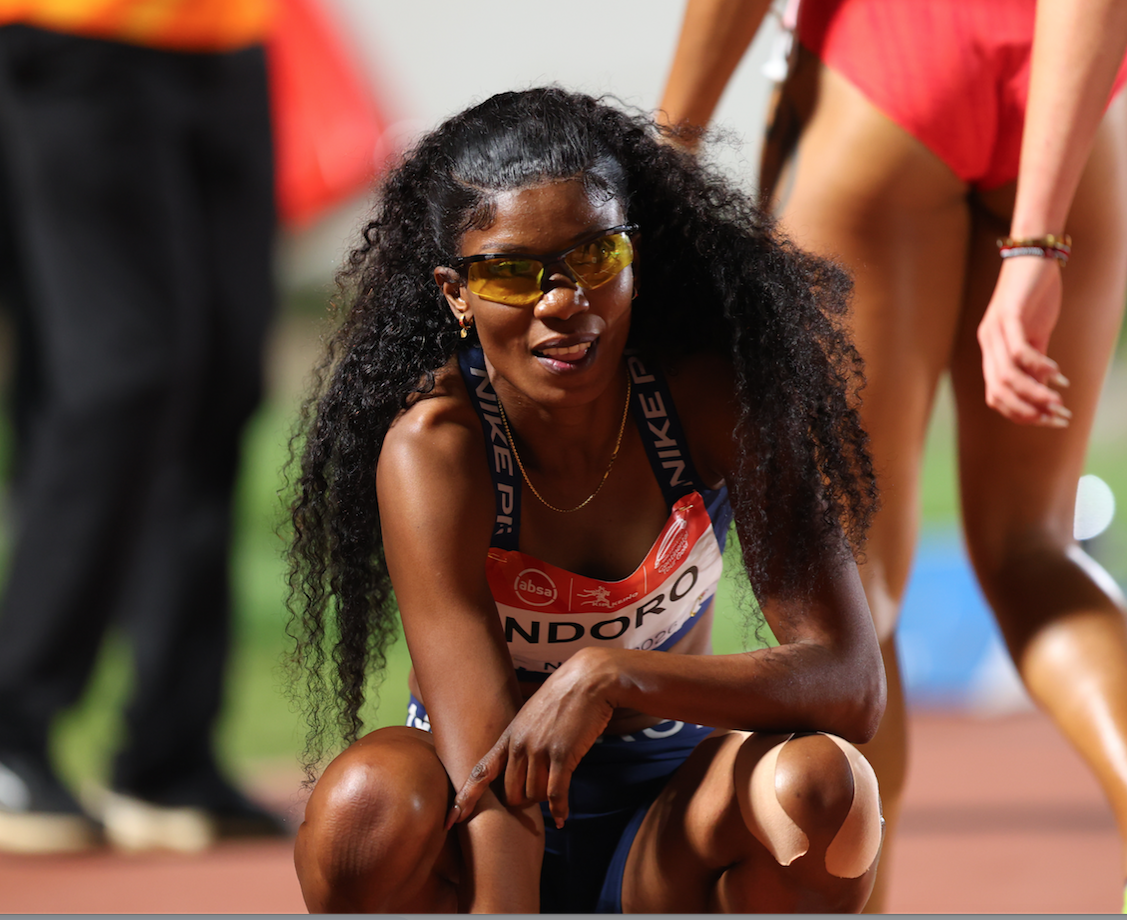
 Sprinter Millicent Ndoro/HANDOUT
In the Kenyan women’s sprinting scene, one figure towers above the rest: Millicent Ndoro.
For athletics enthusiasts, she is an unmistakable presence, instantly recognisable by her signature glasses and flowing hair, which paints a magnificent, commanding picture every time she storms down the straight. Her soft-spoken nature and calm demeanour can easily deceive you when she settles into the starting blocks.
But once the gun fires, Ndoro transforms into something different, unleashing ferocious speed with the aggression and authority of a sprinter still firmly in her prime. At 40 years old, Ndoro has occupied the national, continental and global athletics limelight for nearly two decades.
Year after year, she has dominated the local sprint scene over both the 100m and 200m, a sprint queen who simply refuses to surrender her crown. What makes Ndoro’s longevity even more extraordinary is that, scientifically, she is defying the natural laws of sprinting.
It is generally considered extremely difficult for sprinters to maintain elite-level speed at 40 because sprinting depends heavily on explosive, high-force output, qualities that naturally decline with age due to changes in muscle composition, slower neural firing and longer recovery periods.
While a 40-year-old athlete can still sprint competitively, elite performance traditionally peaks between the late 20s and early 30s before gradual decline begins.
Sprinting relies heavily on Type II fast-twitch muscle fibres that generate explosive power. From around the age of 35, there is usually a preferential loss of these fibres as they shrink in both size and number, often being replaced by less powerful slow-twitch fibres. The reduction in muscle cross-sectional area leads to diminished explosive strength and raw sprinting power.
Older muscles also experience reduced motor unit recruitment, making it harder to activate the necessary muscle fibres to produce maximum velocity.
The nervous system no longer fires at the same rapid rate with age, resulting in slower reaction times and reduced coordination during high-speed movement.
There is also an increased injury risk due to connective tissue changes. Tendons and ligaments become stiffer and less elastic, reducing the body’s ability to absorb impact and generate force efficiently during sprinting. Hamstrings, in particular, become highly susceptible to injury at top-end speed, with the risk only increasing as athletes age.
Recovery is another challenge. Older athletes require more time between high-intensity sessions to manage fatigue and prevent breakdown.
As strength naturally declines, masters sprinters often display shorter stride lengths and longer ground contact times, spending more time on the track and less time airborne.
That is why Ndoro’s continued ability to match and often beat athletes nearly 20 years younger than her remains one of the most remarkable stories in Kenyan athletics.
She is not only a force in the senior ranks but also a dominant figure in Masters athletics. Masters athletics is a competitive division for athletes aged 35 and above, encompassing track and field, road running and cross-country disciplines.
For Ndoro, resilience and hard work have been the fuel behind her enduring success. And in her view, many of the younger sprinters simply do too much talking and too little running.
“To the young athletes, I think they talk more than they actually do on the track. They are in their comfort zone because they believe a Master's athlete can’t beat them. They need to train and cut down on too much talking,” Ndoro said.
“The other senior athletes were saying that I have gone to the Masters, so she will not be a challenge to us. Their talks to me were like stepping stones; I needed to show them I can still go head-to-head with them.”
Away from the track, Ndoro also revealed the deeply personal reason behind her trademark glasses. The eyewear, now synonymous with her image, is not a fashion statement but a necessity born out of adversity.
“I sprint with glasses because I have an eye problem with my right eye. In 2013, I got Bell’s Palsy, which is like a stroke but affects just the face on one side. So it hit me and messed up my right eye, which is now smaller than the left.”
“The glasses I wear protect me from direct sunlight, which can make me overstep my lane. I have even done it before I started wearing the glasses.”
Ndoro says discipline, healthy living and clean sport have been the foundation of her longevity. “Being 40 and still sprinting requires a lot of discipline and eating healthy. You also have to run clean and avoid doping. All those years, I have never gotten a warning from either ADAK or the AIU (Athletics Integrity Unit). At 40, I am running clean. If I had doped, I don’t think I would be where I am now.”
Even at 40, her training programme remains brutally demanding. “My programme is on Monday, I do long run in the morning, Tuesday and Friday I do speed work, Wednesday and Thursday are for gym work and Saturday maybe a long run. Sunday, I am at church.”
“I don’t drink because sprinting and drinking do not go well. I also eat a lot of greens and try to avoid a lot of oil in my food.”
So far, Ndoro has enjoyed a blistering start to her 2026 season. She credited her appearance at the African Masters Championships last year, alongside a well-structured off-season build-up, for laying the platform for her dominant return. “For me, 2026 has been so good. I started my year with the African Masters Championships last year in August as a build-up for this year,” Ndoro said.
“That gave me a lot of confidence and courage that I can have a strong season. I came back home with two medals, gold in the 400m and 200m.”
At the African Masters Championships staged in Tunisia, Ndoro claimed gold in the W35 400m as well as the 100m. She opened her 2026 campaign in Uganda during the 1st National Trials, placing second in the 400m in 53.91 before later storming to victory in the 100m in 11.89.
Ndoro then joined forces with Ferdinand Omanyala, Boniface Mweresa and Mercy Oketch in the mixed 4x100m relay at the Lefika Relay in Botswana, where the quartet clocked 41.70 to finish behind Nigeria’s 41.44.
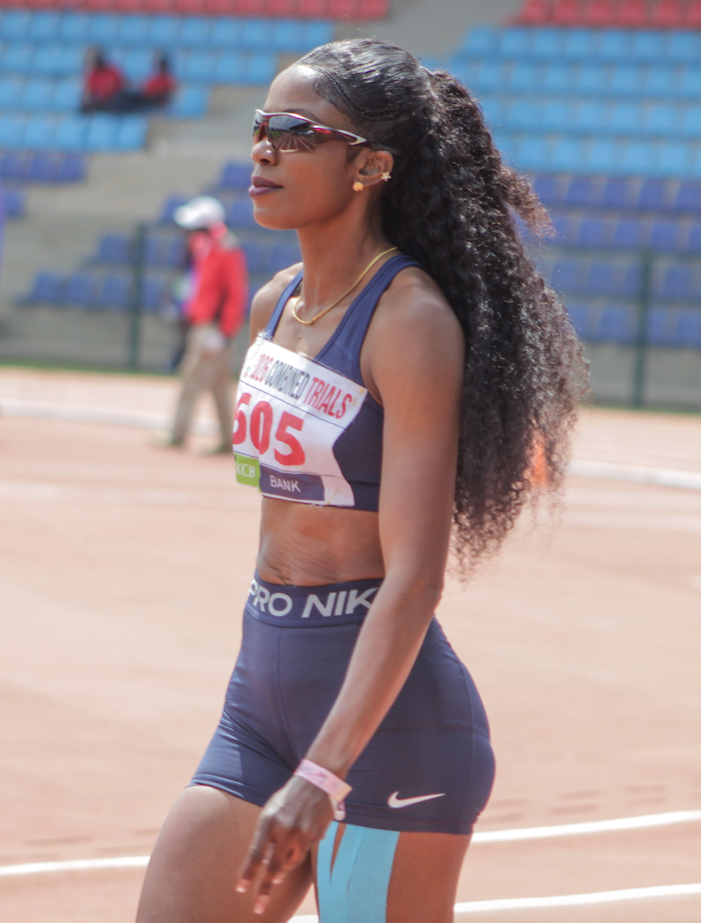 Millicent Ndoro/HANDOUT
 “Botswana was really good. I had not been featured in a relay team for a while. It was our good performance that laid down the marker for the World Relays.”
“It was a bit of a challenge. However, because you have to properly calculate the speed at which the other athlete is coming with to hand over the baton, you can’t move too late or too early. You also need the same calculations when you’re going to hand over the baton.”
On April 3 at Kinoru Stadium in Meru, Ndoro was crowned national Betika BingwaFest champion over 100m after clocking a blistering 11.04. For her, the explosive start to the season was a loud statement of intent.
“Winning at the Masters last year and starting my 2026 with strong performances, including winning at the BingwaFest, was a motivation.”
After her BingwaFest heroics, Ndoro lined up at the Athletics Kenya combined trials for the African Championships and World Relays on April 9, where she stormed to victory in the 100m in 11.55, to secure double qualification.
Then came the ultimate acid test, the Kip Keino Classic on April 24 under the Nyayo floodlights, where she would square off against some of the biggest names in global sprinting.
Before stepping onto the track, Ndoro struck a fearless tone. “The big names, I won’t undermine them, and I am happy to run alongside them. Maybe if I close my gap on them, I can get good results.”=
Ndoro doubled up in both the 100m and 200m. Over the 100m, she clocked 11.76 to finish seventh as Olympic 200m champion Gabby Thomas led an American sweep of the podium in 11.01 ahead of Cambrea Sturgis and Maia McCoy. But it was in the 200m where Ndoro truly electrified the home crowd.
Against world-class opposition, the veteran Kenyan surged to a stunning third-place finish in 23.21 behind Thomas’ meet record 21.89 and Sturgis’ 21.93. “I was tense lining up against very strong women like Gabby. I am happy with how the 200m unfolded. In the 100m, I was not satisfied with my time because I had hoped to run faster,” she said after her Kip Keino appearance.
Her most recent outing came at the World Relays in Gaborone, Botswana, where, alongside Moses Wasike, Dennis Mwai and Eunice Kadogo, the Kenyan mixed 4x100m relay team narrowly missed qualification for the 2027 World Championships after posting 41.84 to finish sixth in their heat.
As the season gathers pace, Ndoro has now set her sights on faster times in the 100m and a long-awaited breakthrough at the Commonwealth Games. “My target for the moment in the 100m is 11.3 seconds, which I hope will be enough to take me to the Commonwealth Games.”
“I have been to three Commonwealth Games now, and I have never made the finals. I hope this year will finally be my year. Once I get to the finals, anyone can win a medal,” she said.
Before that, however, comes the African Championships in Accra, Ghana, where she is targeting a medal double in both the 100m and 200m. “For the African Championships, my target is to get any medal. I hope I can double in both the 100m and 200m.”
Yet behind the medals, the races, and the roar of stadium crowds lies a much deeper source of motivation. For Ndoro, sprinting is survival; it is a responsibility for her family.
“For me, what keeps me going is the problems we have at home. The difficulties at home are the only source of motivation that wakes you up every day to chase a way to help those back home.”
“I am a single mother of one, and when I line up on the track, I am thinking of my kid. I only have my dad; my mom passed away. My dad has cancer, and I don’t want him to lack proper medication.”
“So this running I am doing, the small amount I get is all for them,” she said. Born in 1986 in Marani, Kisii, to Nahashon Ndoro, the speedster is the sixth-born in a family of 12 siblings.
Ndoro recalls how her love for athletics was ignited at a tender age while at Nyagoto Primary School and continued at Nyota High School. Ironically, sprinting was not initially her strongest discipline. “I started my athletics career in Class Six, doing long jump and carried it through to High School. I was also doing sprints, 100m and 200m, but I was not so good; I would not even make the finals.”
A long jump injury would eventually alter the course of her career and her life. It was during that difficult phase that she met national sprints coach Stephen Mwaniki, who convinced her to embrace sprinting. “After high school, I continued chasing my athletics career, but I gave up on the long Jump after I got an injury.”
“Then I met coach Stephen Mwaniki, who told me I should abandon the long jump because it was putting too much strain on my knee. He told me I could still be a good sprinter, and I trained with him for like two seasons before the police recruited me.”
Ndoro made her first appearance for Kenya at the 2010 African Championships in Nairobi, competing in the 200m but failing to progress past the heats after clocking 24.47.
“I did not run much in my junior years. I started fully in my senior years at 18 years, my first Kenya team appearance was in 2010, at the African Championships.”
Still, she persevered. And slowly, the breakthrough came. “I stayed for a long time without even making it to finals. I was eliminated in the heats until 2013, when I started performing and even making the finals."
“I loved sports a lot, so I did not want to give up despite the poor results.”
In 2014, she earned her maiden Commonwealth Games appearance in Glasgow, Scotland, where she competed in both the 100m and 200m but exited in the heats. “In 2014 at the Commonwealth Games, I was a bit nervous. I was happy to be there but very nervous because it was a big stage.”
She returned four years later at Gold Coast 2018 and this time reached the 200m semi-finals, narrowly missing out on a place in the final after posting 24.42. “Real competition starts at the semi-final level. If you make the finals, anything can happen; you can win any medal. That is what I am hoping for in 2026.”
That same year, Ndoro made another career-defining decision, bringing in an American sprint coach who she says unlocked her true potential. “In 2018, I got a coach from the USA who has now unlocked my full potential. We used to train in Nakuru for like two seasons until he got sick and had to go back to America. He now started sending me training programmes.”
“After the coach left, I used to train myself with his programme because finding a good coach who will understand me at my age is difficult. I prefer to train alone.”But training in isolation carried its own difficulties. “It was a challenge training by myself because, as a sprinter, you need someone to do the timing for you and also tell you all the mistakes you are making from the blocks.”
“Also, getting good male coaches to train us female athletes is difficult because you never know their motive.”
Then came another turning point, her partnership with coach Vincent Mumo, a former sprinter and 2010 Commonwealth Games 4x400m silver medallist. “Right now, I have a good coach who understands me and is there for me. He is the best coach there is. I have trained with him for two seasons now, and I think I have upgraded my sprinting.”
“He saw me during training, and at that time, I had a friend doing the timing for me. So he approached me and told me there were some areas I was not doing well.”
And despite turning 40, Ndoro insists the fire still burns fiercely inside her. “I still have more running in my legs, and I am also hoping to be there even next year.”
When the spikes finally come off, she already knows the next chapter she wants to write. “I would like to go into coaching and support young athletes, more so young ladies, because they are very vulnerable.”