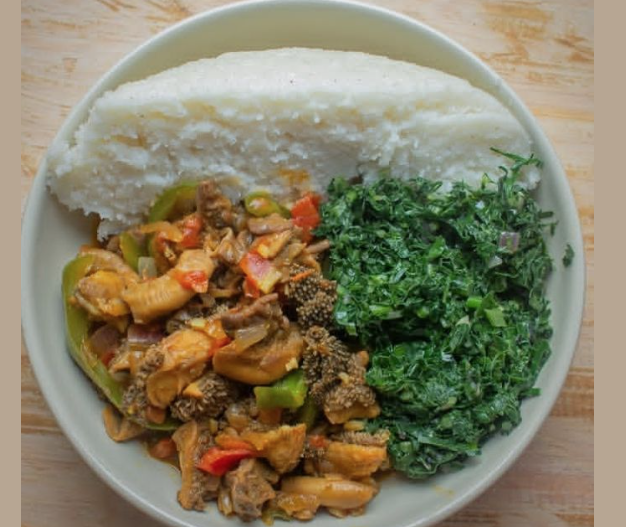
 A plate of matumbo and ugali/FILE
Kenyans are increasingly paying more for matumbo and beef, signalling what many consumers see as the gradual disappearance of one of the country’s most dependable low-budget meals.
New data contained in the 2026 Economic Survey shows the average retail price of beef with bones rose from Sh635.08 per kilogramme in 2024 to Sh689.62 in 2025, representing an 8.6 per cent increase.
The price of matumbo, officially listed as offals in the Consumer Price Index basket, also climbed from Sh348.92 per kilogramme to Sh369.37 during the same period, a 5.9 per cent rise.
The increase continues a steady upward trend over the last five years.
In 2021, a kilogramme of beef retailed at an average of Sh474.52 while matumbo cost Sh279.66. By 2025, the prices had jumped to nearly Sh690 and Sh370, respectively.
For years, ugali, sukuma wiki and matumbo have been considered the ultimate “cheap plate” in estates, roadside eateries and university neighbourhoods, especially among low-income earners and students.
The latest Economic Survey also shows the pressure is not limited to meat alone.
Kales, commonly known as sukuma wiki and often served alongside beef or matumbo, recorded one of the sharpest increases among food items in the survey.
The average retail price of sukuma wiki rose by 20.3 per cent from Sh75 per kilogramme in 2024 to Sh90.24 in 2025.
Cabbages also recorded a 20 per cent increase over the same period.
The Economic Survey attributes the broader price movements to inflationary trends affecting consumer goods in the country.
Even as several commodities recorded price reductions, food costs remained a concern for households.
The report shows wheat flour prices declined by 6.5 per cent between 2024 and 2025, while packeted milk dropped slightly by 1.4 per cent.
Petrol prices also eased by 5.4 per cent and kerosene by 13.9 per cent during the same period.
However, the decline in fuel and some household commodities has not fully eased the burden on food budgets for many families.
Economists have previously linked rising food prices to factors such as transport costs, unpredictable weather patterns, supply chain disruptions and increasing demand in urban centres.
The data now highlights how foods traditionally associated with affordability are steadily becoming more expensive.
In many estates, matumbo has long enjoyed a reputation as the survivor meal, a cheaper alternative to beef stew or fried meat.
But with prices continuing to climb year after year, many households are increasingly turning to alternatives such as beans, eggs and ndengu to manage daily food costs.
For many Kenyans, the once affordable plate of ugali, sukuma wiki and matumbo is slowly losing its place as the go-to meal for those on a tight budget.