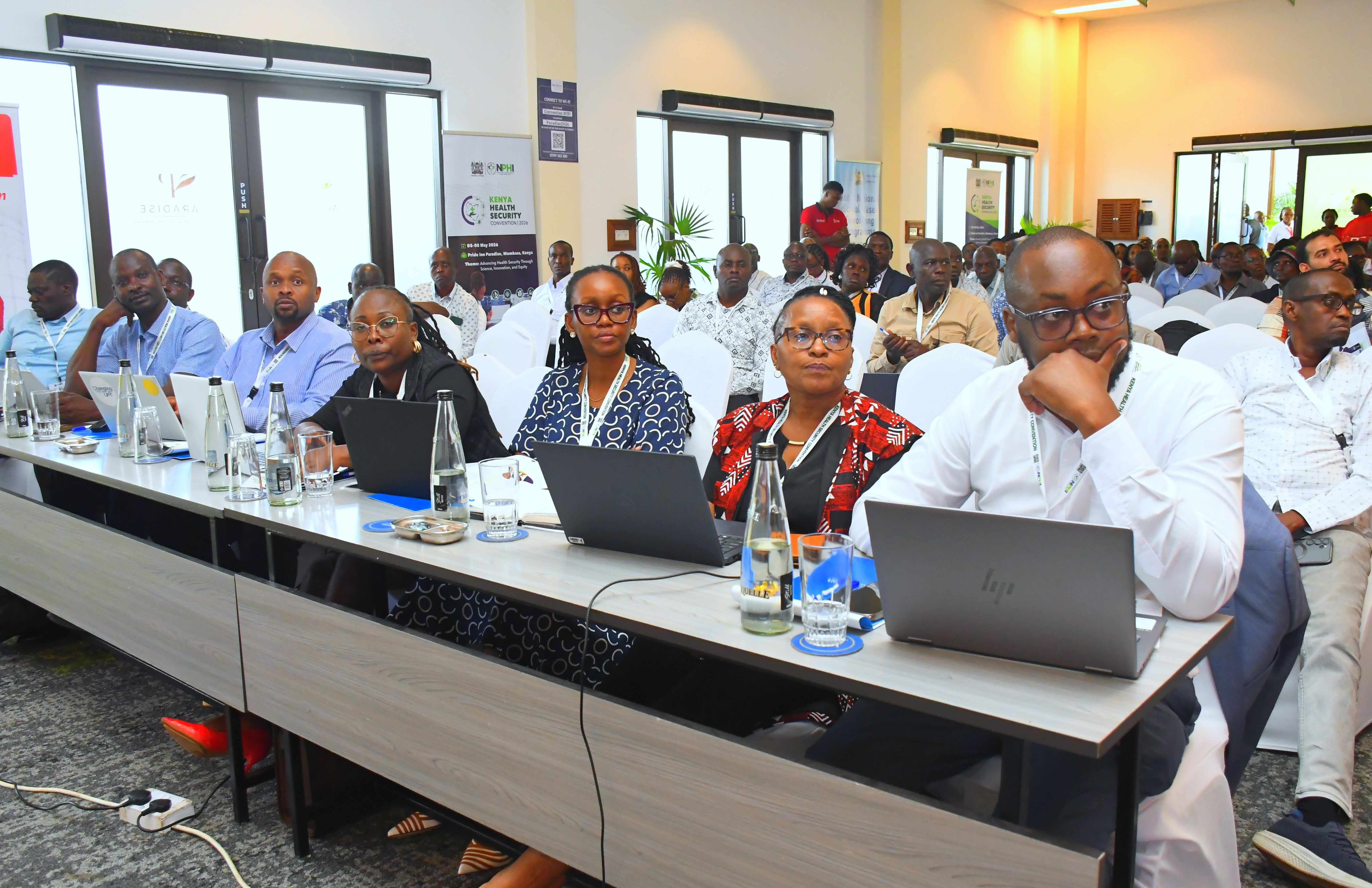
 Delegates at the
inaugural Kenya Health Security Convention in Mombasa on Tuesday / BRIAN OTIENO
Delegates at the
inaugural Kenya Health Security Convention in Mombasa on Tuesday / BRIAN OTIENO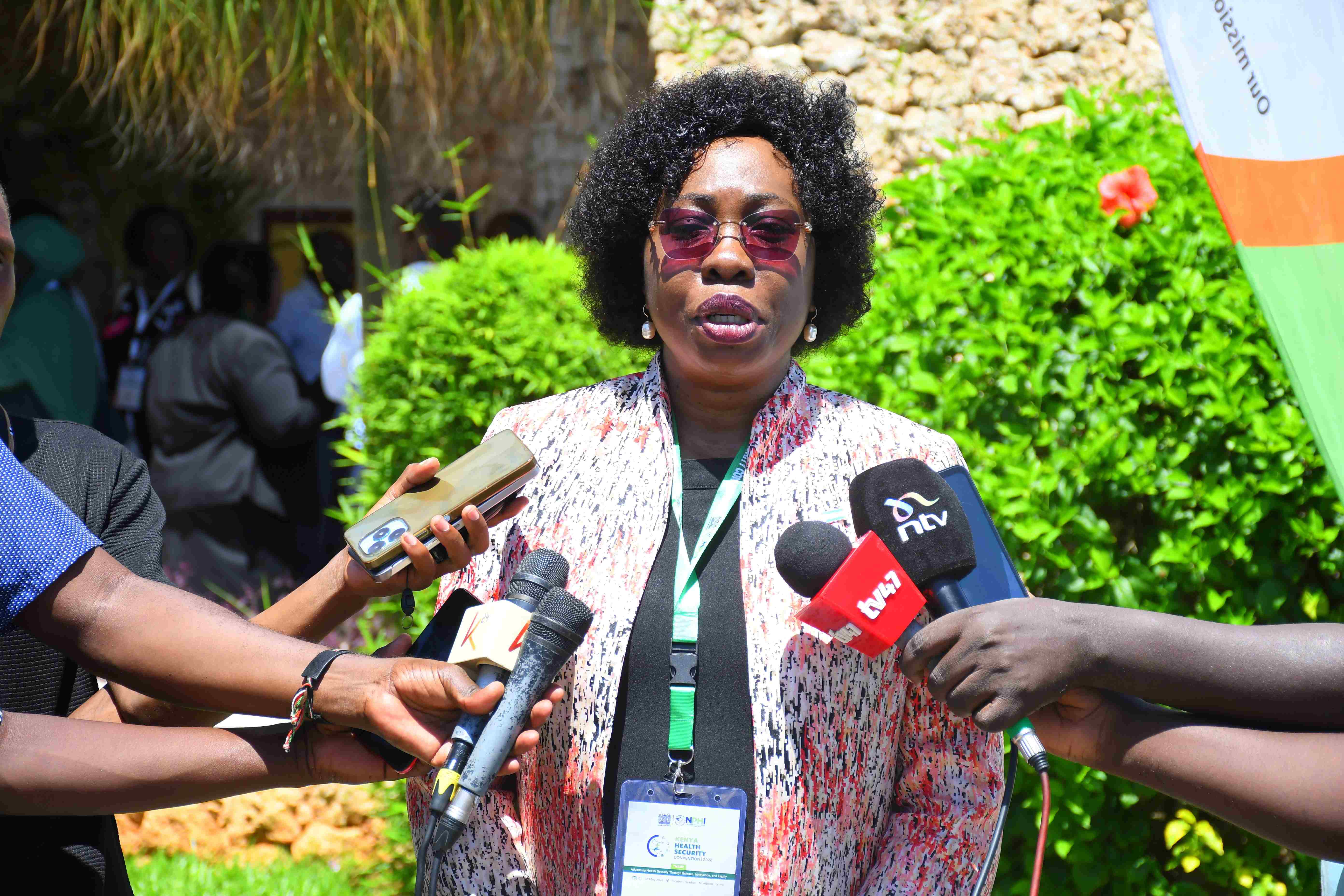 Acting World Health
Organization representative to Kenya Neema Kimambo at the inaugural Kenya
Health Security Convention in Mombasa on Tuesday / BRIAN OTIENO
Acting World Health
Organization representative to Kenya Neema Kimambo at the inaugural Kenya
Health Security Convention in Mombasa on Tuesday / BRIAN OTIENO
Kenya’s health security system is steadily improving, though officials acknowledge it is still not at the level the government ultimately wants.
This is despite being relatively stronger than several other African countries.
The Kenya National Public Health Institute (NPHI) says medical personnel continue to undergo regular training to meet World Health Organization standards and strengthen the country’s capacity to detect and respond to public health threats.
NPHI chair Paul Kariuki said Kenya has been training field epidemiologists drawn from both national and county governments.
The officers are then deployed back to counties where outbreaks occur.
He said the programme, known as the Kenya Field Epidemiology and Laboratory Training Programme, is ongoing and aims to ensure a continuous pipeline of officers capable of detecting, reporting and responding to health emergencies.
“We have trained the third cohort now and we are working to make it a continuous process to ensure we have officers who can detect, report and address public health threats,” he said.
Speaking during the inaugural Kenya Health Security Convention in Mombasa, Kariuki said one of the major challenges in responding to public health emergencies has been inadequate and fragmented resources.
He noted that better coordination of resources within a single structured system improves efficiency and response.
“Previously, we faced bureaucracies because when addressing public threats, you need coordination from Interior, Defence, Livestock and other ministries, and sometimes you don’t know who to call. But with one house under NPHI, you now have one coordinating point for all stakeholders,” he said.
On financing, Kariuki said the Sh209 billion US-Kenya health partnership will help consolidate funding previously channelled through multiple non-governmental organisations.
“With that kind of funding and unified direction coming through government systems, we are addressing challenges of fragmented financing,” he said.
He added that Kenya continues to attract additional partners willing to support health security reforms, noting that progress is being made even if the system is not yet fully mature.
Acting World Health Organization representative to Kenya Neema Kimambo said health security remains a key priority for the organisation, which is working closely with the Ministry of Health and NPHI to strengthen surveillance and early detection systems.
She noted that Kenya has already undertaken a Joint External Evaluation (JEE), which assessed the implementation of International Health Regulations and identified gaps that informed the recently launched national action plan for health security.
“This was done to build on gaps identified from the JEE and other WHO tools,” she said.
However, she stressed that the main challenge remains implementation due to funding constraints.
Kimambo emphasised the need for emergency preparedness financing, including dedicated budget lines that can be quickly accessed during outbreaks.
“Do we have funding ready to immediately deploy rapid response teams in a timely manner? These are issues Kenya and the region need to address,” she said.
She also called for stronger sub-national capacity, noting that counties and sub-counties must be equipped to respond effectively to emergencies.
The convention, organised by NPHI, brought together policymakers, scientists, health professionals and security experts to strengthen coordination in addressing public health threats.
Kariuki said the forum aimed to correct past fragmentation in emergency response systems, where duplication of roles during crises such as Covid-19 led to inefficiencies and wastage of resources.
He said the establishment of NPHI was meant to ensure a unified, timely and well-coordinated national response system that also supports regional and global health security.