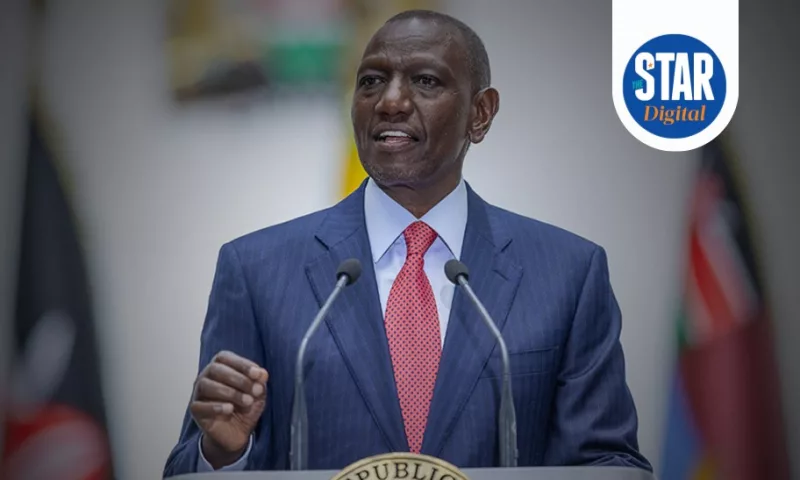
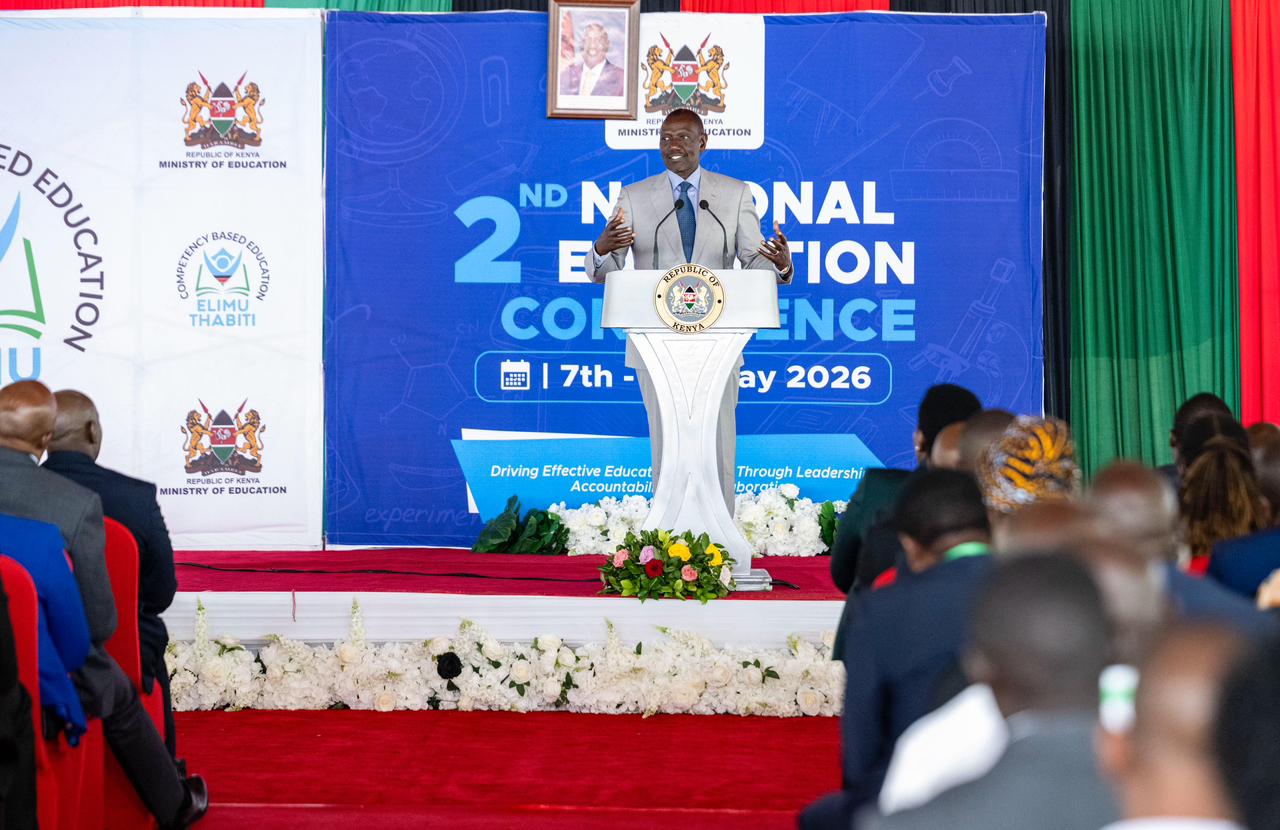
 President William Ruto addressing the 2nd National
Education Conference at the Lake Naivasha Resort in Naivasha, Nakuru county,
May 7, 2026. /PCS
President William Ruto addressing the 2nd National
Education Conference at the Lake Naivasha Resort in Naivasha, Nakuru county,
May 7, 2026. /PCSPresident William Ruto has said a government audit uncovered at least 887,000 ghost learners and nearly 200 non-existent schools that had been receiving public funds through the education capitation programme.
Speaking on Wednesday during the Second National Education Conference in Naivasha, Nakuru County, Ruto said the findings pointed to widespread irregularities in the education sector, with billions of shillings potentially lost through questionable student and school records.
The President said the audit established that about 87,000 students listed in secondary schools did not exist, even though the government had continued disbursing capitation funds for them.
“When we carried out an audit and when we decided to verify the numbers of students in primary school, the numbers of students in secondary schools and the numbers of schools themselves, we got to know that there were 87,000 or thereabout ghost students in our secondary schools, students we were paying capitation for yet they did not exist,” Ruto said.
He further said another 800,000 ghost learners had been identified in primary schools, with the government losing nearly Sh2 billion annually through capitation payments for non-existent learners.
“We had 800,000 pupils in primary school, government paying close to Sh2 billion every year for learners that did not exist,” he said.
The President also said the audit identified nearly 200 schools that had been registered in government systems despite not physically existing.
“We had schools registered, close to 200 schools that did not exist,” Ruto said.
He said the government had launched investigations into the matter, with education officials and school heads expected to account for the discrepancies.
“We are asking some very difficult questions to some of our head teachers and education officers at the county level because accountability and integrity are central to making sure that all our resources are used properly,” he said.
Ruto announced that the government would move to fully digitise the education sector to curb fraud and improve accountability in the management of public resources.
He said the Ministry of Education had been directed to work with technology experts over the next two months to develop a comprehensive digital database capturing details of every learner, school and teacher in the country.
“Because of this, we are now moving to the next step, and I have instructed the Ministry of Education that in the next two months, we are going to be working with technologists to make sure that we digitise all the education details of every learner, every school, teachers, bursaries and everything else,” he said.
According to the President, the digital system will help the government track student enrolment, teacher distribution and funding gaps across the country more accurately.
He said the use of technology would also help seal loopholes that have enabled misuse of capitation funds over the years.