
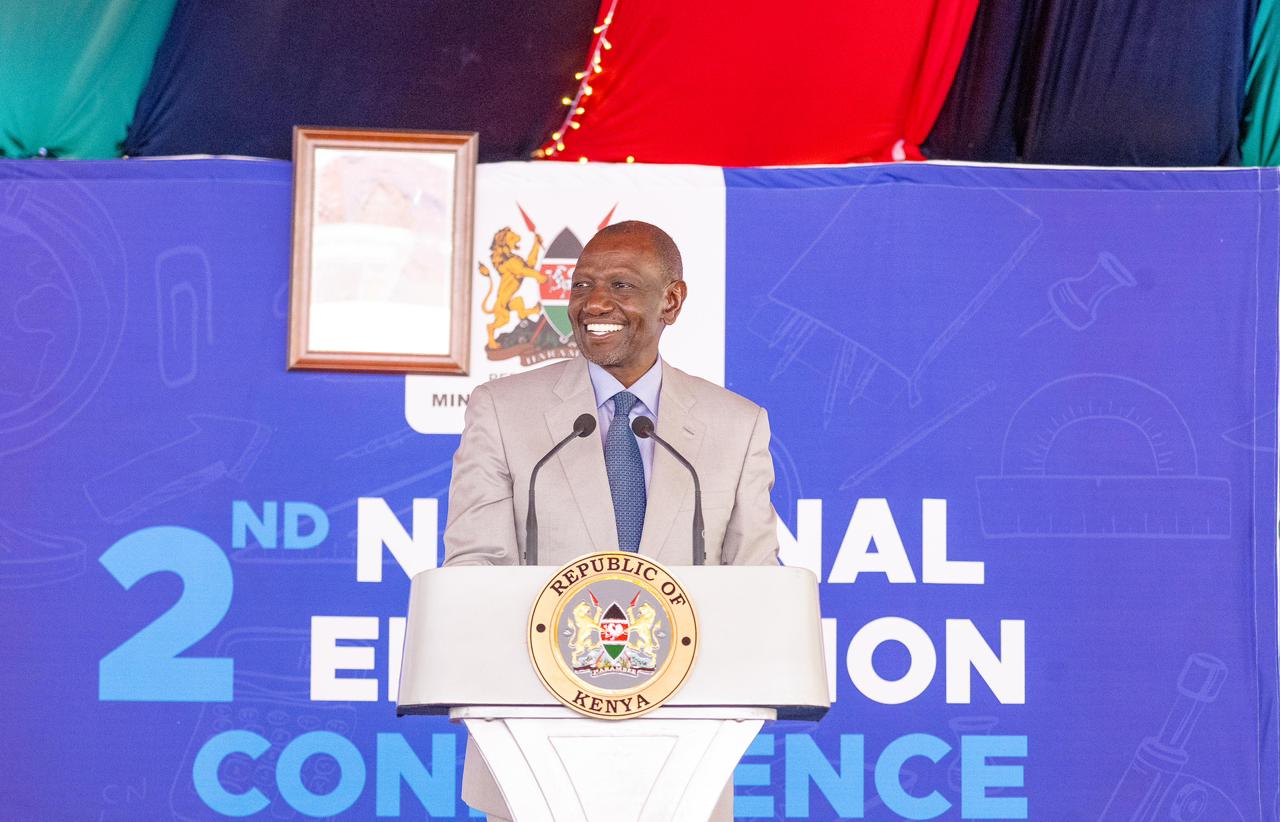
President William Ruto has defended the government’s push for digital payment of school fees through the eCitizen platform, accusing a section of head teachers opposing the system of resisting accountability and transparency in public schools.
Ruto questioned why some school heads had moved to court to block the directive requiring parents to pay school fees through digital platforms.
“The question I’m going to ask, union officials, is why do we have some head teachers who have taken us to court because they do not want parents to pay school fees on eCitizen?” posed the President.
Ruto criticised the continued use of manual receipts in some schools, saying the practice created loopholes for misuse of funds and denied the government the ability to properly track public resources.
“They want to continue writing receipts on pieces of exercise books. Honestly, why do you want to continue writing receipts on pieces of paper where nobody can trace your exercise?” he asked.
He spoke Thursday during the Second National Education Conference at Lake Naivasha Resort in Nakuru.
The President insisted that parents should be able to pay fees conveniently from their homes using digital systems linked to eCitizen, banks and mobile money platforms.
“Today parents should be able to pay from the comfort of their homes on eCitizen school fees for their children, where we can verify the data and know this money was paid,” he said.
Ruto said his administration had deliberately moved away from cash transactions across government services in a broader effort to enhance transparency and curb corruption.
“We have made a strategic decision that we do not want to deal in cash in this administration because cash is very sticky,” he remarked.
He noted that Kenyans can now pay for most government services digitally through platforms such as M-Pesa and banks, allowing the government to maintain proper records and visibility of revenue collection.
“That is why today you can literally pay for any government service on a digital platform through M-Pesa or the bank so that we have traceability and visibility as government,” he added.
The Head of State maintained that the government was not targeting teachers but promoting prudent management of school resources.
“I don’t think asking for transparency is too much,” he said, adding that only a small number of school heads were resisting the reforms.
Ruto at the same time praised the majority of teachers and school administrators who have already embraced digital payment systems.
“In fact, I have head teachers who have rejected cash completely and told parents to pay using digital platforms because they want accountability,” he said.
The President linked the digital payment initiative to the conference’s broader theme of accountability, arguing that better management of resources would improve learning outcomes in schools.
“If we are accountable, we can do more with the resources we have and improve learning outcomes with the resources available,” he said.
Education Cabinet Secretary, Principal Secretaries Julius Bitok (Basic Education), Beatrice Inyangala (Higher Education), union officials and other officials from the education and elected leaders were present.



Comments 0
Sign in to join the conversation
Sign In Create AccountNo comments yet. Be the first to share your thoughts!