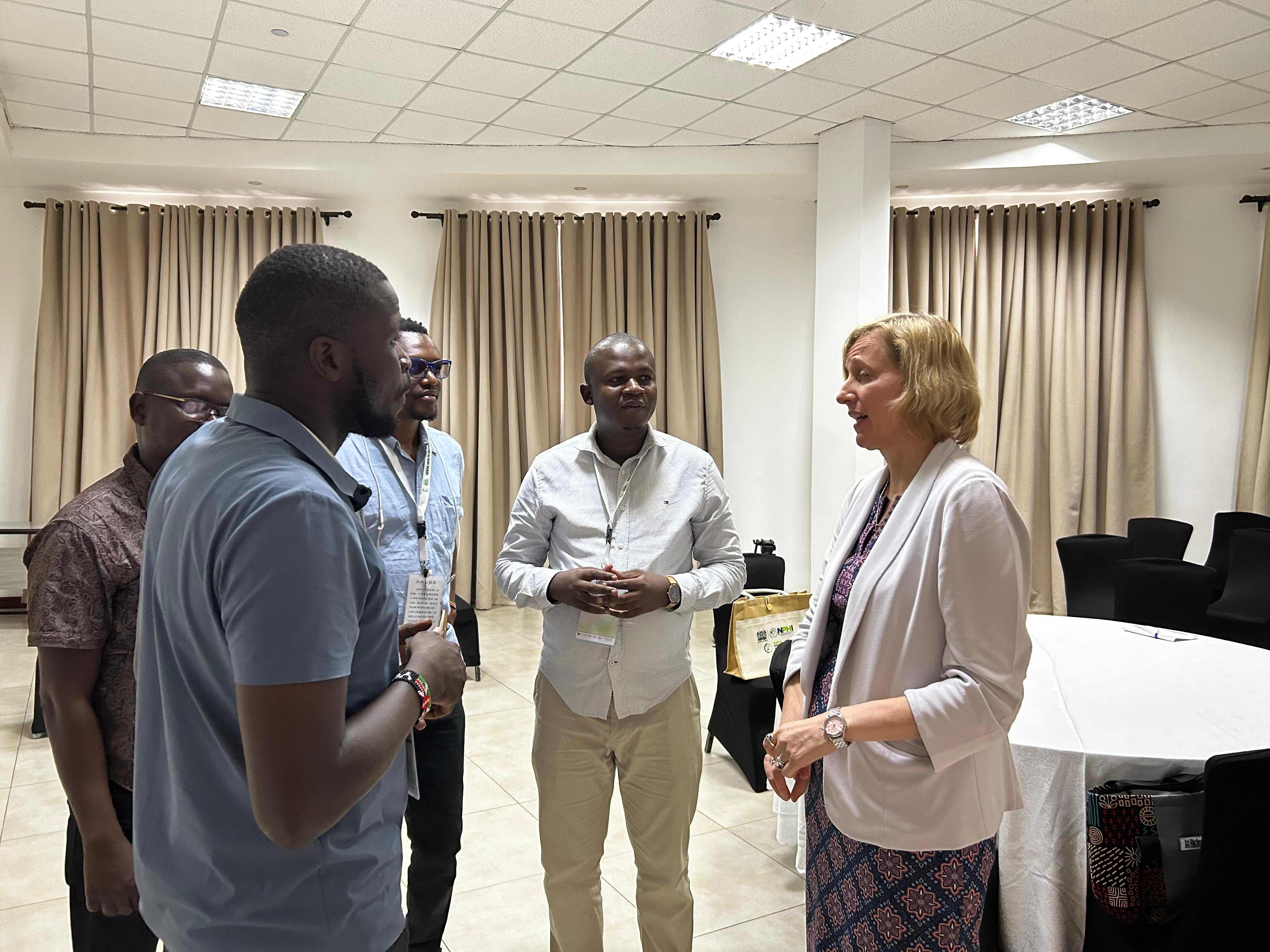
Acting US ambassador and charge d’affaires Susan Burns chats with Mombasa journalists on Tuesday during the inaugural Kenya Health Security Convention in Mombasa / BRIAN OTIENO
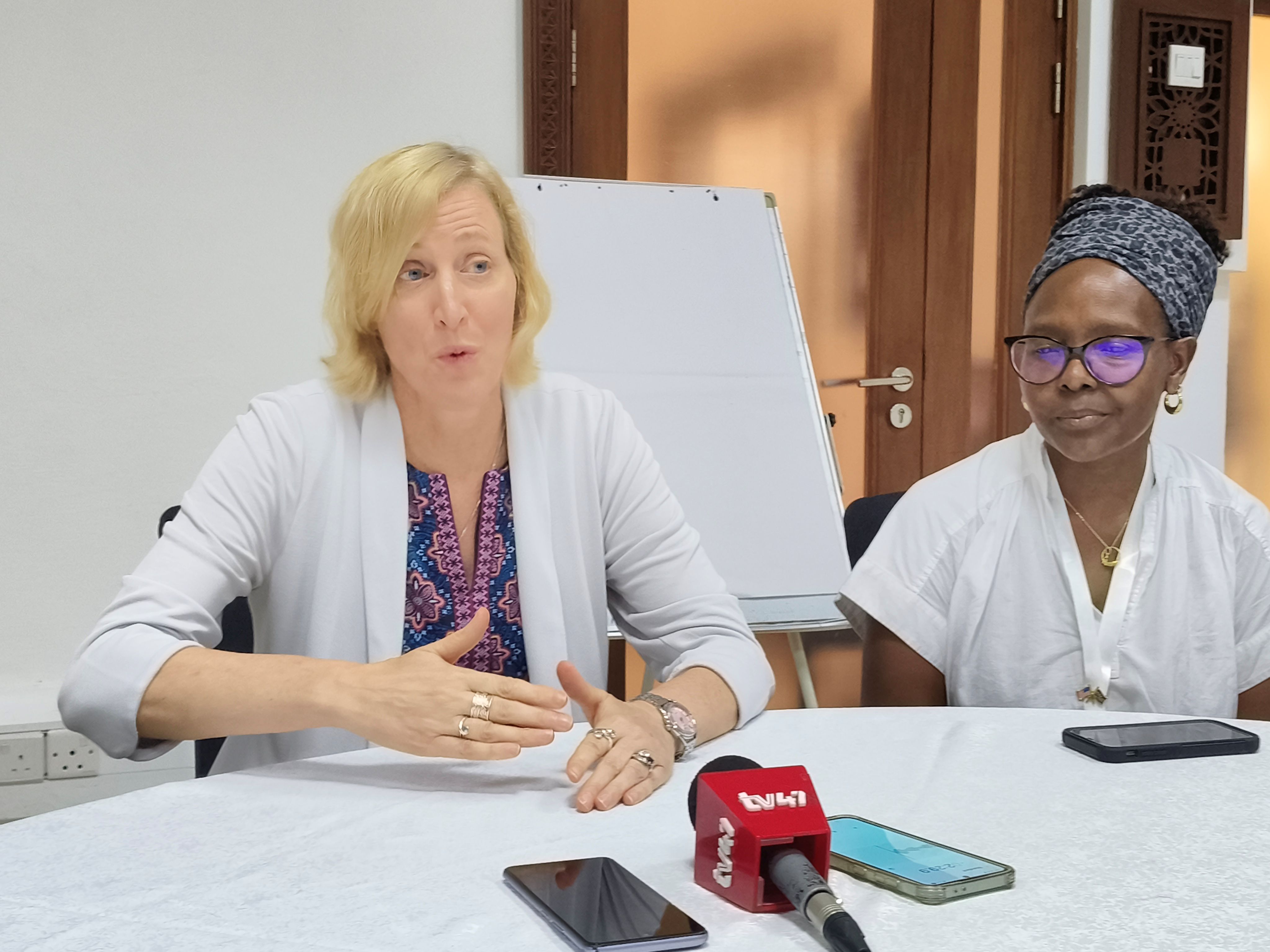
Acting US ambassador and charge d’affaires Susan Burns and Dr Naomi Lucchi in Mombasa on Tuesday / BRIAN OTIENO
We are not after Kenyan individuals’ medical data - Burns
BY BRIAN OTIENO @Yobramos4 Wednesday, May 6, 2026
The US government has once again set the record straight over the health agreement signed between them and the Kenyan government last December.
Acting US ambassador Susan Burns on Tuesday said the data aspect of the agreement does not violate data privacy in the country as they are not interested in individuals' data.
She said what the US is interested in is the collective data that helps them monitor whether the assistance or agreement is working or not.
“The data we are interested in is not whether you, as so and so, have HIV or TB. It is, for example, in Mombasa how many men under the age of 30 have HIV. That’s aggregated data.
“We are not collecting it as individual records, we are collecting it so we know that the programs are working,” Burns said.
She spoke during the inaugural three-day Kenya Health Security Convention being held in Mombasa.
Burns said there has been a lot of misinformation over the USD1.6 billion (Sh208 billion) health deal signed on December 4, which she described as a framework and not binding.
The five-year deal is meant to fund HIV/AIDS, TB, malaria, and maternal health, transitioning from NGO-driven aid to direct government-to-government support.
“As we transition care from some of the organizations who do that to the government of Kenya, we want to make sure that the programs are working,” the charge d’affaires said.
However, the deal, which aims to strengthen Kenyan health systems and increase domestic health spending, has been suspended by the High Court after the Consumer Federation of Kenya and Busia Senator Okiya Omtatah went to court to challenge it over data privacy and procedural issues.
The matter is set for hearing later this month.
Burns said the Kenyan legal system will have the final say.
Right now, the two parties (Kenya and the US) are working on the implementation phase of the agreement, meaning a lot of intensive work is being done together with officials in the Health ministry, Treasury, among others.
“Essentially, what we are trying to do is build a system. When we first started here in HIV, it was an emergency, so we created a health system to get medicine to people quickly.
“Over time, the needs have really changed and we created some parallel structures that now we need to integrate into Kenya’s health system,” Burns, who is the US charge d’affaires, said.
She said there is need to ensure programs are not duplicated, there are no parallel efforts, and that HIV is integrated into regular care.
The charge d’affaires said the US has not cut health assistance to Kenya as many have been led to believe.
“I do want to stress that while we are doing that we have ongoing health assistance that’s continued throughout and one of the things that really drives me a little bit crazy is the idea that we somehow cut health assistance.
“Our health assistance that’s ongoing without the health framework is about USD290 million (about Sh33.9 billion) a year. It was the assistance that we’ve always done here and we are keeping that going while we are doing the negotiation for the implementation of the health deal,” Burns said.
The US Centers for Disease Control and Prevention (CDC) is one of the co-sponsors of the inaugural health convention.
The convention has been organized by the Kenya National Public Health Institute (NPHI).
It brings together policymakers, scientists, public health professionals, security experts, healthcare professionals, industry leaders, and other stakeholders to share knowledge, innovations, and strategies for strengthening health systems and enhancing pandemic preparedness and response.
The convention is a culmination of many years of work done to build a surveillance system for disease identification and building laboratory systems to detect diseases early.
Burns hailed Kenya’s health security system which she said is one of the strongest in the world.
“I know from my CDC colleagues that the Kenya program in that global health security space is one of the strongest that we have worldwide,” Burns said.
She said through US government-supported programs and investment, Kenya has made strides in the health sector with a 50 per cent reduction in the burden of malaria over the last decade, between 2010 and 2020.
There has also been a drop in the number of outpatient cases due to malaria, TB and HIV.
Ends....
Instant Analysis:
The health deal between Kenya and the US is such that as the US gradually decreases its funding to Kenyan health system, Kenya also gradually increases its funding if the health sector over the next five years. This is mainly because the UDS believes Kenya’s health system is groiwning stronger and stronger year on year.
PICs: Acting US ambassador and charge d’affaires Susan Burns and Dr Naomi Lucchi in Mombasa on Tuesday / BRIAN OTIENO
Acting US ambassador and charge d’affaires Susan Burns chats with Mombasa journalists on Tuesday during the inaugural Kenya Health Security Convention in Mombasa / BRIAN OTIENO
Comments 0
Sign in to join the conversation
Sign In Create AccountNo comments yet. Be the first to share your thoughts!