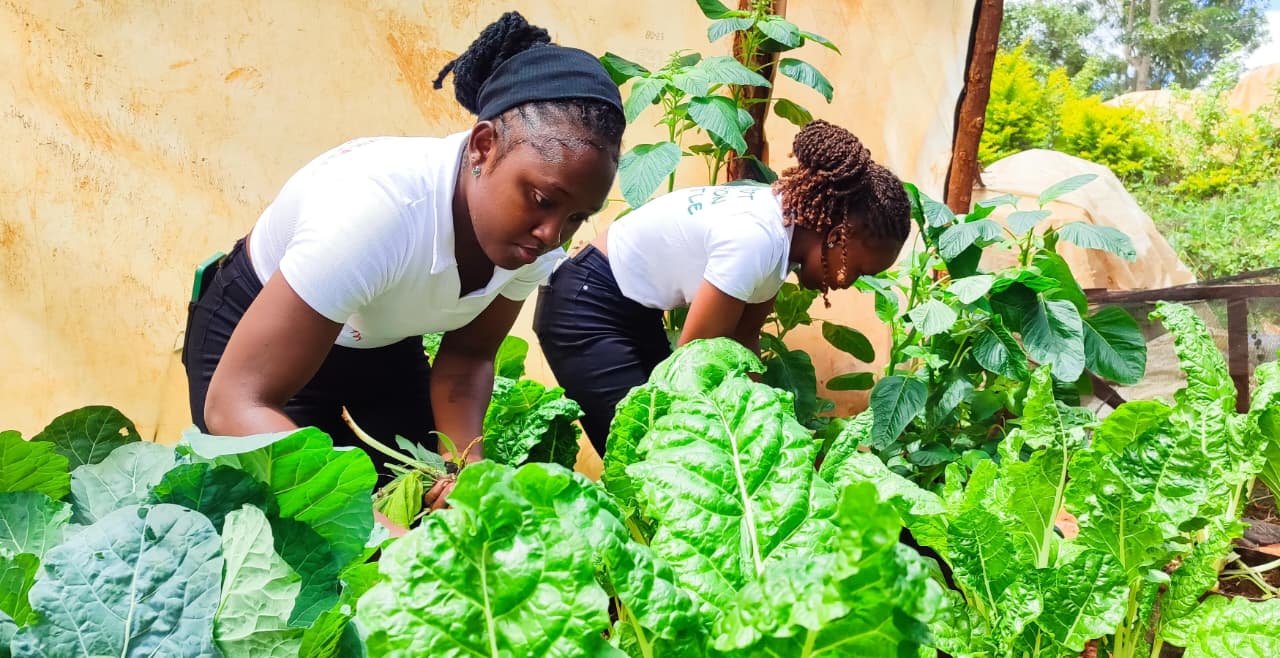
 Members of the Real Baddies Wear Gumboots group in the demo farm at Kenol, Murang'a county /ALICE WAITHERA
Operating under the banner Real Baddies Wear Gumboots, the group was brought together by Loise Kabuti, a young farmer who established a demonstration farm at her home in Kenol to train and mentor fellow young women.
“The soil may be dirty, but the money we earn from it is clean, and that is why I brought these girls together to learn and grow,” Kabutisays, explaining the vision behind the initiative.
What started as a small training space has since evolved into a practical learning hub, where the young women acquire hands-on skills in modern farming.
Many of them are now replicating the same model in their parents’ farms, extending the impact of the project beyond Kenol and into surrounding rural areas.
“We are not just farming here, we are building something that can spread to our homes and communities,” another member explains.
The initiative, launched a year ago, is already bearing fruit, both literally and economically.
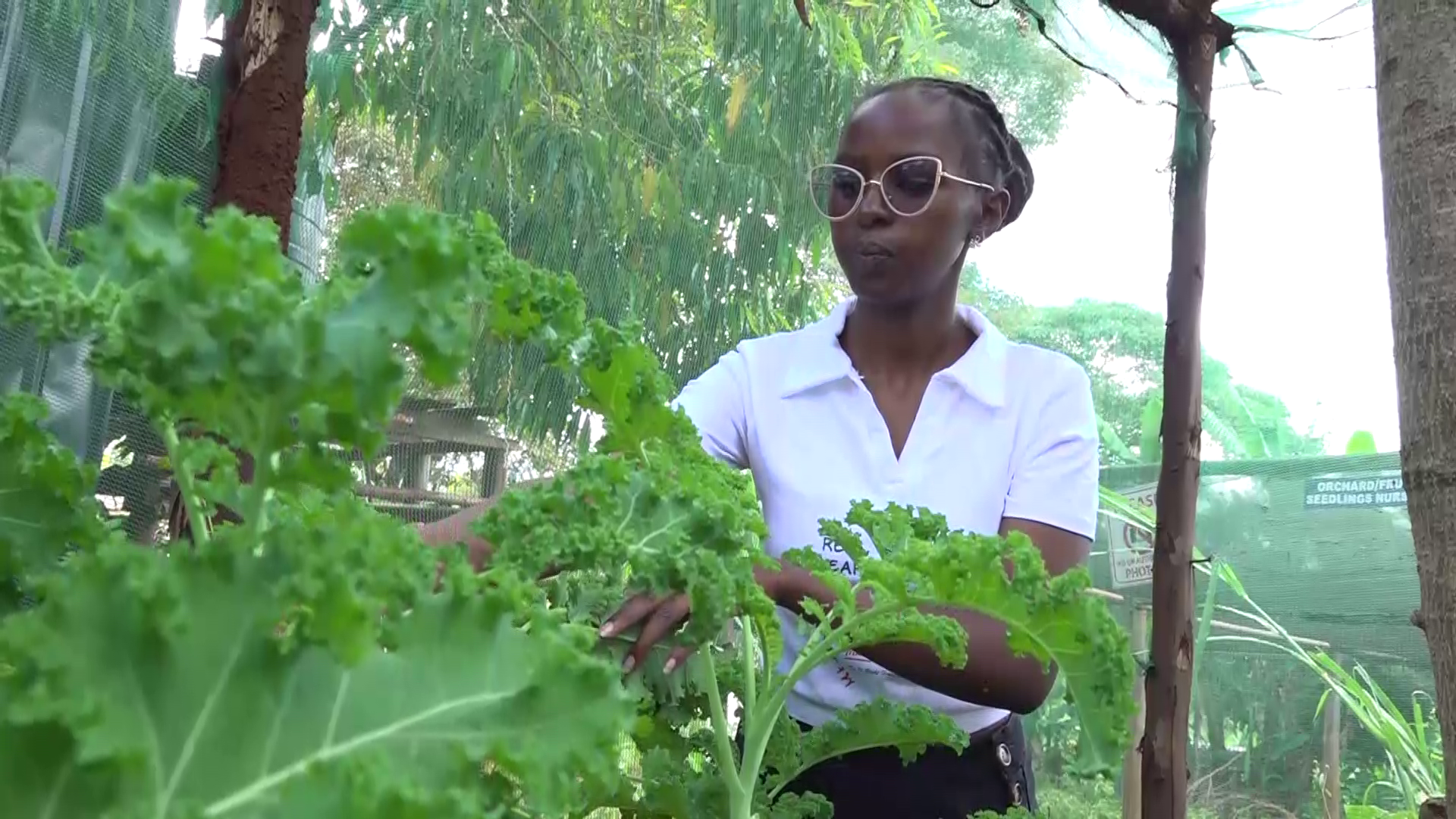 Olive Nyawira, a young farmer, tending to vegetables at a demo farm in Kenol, Murang'a county /ALICE WAITHERA
By growing vegetables and selling them to local households, the group has created a steady income stream while also improving their own food security.
“People will never stop eating, so agriculture will always have opportunities,” one of the young farmers says.
Faced with limited land, the group has turned to innovation to sustain their activities. Using sacks, containers and even discarded shoes, they have embraced small-scale kitchen gardening techniques that allow them to maximise production in confined spaces.
“We are showing that even with little land, you can still farm and make money,” a member says as she tends to crops planted in improvised containers.
Beyond the economic benefits, the project is reshaping perceptions around gender roles in agriculture.
“You don’t have to be a man to succeed in farming, and you can still look good while doing it,” another farmer says, challenging stereotypes that have long discouraged women from entering the sector.
Agriculture remains a cornerstone of Kenya’s economy, employing a significant portion of the population and sustaining millions of households.
The sector is largely driven by smallholder farmers, many of whom engage in subsistence farming, producing mainly for family consumption with limited surplus for sale.
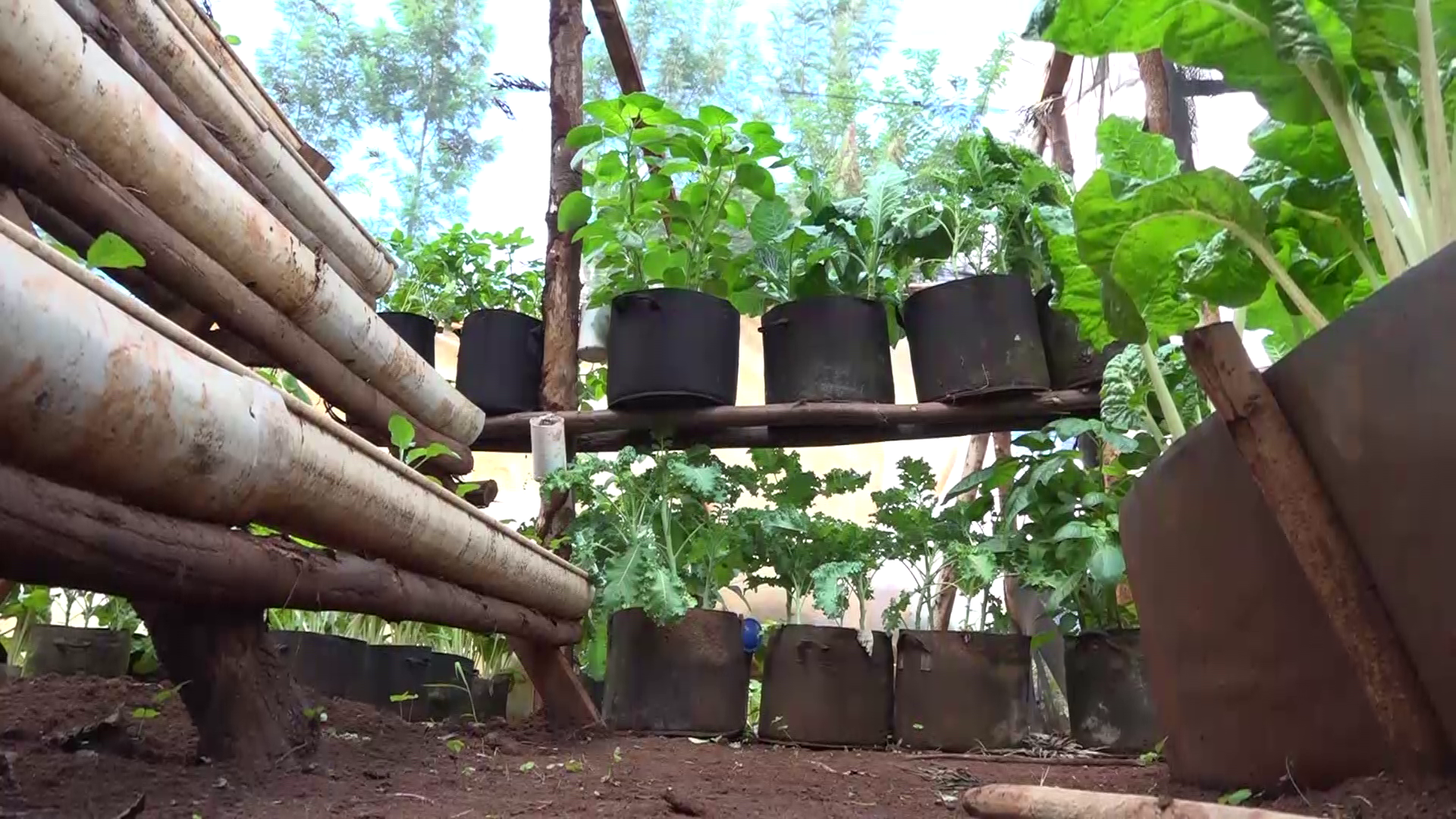 A demo farm being used by young women farmers at Kenol, Murang'a county /ALICE WAITHERA
Women form the majority of this labour force, taking on tasks such as planting, weeding and harvesting, while men often control land ownership and access to markets.
Traditionally, farming has been associated with older generations, with many young people migrating to urban centres in search of formal employment.
However, changing economic realities, including high unemployment rates, are prompting a growing number of youth to reconsider agriculture as a viable and profitable venture.
Despite the progress, challenges remain. Limited access to land, capital and modern farming technologies continue to hinder many aspiring young farmers, particularly women. Cultural perceptions also persist, with some still viewing agriculture as a last resort rather than a career of choice.
Even so, the determination among the young women in Kenol remains unwavering. Brenda Mukami, one of the group members, hopes to expand her involvement in the sector.
“I have a vision of owning my own farm and mentoring other girls who want to venture into agriculture,” she says.
Cecily Njeri, another young farmer, believes the rewards of farming go beyond financial gain. “You may get dirty while farming, but in the end you have food, income and a sense of fulfilment,” she reflects.
As more young women take up farming across the country, their efforts are steadily transforming the sector, proving that agriculture is not just a means of survival, but a powerful tool for empowerment, innovation and sustainable livelihoods.
Instant Analysis
Faced with limited land, the group has turned to innovation to sustain their activities. Using sacks, containers and even discarded shoes, they have embraced small-scale kitchen gardening techniques that allow them to maximize production in confined spaces.Traditionally, farming has been associated with older generations, with many young people migrating to urban centres in search of formal employment.