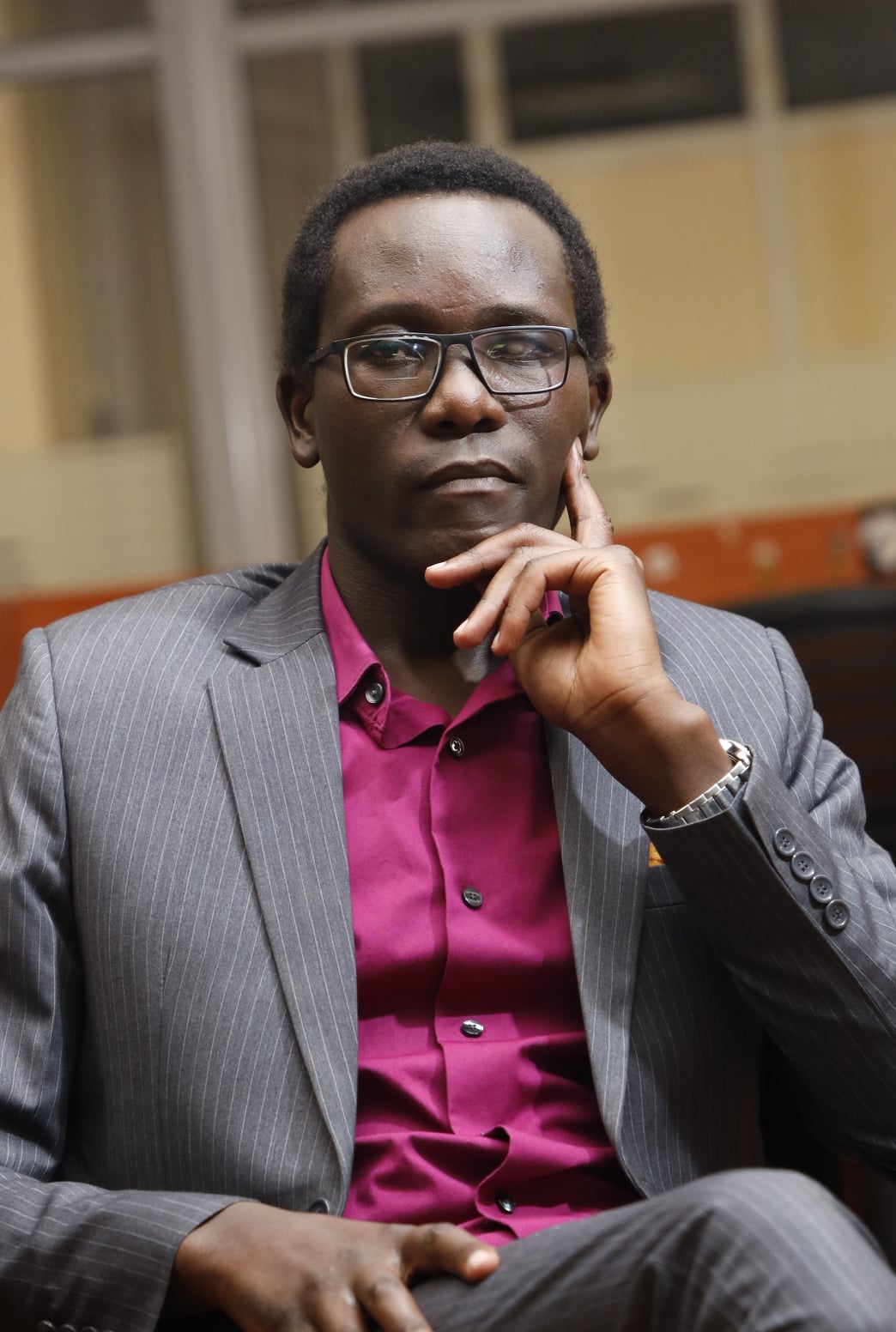
A Russian national deported from Kenya last September has been sanctioned by the United Kingdom over his alleged role in trafficking Kenyans into Russia’s war in Ukraine.
The British High Commission Nairobi on Tuesday named Mikhail Lyapin among three individuals accused of recruiting foreign nationals, including Kenyans, under false pretences and funnelling them into Russia’s military.
“This includes Mikhail Lyapin who was a key facilitator for the trafficking of Kenyan nationals into Russia on the promise of lucrative jobs,” the statement reads.
“Instead, on arrival in Russia, Kenyans were coerced into signing contracts with the Russian military and deployed with minimal training and under dire conditions to the frontline to sustain Russia's illegal war of aggression.”
The sanctions, part of a broader designation targeting 35 individuals and entities, are aimed at dismantling networks accused of exploiting vulnerable migrants to support Moscow’s war effort in the Russia–Ukraine War.
Lyapin was reportedly detained by DCI officers at Muthaiga police station before his deportation. Authorities did not explain why he was deported instead of being prosecuted over the trafficking allegations.
At the time, the Embassy of Russia in Kenya denied that Lyapin had been detained or deported.
The embassy said he had only been questioned by investigators over his business activities in Kenya and left the country on September 26 “in accordance with his previous plans”.
It also dismissed claims that he was linked to the Russian government and worked at the embassy.
The UK sanctions do not detail the circumstances of Lyapin’s deportation but highlight Kenya’s potential role as a transit or recruitment point within a wider global network.
The sanctions also target individuals and companies linked to Russia’s expanding drone warfare capabilities, reflecting a dual focus on human trafficking and military supply chains.
A report by the National Intelligence Service tabled in the National Assembly indicated that at least 1,000 Kenyans had travelled to Russia to take part in the war. Other reports suggest at least 20 Kenyans have been killed, with none of the bodies repatriated.
The issue prompted a visit to Moscow by Foreign Affairs Cabinet Secretary Musalia Mudavadi in March.
Following talks, Mudavadi said both sides agreed that Kenyans would no longer be enlisted into the war through Russia’s Ministry of Defence, although those already recruited would have to complete their contracts.
The UK said the sanctions are intended to curb Russia’s drone production and disrupt networks exploiting migrants from across the globe.
“Networks sanctioned today by the UK have been deceptively recruiting foreign migrants, including Kenyans, in search of a better life and either sending them to the front line as cannon fodder or putting them to work in weapons factories,” the statement reads.
The UK also cited schemes such as the Alabuga Start programme, which it described as part of a sanctioned entity involved in drone production.
Among those also sanctioned is Pavel Nikitin, whose company is accused of developing the VT-40 drone, a low-cost, mass-produced weapon widely used in attacks in Ukraine.
UK Sanctions Minister Stephen Doughty described the exploitation of vulnerable migrants as “barbaric”. He said the new measures would disrupt networks feeding both manpower and components into Russia’s war machine.
“Today's sanctions expose and disrupt the operations of those trafficking migrants as cannon fodder and feeding Putin's drone factories with illicit components to target innocent civilians and vital infrastructure,” he said.
Sanctioned targets also include individuals and entities based in Thailand and China, accused of supplying drone components and other critical military goods to Russia.
The measures were imposed under the UK’s Global Irregular Migration and Trafficking in Persons sanctions regime, which targets individuals and entities involved in people smuggling and human trafficking worldwide.
This marks the first time the regime has been used to address the exploitation of migrants in the context of armed conflict.
The UK said the move underscores its commitment to dismantling trafficking networks and increasing pressure on Russia over its war in Ukraine.
Comments 0
Sign in to join the conversation
Sign In Create AccountNo comments yet. Be the first to share your thoughts!