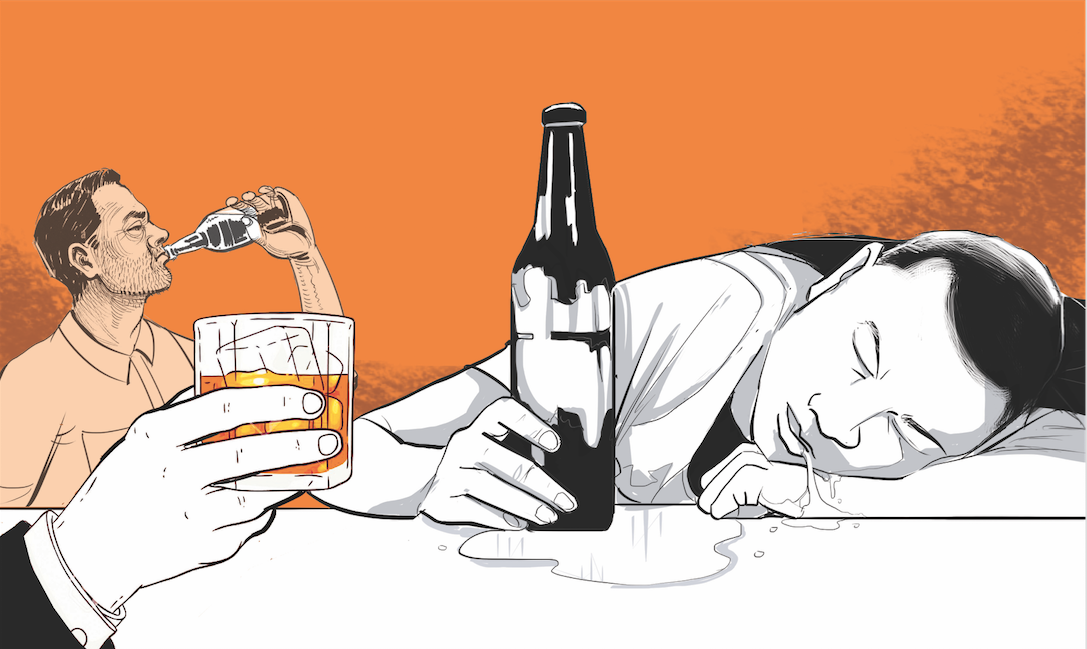
Alcohol does not arrive loudly in most Kenyan homes. It slips in quietly, almost politely and makes itself part of everyday life before anyone realises something is wrong.
There is a family in Nyeri that still remembers their son, Mwangi, as he was before alcohol took over.
He was not extraordinary in a way that made headlines, but he was enough. Enough for his mother to believe that one day, things would be different. Enough for the family to stretch what little they had so he could stay in school. Enough for relatives to point at him during gatherings and say he would be the one to lift them.
They did what many families do. They invested in him with quiet sacrifice. School fees paid in bits. Expectations carried gently, but always present.
When he finally left for Nairobi, there was pride, because even a small job meant things were starting to move.
At first, nothing seemed out of place. Drinking was just part of life around him. After work, people gathered. Bottles were shared. It looked like relief, like belonging. It looked like what adults did after long days. No one marked it as a beginning. But inside homes, it never feels like a statistic.
Over time, small things began to shift. Calls home became less frequent. When he did pick up, his voice carried a distance that was hard to explain. Money that once came, even in small amounts, stopped coming altogether. There was always a reason. Rent. Delays. Things being tight.
When he came home, he was not the same. Thinner. Quieter at times, then suddenly sharp and impatient. Conversations turned into arguments too easily. He avoided eye contact and slept too much or not at all.
The family noticed, but naming it felt heavier than ignoring it. The drinking had moved beyond routine. It had become necessary. Not for enjoyment, but to get through the day. To steady the body. To quiet something inside that had no clear name.
By the time it became undeniable, the change was already deep. He began missing work. Then he lost the job. Days blurred into each other. He would disappear for hours, sometimes days, and return in a state that made conversation impossible.
He was no longer just struggling. He was slipping away.
At home, the pressure built slowly, then all at once. His mother carried most of it. The worry. The shame. The constant calculations of what to do next. Neighbours began to talk. Relatives began to advise, each suggestion heavier than the last.
“Take him to rehab.” It sounded simple when other people said it. Like a solution that only required a decision. But rehab, for this family, was not something they understood. It was not part of their world. It was something distant, something associated with people who had money and options.
Still, things reached a point where there was no more space to wait. He had lost too much weight. His body looked worn down. His behaviour had become unpredictable, sometimes aggressive and sometimes completely withdrawn. Like a ghost of himself.
The decision to take Mwangi to rehab was not about recovery. It was about keeping him alive. The cost alone was suffocating. Figures were mentioned that did not match the reality of the family’s income. Hundreds of thousands, then more. Money that did not exist. But desperation has its own logic.
They borrowed. They asked. They sold what they could… cows, goats and finally chickens. Contributions came in small, painful amounts. Not because anyone fully believed in what would happen there, but because doing nothing felt worse.
He was admitted and for a short time, there was a change. His voice over the phone sounded clearer. His words made more sense. There was a version of him that seemed to be returning, or at least trying to. But the stay was limited. It had to be. The money could not stretch any further.
When he came back, nothing around him had changed, the same environment. The same pressures.
Whatever had begun in rehab had nowhere to continue. There was no follow-up. No consistent therapy. No system to hold him in place while he tried to rebuild himself. The drinking returned, not dramatically, but steadily. As if it had been waiting.
Back at home, the family adjusted again. Conversations became shorter. Expectations lowered without being spoken aloud. His mother watched, carrying a kind of exhaustion that did not have a clear release.
More than 80 per cent of people living with alcohol dependence in Kenya do not access formal treatment, meaning official figures only capture a fraction of the true burden.
In reality, alcoholism is often only recognised when it has already reached a severe stage, when work has been lost, health has declined, or families have begun to break apart.
By the time it enters statistics, it is usually no longer early dependence but its visible aftermath. This means the numbers rarely reflect how quietly and widely the problem begins, but rather how badly it ends
This is what alcohol looks like in many homes. Not chaos from the beginning, but a slow erosion. Not a single moment of collapse, but many small ones that add up over time.
Rehab exists, but for families like Mwangi’s, it remains distant even when they manage to reach it once. It is too short, too expensive, too disconnected from the life people return to.
What remains is not resolution … It is continuation.
Mwangi is still there. Alive, but altered. The family is still there. Present, but worn down.
And life moves forward, carrying all of it without pause.


Comments 0
Sign in to join the conversation
Sign In Create AccountNo comments yet. Be the first to share your thoughts!