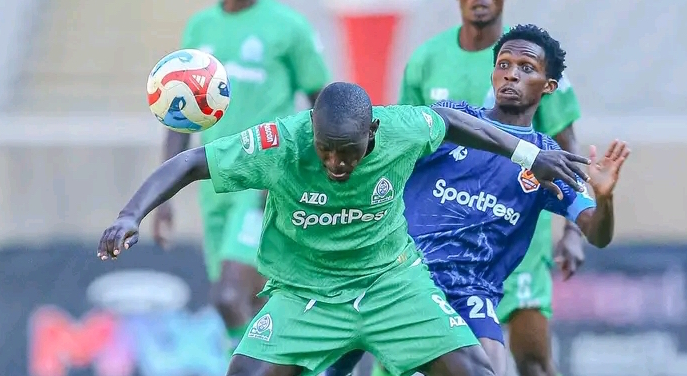
 Marvin Nabwire of Police in action with AFC Leopards' Hassan Beja/AFC Leopards/HANDOUT
Kenyan football continues to grapple with structural weaknesses that are limiting its commercial growth, even as corporate sponsorship in the sport increases.
Low fan turnout, underdeveloped infrastructure, inconsistent broadcast coverage, and governance gaps remain central challenges, according to Betika Group head of branding, Eric Mwiti.
Mwiti observed that the core issue affecting the sport is not a lack of interest but the inability to translate that interest into consistent engagement and commercial value.
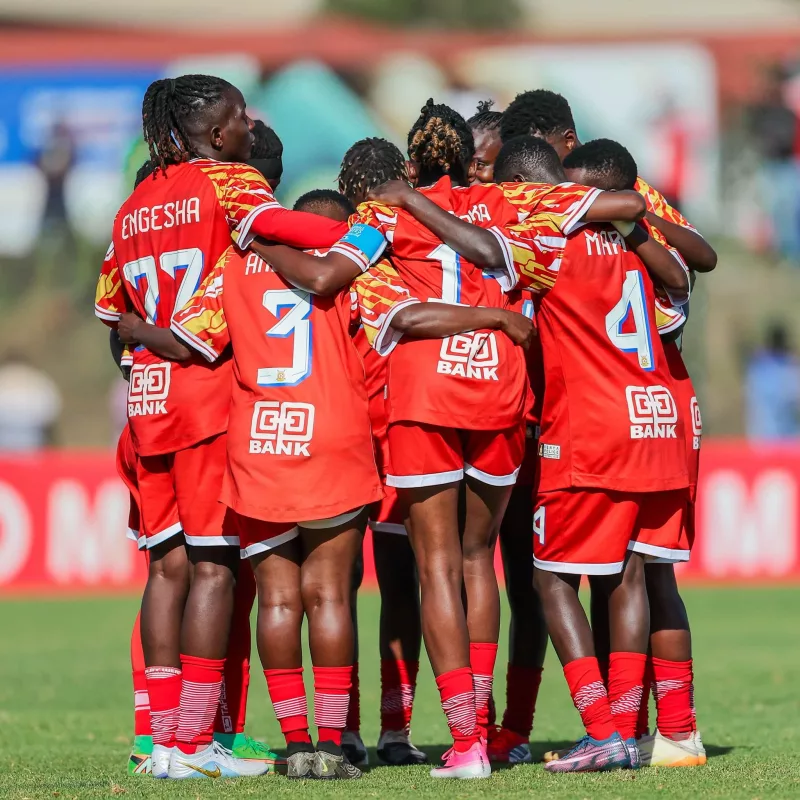
Betika currently sponsors AFC Leopards, Kenya Police, and GFE 105, alongside grassroots tournaments and community-based sports programmes.
The investment reflects a broader attempt to support elite and developing structures within the game, but, from a sponsor’s perspective, the underlying challenges within the football ecosystem remain significant.
“The biggest weakness is fan experience. We need full stadiums, proper broadcast coverage and clubs with strong identities. That is what attracts sponsors,” he said.
While football remains the most popular sport in the country, attendance patterns remain uneven. Outside of high-profile fixtures such as the Mashemeji derby involving Gor Mahia and AFC Leopards, as well as Shabana, many games struggle to attract strong crowds, limiting their commercial appeal.
“We don’t have to always wait for the Mashemeji derby for us to fill a stadium. We need any game to be a big game,” Mwiti said.
The concern extends beyond individual fixtures to the broader structure of the league, where fan engagement is inconsistent and often driven by rivalry rather than sustained club identity.
Clubs such as AFC Leopards, despite having one of the largest supporter bases in the country, still face challenges in converting that support into consistent matchday attendance across all fixtures. Kenya Police FC, meanwhile, represents a more structured institutional side but still operates within a league where visibility and fan engagement vary significantly from match to match.
Mwiti said sponsorship decisions are increasingly influenced by measurable audience engagement, online and in stadiums. “When a club is here requesting Sh75 million a year, the first thing they will give us as a bargaining chip is the number of followers they have on social media or whether their games are always full,” he said.
Infrastructure remains another major constraint. Across the country, many pitches and stadiums require rehabilitation, with basic facilities such as drainage systems, pitch levelling, and goalposts often lacking or in poor condition. This affects not only the quality of football but also the spectator experience.
“You’ll find most of those pitches in very bad condition,” Mwiti said. “There is levelling that needs to be done, marking, and if there are no goalposts, we put up goalposts.”
He noted that improving infrastructure is essential for player development and fan comfort, but also for creating a product that can attract sustained commercial investment.
A key structural issue is the absence of stable home grounds for many clubs. Without fixed venues, clubs struggle to build identity and deepen local fan loyalty.
“How many clubs in the current league have actual home turfs?” Mwiti asked. “Each club needs to have an identity. This is our home.”
Broadcast coverage remains another limiting factor. Limited and inconsistent television access reduces visibility for most league matches, restricting both audience reach and sponsorship value. “We need to get to a point where I can be able to watch any of the games, not just the Mashemeji derby or just the top five clubs,” Mwiti said.
Governance and financial accountability also remain central concerns for sponsors engaging with clubs. Mwiti stressed that proper use of funds and player welfare are non-negotiable in any partnership structure.
“You cannot have a sponsor paying a club, and players are not receiving salaries. That is unacceptable. Player welfare, including health insurance, is a top priority for us,” he said. Transparency and accountability are critical to maintaining long-term investment in the sport. But Mwiti cautioned that investment alone cannot resolve the deeper structural issues facing the game.