MPs are mulling punitive legal, technological and administrative reforms to curb rising cases of livestock and produce theft, warning the vice is crippling rural livelihoods and fuelling insecurity across the country.
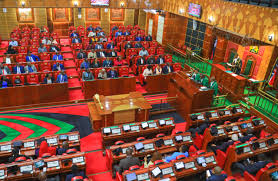
Contributing to debate on the Prevention of Livestock and Produce Theft Bill, 2023, lawmakers overwhelmingly backed the proposed legislation.
They also backed stricter penalties, enhanced enforcement mechanisms and the adoption of modern tracking technologies to combat what they described as an increasingly organised criminal enterprise.
The Bill, co-sponsored in the Senate, seeks to provide a comprehensive legal framework for preventing livestock theft, regulating livestock movement, improving identification and branding systems, and strengthening inter-agency coordination between national and county governments.
During debate in the House, legislators from both pastoralist and highland farming regions painted a grim picture of a crime they said has evolved into an organised, cross-county enterprise involving cartels, rogue traders and weak enforcement systems.
Matungulu MP Stephen Mule painted a picture of the human cost of livestock theft, telling the House that small-scale farmers continue to lose their only source of livelihood to criminals, particularly during rainy seasons when security is strained.
He cited a recent incident in his constituency where a resident lost all seven of his cows after armed thieves raided his homestead at night.
“This man had no other source of income. When his livestock was taken, he was left with nothing,” he said, warning that such incidents were demoralising rural farmers who depend entirely on livestock for survival, school fees and household needs.
“This guy is not employed and depended on his livestock. When those cows were taken, he was left with nothing.”
Mule warned that livestock theft is no longer random but increasingly coordinated, often targeting vulnerable farmers at night.
He urged counties to establish dedicated livestock protection systems and adopt electronic branding and tracking technologies similar to those used by the Kenya Wildlife Service to monitor wildlife.
“If KWS can tag lions and elephants, why can’t we electronically tag cows?” he posed.
“A helpless farmer could have traced stolen livestock electronically, and the police would know exactly where they are.”
While supporting the Bill, Mule pushed for stronger penalties, warning that current fines are too weak to deter criminals.
“A fine of Sh100,000 is nothing to someone who has stolen 100 cows,” he said.
“We must enhance penalties and ensure long jail terms actually deter crime.”
Laikipia East MP Mwangi Kiunjuri echoed similar concerns, arguing that livestock theft has become a structured criminal economy rather than petty theft.
“Livestock theft is more of a trade than petty thievery,” Kiunjuri said. “Sometimes 1,000 cows disappear and are never recovered. Where do they go?”
He warned that the Bill will only succeed if cartels are directly confronted.
“Before we address that, whatever we try to bring up will be futile,” he cautioned, urging enforcement agencies to go after networks financing and facilitating the theft.
Kiunjuri also raised concern over slaughterhouses and eateries, questioning the origin of meat sold in urban centres.
“You wonder how a joint is opened today and they are permanently supplied, yet they never go to slaughterhouses. Where do they get their supplies?” he posed.
He proposed stricter regulation of meat supply chains, including documentation for all catering establishments.
Marsabit Woman Representative Naomi Waqo said pastoralist communities had suffered decades of raids that left families impoverished and vulnerable, describing livestock theft as a matter of survival for pastoralist families.
“Just reflect on the life of a simple livestock farmer who has 20 or 50 cows. That is all they have,” she said. “When thieves come and take them, it is like a death sentence.”
Waqo, who said her own constituents have suffered repeated raids, urged Parliament to consider life imprisonment for offenders.
“These people destroy families and livelihoods. They should face life imprisonment so they know the consequences of their actions,” she said.
Waqo urged the adoption of compulsory identification systems to enable rapid recovery of stolen animals.
“In Marsabit, livestock is everything. When animals are stolen, entire families collapse economically,” she said.
South Imenti MP Shadrack Mwiti supported the Bill but stressed the need for surveillance, better coordination between security agencies and community policing.
“We should strengthen enforcement of penalties and promote livestock identification systems such as tagging and tracking,” he said.
The Prevention of Livestock and Produce Theft Bill, 2023 (Senate Bill No. 12 of 2023), among others, aims to eradicate cattle rustling and theft by introducing mandatory livestock branding, digital registration, movement permits and stricter penalties for offenders.
The Bill, passed by the Senate with amendments in March 2024, also seeks to address the shortcomings of the existing Stock and Produce Theft legislation.