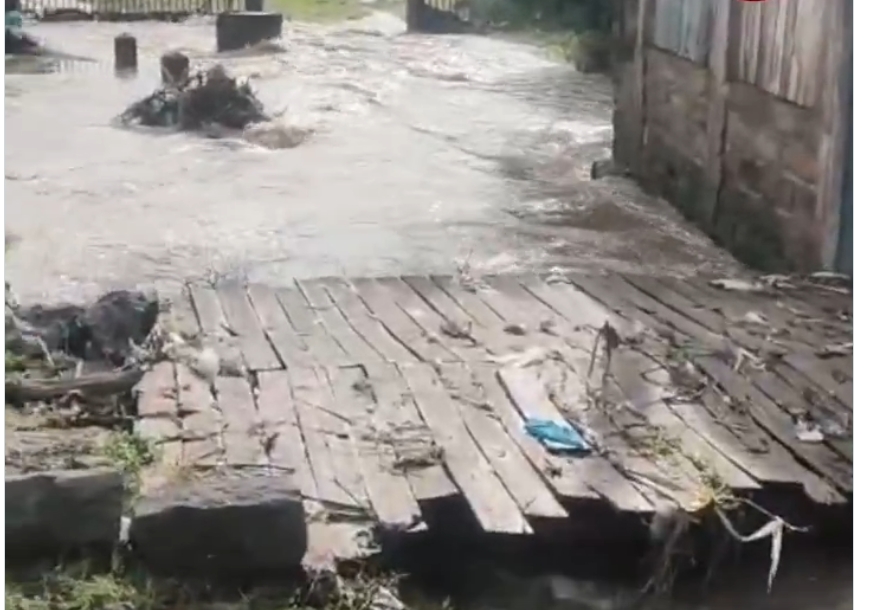
 A screengrab from the video of floods smashing homes and sweeping away the Nazareth Court gate
Utawala residents woke up in shock on Tuesday morning when heavy floods swept through the area on Monday night.
A video by Jennipher Wachie, shared on Twitter, captured the dramatic moment nature had caused.
The swollen stream carved its own path, pushing between buildings and invading homes.
The video shows iron-sheet walls and structured houses standing side by side, as the water makes its way through the narrow spaces.
In the video, timber pathways are shaken as the current flows around them, showing how close the floods came to overwhelming the area.
The Nazareth Court gate, once a strong barrier, was swept away by the force of the water.
Broken and nearly scattered debris marked the destruction left behind.
Residents stood along the sides, speaking in low voices, watching helplessly as the water carried away property and reshaped familiar paths.
For Utawala, the morning was a reminder of how quickly disaster can strike, even in places never meant to hold a river.
The scene was a stark reminder of the destructive power of floods that have repeatedly struck Kenya, leaving behind devastation and grief.
Flooding in Kenya has long been a recurring disaster, particularly during the rainy seasons.
From Nairobi’s estates to rural counties, swollen rivers and clogged drainage systems often unleash torrents of water that overwhelm communities.
In past years, floods have claimed lives, leaving families mourning loved ones, and destroyed property worth millions.
Each incident underscores the vulnerability of communities living near rivers and streams, where infrastructure is often inadequate to withstand the force of nature.
Watching one swept away by floodwaters underscores the sheer force of nature when infrastructure fails.
The fallen gate, captured in Wachie’s video, now stands as a vivid symbol of vulnerability, an image that resonates far beyond one estate.
Online, the video sparked strong reactions. One commenter wrote: “Water is innocent, the people blocking those streams are now paying heavily.”
Another added: “Nature is unforgiving. It is a matter of fact, reclaim its place and course.”
These sentiments reflect a growing frustration with human interference in natural waterways, where construction and blocked drainage often worsen the impact of floods.
Kenya’s floods highlight the urgent need for stronger disaster preparedness and resilient urban planning. Clearing drainage channels, reinforcing stream banks, and investing in flood‑resistant infrastructure are measures often discussed but rarely implemented at scale.
The latest incident is not just about one estate or one night of rain. It is part of a larger narrative of floods in Kenya, their deadly impact, and the pressing call for solutions.
As the rainy season continues, the hope is that this moment will spark action, ensuring that future storms do not bring the same destruction and loss.
The fallen Nazareth Court gate, twisted and broken, is more than a local tragedy; it is a national warning, urging Kenya to confront the floods that have claimed lives, destroyed property, and reshaped communities time and again.



Comments 0
Sign in to join the conversation
Sign In Create AccountNo comments yet. Be the first to share your thoughts!