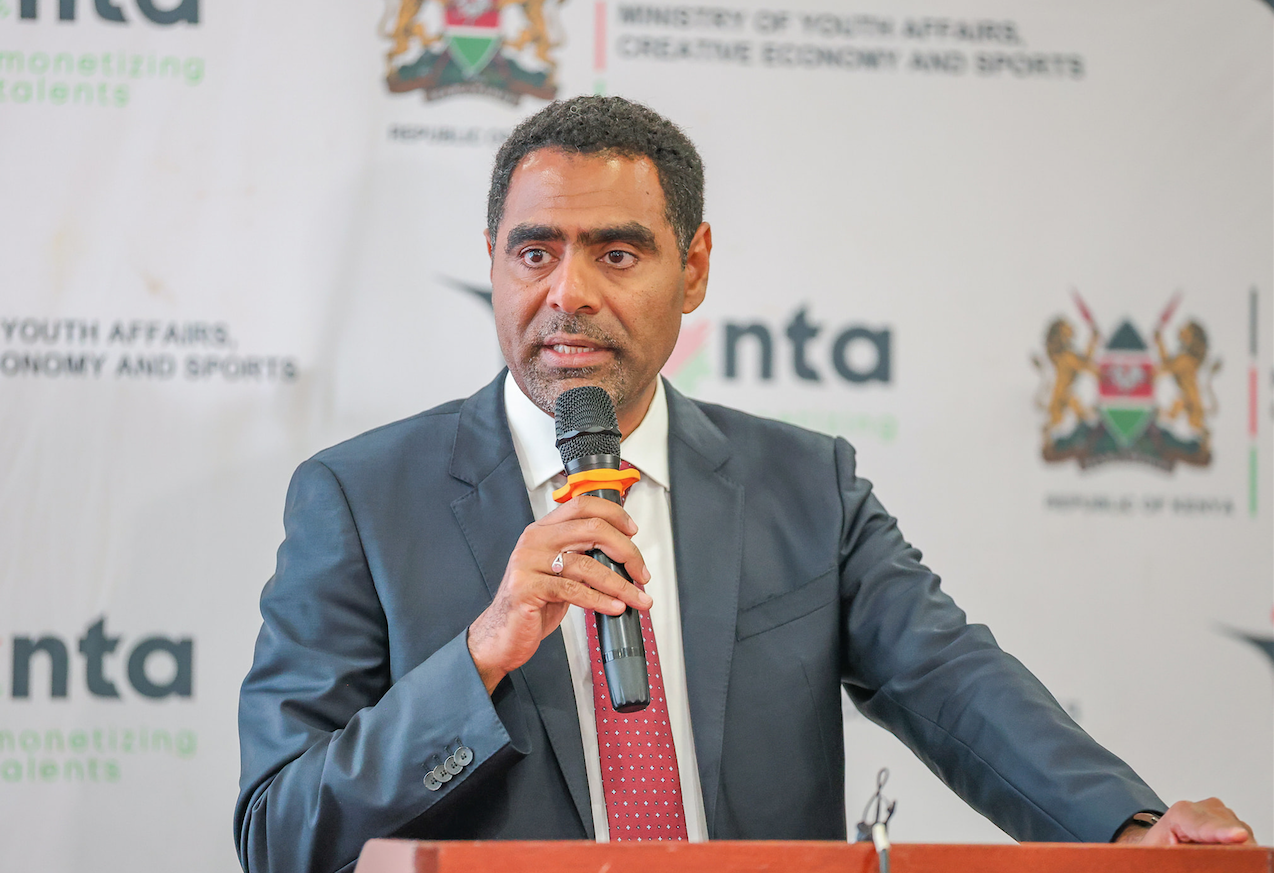
 FKF president Mohammed HusseinHANDOUT
The attempted ouster of Hussein Mohammed as Football Kenya Federation president is shaping into more than a leadership dispute—it is becoming a constitutional stress test for Kenyan football governance.
At the centre of the storm is one critical issue: whether the process used against him aligns with the FKF Constitution 2017.
That document is explicit on one point—the president cannot be permanently removed by the National Executive Committee (NEC) acting on its own.
Under Article 24(c), the General Assembly has the authority to “elect, ratify and dismiss the President and all the other members of the National Executive Committee.”
This provision places the power of dismissal squarely in the hands of the General Assembly, the federation’s highest decision-making organ.
In simple terms, the NEC may initiate action, but it cannot by itself permanently unseat the president.
That distinction is reinforced in Article 41, which governs the dismissal of any officeholder.
The constitution states that the General Assembly may dismiss a person of a body, while the NEC may only dismiss a person provisionally.
That means any NEC-led suspension is temporary and must ultimately be subjected to a broader constitutional process. The constitution also lays down strict procedural safeguards.
A motion for dismissal must be justified and circulated in advance as part of the official meeting agenda.
The official facing removal must be granted the opportunity to defend himself.
That requirement is not symbolic—it is central to due process. If Mohammed was not informed of the charges against him, or denied a chance to respond before action was taken, the legitimacy of the process would immediately come into question.
The constitution further requires that the decision be made through a secret ballot, with a two-thirds majority of valid votes cast needed for dismissal to pass.
That threshold is deliberately high, designed to prevent politically motivated removals driven by temporary alliances. If the matter cannot wait for the Annual General Assembly, the constitution provides another route.
Under Article 31, more than 50 percent of delegates representing FKF members may request a Special General Assembly in writing. If the request is ignored, the members may convene the meeting themselves, and may even seek assistance from FIFA and CAF.
This becomes crucial in high-stakes disputes where urgent constitutional clarification is needed.
Quorum also matters. Under Article 25, more than half of eligible delegates must be present for proceedings to be valid. Without quorum, any vote risks being nullified.
Most significantly, Article 42(7) makes the standard unmistakable: “The procedure for the removal of the President shall be in strict accordance with the provisions of this Constitution or regulations made thereunder.”
The battle over Mohammed’s presidency is therefore not simply about allegations or internal politics. It is about whether FKF followed the constitutional pathway required for such a drastic action.
And in football governance, process is everything.
If the constitution was ignored, then the ouster may not stand—not because of personalities, but because the rules themselves demand it.