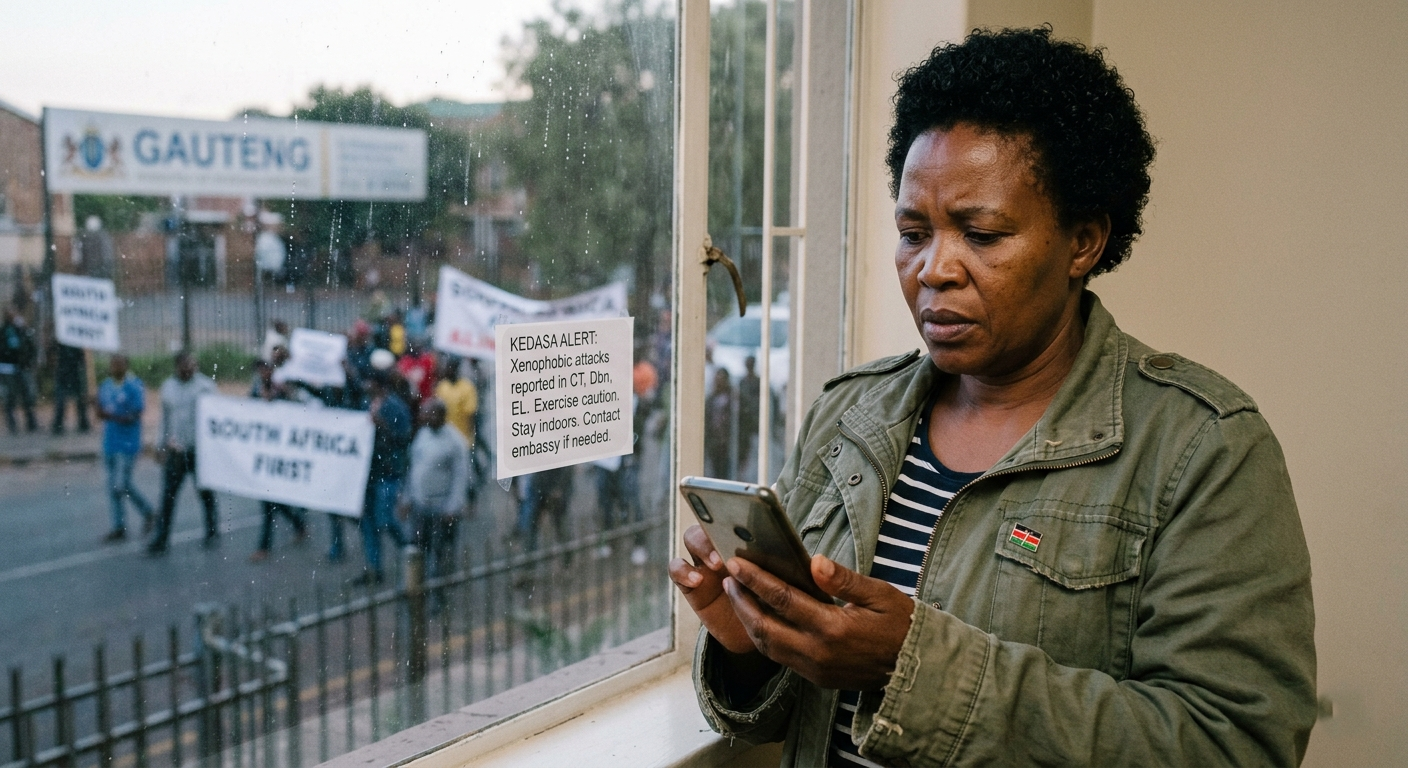
The government says no Kenyan has been reported as affected by the ongoing xenophobic attacks in South Africa, even as it remains on high alert.
An association of Kenyans living in South Africa has since asked its members to exercise caution and remain vigilant following a fresh wave of attacks targeting foreign nationals.
A lobby, known as Kenya Diaspora in South Africa (KEDASA), through its Secretary General William Thegeya, sent an alert to Kenyans living in various parts of South Africa, indicating that violent incidents targeting foreign nationals had been reported.
The lobby, in a statement issued on Sunday evening, identified Cape Town, Durban, and East London (Ku-Gompo) among the most affected cities, with planned demonstrations in Gauteng from Monday to Wednesday.
“There are confirmed reports of violent anti-foreigner protests in parts of Cape Town, Durban, East London (Ku-Gompo), with planned demonstrations in Gauteng (27–29 April). Stay indoors where possible. Do NOT engage protesters and carry valid identification at all times,” Thegeya said in an advisory.
On Monday, Kenya’s Diaspora Affairs Principal Secretary Roselyn Njogu said that so far, no Kenyan has been reported among those affected, but noted the state remains on alert.
“The state is monitoring the situation through our mission in Pretoria. Kenyans who may be affected are advised to use the available channels to contact the embassy,” Njogu said via phone, adding: “So far, we haven’t received any reports of any Kenyan who is affected.”
Last weekend, Ghana summoned South Africa's top envoy to the country over reported “acts of intimidation and harassment” against its citizens and other African migrants in the southern African nation.
This follows the circulation of video clips online appearing to show vigilante groups attacking and confronting individuals they believed to be in South Africa unlawfully— in one instance, a Ghanaian man is questioned about his status.
Xenophobia has long been an issue in South Africa and has been accompanied by periodic outbreaks of deadly violence, the BBC reported.
Nigeria has since urged its citizens living in South Africa to exercise caution following reports of renewed anti-foreigner protests in parts of the country.
In a statement on Friday, the Nigerians in Diaspora Commission (NiDCOM) said demonstrations in several cities — including Cape Town, Durban and East London, now known as KuGompo City — had reportedly turned violent, with incidents of looting, property damage and injuries noted.
Ghana's foreign affairs ministry said its officials had also met South Africa's acting high commissioner to Ghana, Thando Dalamba, and raised a formal protest over the recent “xenophobic incidents” involving foreigners, including its citizens.
It cited a video clip appearing to show a group of South Africans questioning a Ghanaian man. The group is seen requesting the man’s documents and, after he produces them, questioning their authenticity before telling him to go and “fix your country”.
Most migrants come from neighbouring countries such as Lesotho, Zimbabwe and Mozambique, which have a history of providing migrant labour to their wealthier neighbour. A smaller number come from Nigeria.
Vigilante groups such as Operation Dudula, which translates to “force out” in the Zulu language, and March on March claim South Africa is overrun with migrants and attribute various social challenges, including unemployment and drug abuse, to their presence.
South Africa's acting Police Minister Firoz Cachalia also condemned the incidents, stating that “no individual or group has the authority to take the law into their own hands, irrespective of grievances or frustrations”.