The National Police Service (NPS) strongly condemned a series of retaliatory attacks in Tseikuru Subcounty, Kitui county, that have left seven people dead and heightened tensions between communities.
In the latest incident, seven villagers were shot and killed in an attack.
Deputy Inspector General of Kenya Police Eliud Lagat visited the area as part of efforts to contain further attacks.
In a statement issued Sunday, police spokesman Michael Muchiri linked the violence to an escalating cycle of revenge attacks involving members of the Kamba and Somali communities.
According to the NPS, the violence began on March 29, 2026, when a 44-year-old Kamba herdsman was killed near Mwingi Game Reserve.
The following day, March 30, a suspected retaliatory attack left four members of the Somali community dead.
The latest and deadliest incident occurred on April 25 in Kwa Kamari area, where seven people—believed to be from the Kamba community—were killed.
Police described the killings as “senseless and needless,” warning that the pattern of revenge attacks must stop immediately.
Muchiri said the Inspector General Douglas Kanja has since deployed a high-level security team to the region, led by Deputy Inspector General Lagat, who is already on the ground overseeing operations.
Additional security reinforcements are also being dispatched to restore calm.
The NPS said investigations into the incidents will be conducted thoroughly to ensure those responsible are brought to justice.
Authorities have called for restraint among residents and urged community leaders to promote peace and reconciliation amid rising tensions.
The seven were killed in a brutal attack in what authorities suspect to be a retaliatory raid linked to earlier inter-community violence.
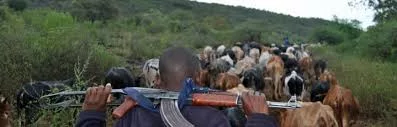
The area has been experiencing attacks linked to pastures, which have left at least a dozen people dead and others wounded in the past months, police said.
According to police, the latest incident was reported on April 25, 2026, at around 9:48 p.m., after gunshots were heard in the area.
A multi-agency security team was dispatched to the scene, which was more than 70 kilometres away from a nearby station.
However, due to poor road infrastructure and limited network coverage, the officers arrived after the attackers—estimated to be about 40 and suspected to be Somali militia—had already fled.
A search of the area led to the discovery of three bodies at Kwa Kamare, all bearing gunshot wounds and deep cut injuries.
Investigators also recovered several spent cartridges of 7.62x39mm special ammunition, suggesting the use of high-powered firearms.
Further information from local residents led officers to the nearby Mwingi Game Reserve, where four additional bodies were found, bringing the total death toll to seven.
One survivor sustained a gunshot wound to the hip and was rushed to Tseikuru Subcounty Hospital, where he is currently receiving treatment.
The deceased have been identified as Nicholaus
Muthi Syengo, 70, Damaris Matei
Mbila, 36, Tito Munyoki Muthi, 27,
Mutua Kituo, 63, Syengo Mwangangi, 65, Kilonzi Kauni, 55 and Mulandi Kauni, 60.
Their bodies were moved to Kyuso Subcounty
Hospital mortuary for preservation and postmortem examination.
Preliminary investigations indicate the attack may
have been a revenge mission following a recent incident in which five members
of the Somali community were reportedly killed by individuals from the Kamba
community.
Security agencies have since intensified patrols
in the area as tensions remain high, with authorities urging residents to
remain calm as investigations continue.
Police fear more attacks will happen in the area. This has prompted the deployment of more personnel to tame the plans. The area is a semi-desert and is expansive, hence difficult to police.
Police headquarters said more personnel had been sent to the area to help in pursuing the attackers for justice.
The region has experienced repeated incidents of inter-communal violence in recent months.
On March 27, 2026, clashes in the Tangamano cluster reportedly left at least 10 people injured. Earlier incidents along the Tana River–Kitui border in April resulted in several fatalities, while violence in December 2025 left at least 14 people dead and displaced more than 1,800 residents.
Security analysts and peace actors have previously linked the recurring clashes to competition over scarce resources, particularly water and pasture, worsened by persistent drought conditions.
The government has been running a campaign to disarm local communities.