South Sudan risks sliding back into large-scale conflict unless urgent political and security interventions are made, a new report warns.
The latest quarterly assessment of the peace deal implementation shows a country struggling to sustain even the basic pillars of stability.
Stalled reforms, persistent violence and deepening political divisions threatening to unravel fragile gains made since the 2018 agreement were also noted.
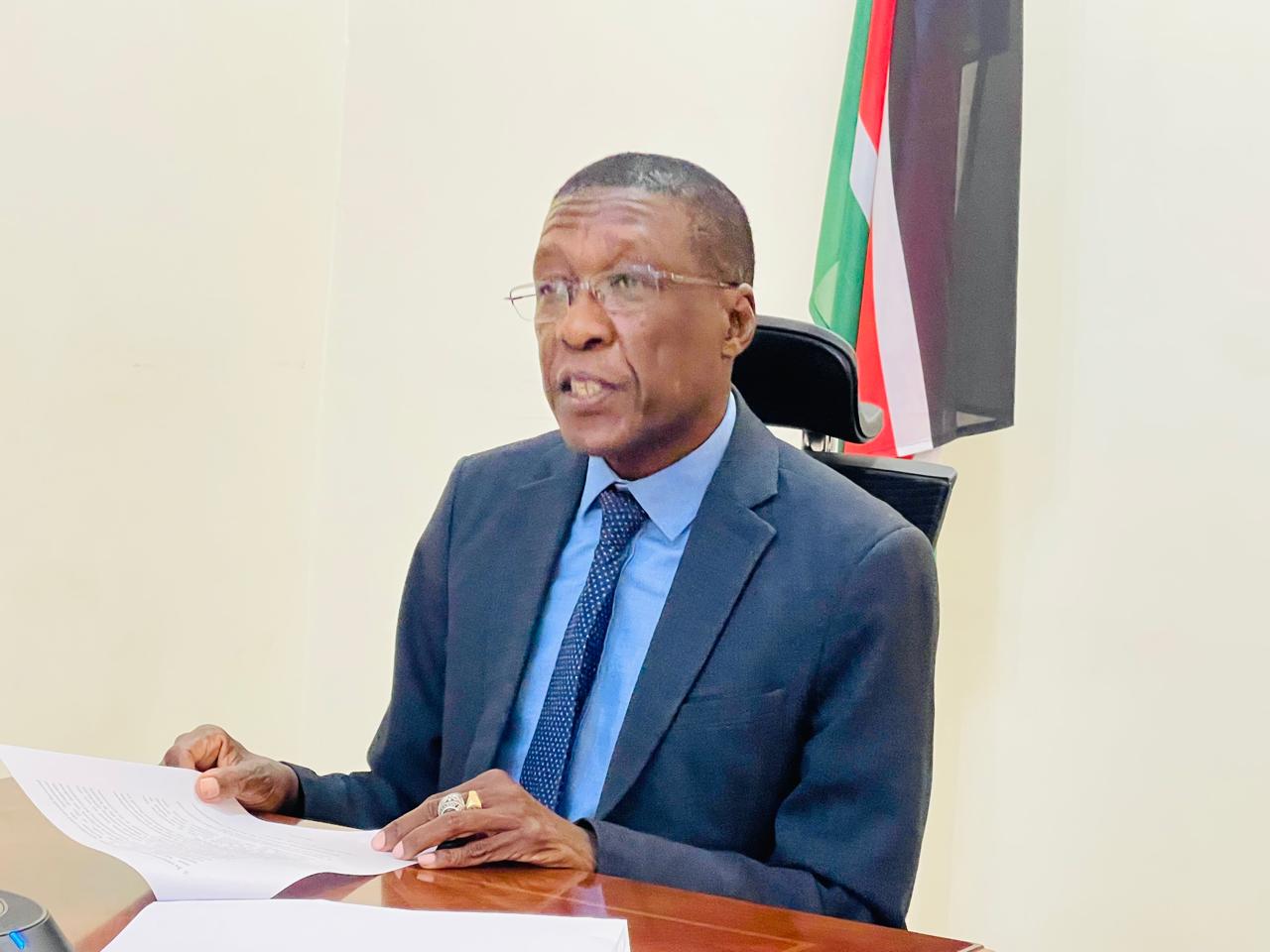
The report by Reconstituted Joint Monitoring and Evaluation Commission interim chairperson Maj Gen (Rtd) George Owinow on the status of implementation of the South Sudan peace deal paints a bleak picture of a transition process that is faltering on nearly every front. It covers January 1 and March 31, 2026.
The report says progress remains minimal across key areas, including governance, security reforms, transitional justice and electoral preparations, with little evidence of the coordinated political will required to drive the transition forward.
Instead, mistrust among political actors has hardened, while unilateral decisions by key players have eroded the consensus-based foundation of the peace deal.
The report documents ongoing violations of the Permanent Ceasefire between the South Sudan People’s Defence Forces and the Sudan People’s Liberation Army-in-Opposition, as well as allied forces. This is despite repeated calls for de-escalation and dialogue.
The report further notes that the Ceasefire and Transitional Security Arrangements Monitoring Mechanism recorded 133 alleged violations during the quarter.
These include armed clashes, crimes against civilians, sexual and gender-based violence, forced displacement and occupation of civilian areas by armed forces.
Crucially, there has been no meaningful progress in implementing security arrangements meant to unify rival forces into a single national army, a crucial part of the peace agreement.
Without this, the risk of renewed large-scale confrontation remains high, as armed groups continue to operate with fragmented command structures and competing loyalties.
“To halt further deterioration and restore confidence in the peace process, there is an urgent need for an immediate cessation of hostilities, coupled with the commencement of an inclusive dialogue in line with the AU C5 Plus Declaration,” the report notes.
“Without these steps, the risk of further political fragmentation and renewed large scale violence will continue to increase, with serious implications for national and regional stability.”
The deteriorating security situation is feeding directly into an already dire humanitarian crisis.
More than two-thirds of the population now requires humanitarian assistance, driven by a combination of conflict, displacement, economic strain and spillover from the war in neighbouring Sudan.
In conflict-affected areas, the destruction of health facilities, disruption of aid delivery, and mass displacement have created conditions that are rapidly becoming unsustainable.
At the same time, the political process meant to steer the country towards democratic transition is losing credibility.
Preparations for elections scheduled for December 2026 are significantly behind schedule, with the electoral body facing severe funding gaps and logistical constraints.
Key steps such as voter registration remain incomplete, raising serious doubts about whether credible, inclusive elections can be held within the set timeline.
Compounding these concerns are controversial proposals to amend the peace agreement, ostensibly to facilitate elections.
The proposed changes go beyond technical adjustments and risk undermining the agreement itself, including provisions that could weaken oversight mechanisms and alter the framework of the transition.
The lack of broad consultation around these proposals has further deepened political tensions, particularly among opposition groups who feel sidelined.
The continued exclusion of key actors from decision-making processes has reinforced perceptions of a shrinking political space, undermining the inclusivity that is essential for a sustainable transition.
Without broad-based participation, the report warns, elections risk becoming a flashpoint for renewed conflict rather than a pathway to stability.
Economic pressures add another layer of vulnerability. While oil production remains relatively stable and non-oil revenues have shown some improvement, the broader economic environment remains fragile.
Inflation, currency instability and weak fiscal management continue to strain both the government and ordinary citizens, limiting the state’s capacity to respond effectively to mounting challenges.
Efforts to advance transitional justice, which is also critical for addressing grievances and fostering reconciliation, have also stalled.
Key institutions, including those tasked with truth-telling, accountability and reparations, remain either incomplete or non-operational, leaving a significant gap in the peace process.
The dynamics point to a transition that is increasingly at risk of collapse. The report makes clear that without immediate steps to halt hostilities and initiate an inclusive political dialogue, the situation could deteriorate rapidly.
Such dialogue, it argues, must go beyond elite bargaining and include a wide range of stakeholders, from political parties and civil society to women and youth groups.
Only through a genuinely inclusive process can trust be rebuilt and consensus forged on the way forward.
The stakes extend beyond South Sudan’s borders. A return to large-scale conflict would not only reverse years of peace efforts but also carry serious implications for regional stability, particularly in an already volatile Horn of Africa.