PERSISTENT drought in parts of Kenya, hunger, low yields and poor earnings have reignited calls for reforms in agriculture with a focus on GMOs.
The clamour comes as about 3.3 million people are reported to face acute food insecurity, mainly in arid areas.
In February, the Cabinet cleared the release of Sh4.1 billion to scale up drought response interventions.
Mandera, Wajir, Kwale and Kilifi counties were placed under the alarm phase, while 12 other counties were put in the alert phase, most of them on a worsening trajectory.
Experts say Kenya stands at a critical crossroads in its agricultural journey, caught between the urgency to feed a growing population and the caution and suspicion surrounding modern scientific interventions and GMOs.
Yet, even as scientific advances increase and state agencies signal readiness, public skepticism ¾ particularly around genetically modified organisms —continues to shape the national conversation.
Government agencies have taken note. In 2022, the government lifted a ban on GMO imports, opening the door to wider adoption. But the policy shift has not translated into widespread acceptance.
Civil society groups have mounted spirited campaigns against GMOs, focusing on what they call environmental risks and long-term health dangers and the clear corporate control of seeds.
These fears, while often contested by the scientific community, resonate deeply with a public wary of external influence over food systems.
The Court of Appeal ruled against the government's decision to lift the ban on GMOs on March 7 last year, throwing a spanner in Kenya’s quest to adopt biotechnology in food production, widely adopted in key global economies.
The contradiction is stark: Kenya continues to accept genetically modified relief food during periods of acute hunger, particularly in arid and semi-arid regions.
During the 2023 drought, thousands of tonnes of imported maize, some of it genetically modified, were distributed to vulnerable communities.
For many recipients, the priority was survival, not the origin of the grain.
“We ate what we were given. At times, you have no choice and we have not had any health challenges,” recalls a resident of Turkana who asked not to be named. “When you are hungry, you don’t ask many questions.”
This uneasy balance of accepting GMOs in times of crisis while resisting their integration into routine local farming highlights the complexity of Kenya’s position.
The Kenya Agricultural and Livestock Research Organisation and the National Biosafety Authority have both renewed calls for controlled use of certain genetically modified crops, citing rigorous scientific assessments.
They argue that delays undermine long-term food security, whereas the adoption of technologies could reduce dependence on imports and aid, and also increase yields and farmers’ earnings.
MP John Mutunga, chairman of the National Assembly Agriculture Committee, said these GMO crops can survive at least 70 per cent drought, resist pests and disease. The Tigania West lawmaker said GMOs have been scientifically proven to be safe with all due processes followed.
"Kenya receives aid, including GMO-developed produce, and people eat it,” he said.
“There is no problem with GMOs ¾ science does not lie,” Mutunga told farmers in Trans-Nzoia during a recent sensitisation forum. “So long as it does not hurt crops and existing genetics and health, there is no problem.
“Don’t listen to politics; politicians and civil society have their own agendas. We are suffering because of ignorance.”
The NBA said GMO safety verification is done under very strict guidance and supervision and must meet all the required standards both pre- and post-production.
NBA evaluates the application based on relevant data for environmental and food safety assessment as well as history of use on a case-by-case basis.
If granted approval, the applicant is required to provide a monitoring plan, including a stewardship plan to ensure proper and responsible use of the GMO.
These include all GMOs, whether plant, animal or microorganisms for environmental testing, research, demonstration and development of novel varieties, breeds, and strains.
“No one is allowed to conduct GMO research, release, import, export, transit the market without written approval from NBA,” said Erick Korir, principal biosafety officer at the biosafety authority.
He said if well done, it has a huge potential to greatly improve Kenya’s food security and can have a transformative economic impact on farmers.
Farmer Pauline Choge from Trans-Nzoia, has been trained in GMO use. “Climate change is here and it is taking a toll on farmers,” she said. “We also spend a lot on chemicals but we still suffer losses. I am very happy to adopt GMO since it will cut my costs and losses and it is safe altogether.I have learnt a lot on it and I would be glad to plant GMO maize.”
Farmer John Mutua from Mwingi Central in Kitui county says rains have been erratic for years, and traditional farming methods are no longer reliable in producing good harvests.
Last season, however, Mutua participated in a pilot programme using SMO techniques — introducing beneficial soil microbes to improve nutrient uptake and water retention.
The results were striking: his yields nearly doubled despite below-average rainfall.
“Before, I depended only on fertiliser and prayers,” he said with a wry smile. “Now, the soil itself is working with me.”
He has been keen to adopt Bt maize, an approved GMO maize that incorporates genes from the soil bacterium, allowing the soil to produce proteins toxic to specific pests, notably stem borers and fall armyworms.
It offers natural, built-in protection, reducing the need for chemical insecticides and lowering production costs. Studies have shown it to increase yields by 4.52 per cent to 25.41 per cent.
Mutua is less concerned with the politics and more with the promise of stability.
“We cannot farm like our fathers did,” he said. “The world has changed. If these technologies can help us feed our families and earn a better living, we should at least be willing to try.”
Kalro scientist Dr James Karanja, who is centre director for the Food Crops Research Centre, Njoro, said Bt maize, for instance, is no different to someone who has costly chemicals to kill weeds and crop diseases.
“We have looked at the problem in the soil and solved it by developing more resistant seeds un affected by the same disease, so the farmer doesn’t need to use these chemicals,” he said.
“It is like the Covid-19 vaccine we took or the vaccines we normally get,” he said. “It is to prevent. You see people using a lot of chemicals to get rid of diseases, so we use agro-biotechnology to address these challenges. Remember, these chemicals sprayed on food crops are also hazardous.”
The process is basically getting new crop varieties through molecular breeding (also known as marker-assisted breeding), the process of selecting a plant for its superior quality or desired trait. This is done by examining its genetics, then identifying (or marking) which plants contain the same piece of beneficial DNA.
“Several steps of backcrossing are necessary to get rid of undesired genes,” Karanja said.
So far, Kenya has four Bt registered maize varieties approved by the biosafety authority in 2022.
Eight varieties of virus-resistant cassava were approved for environmental release in 2021.
“Research on potatoes has been completed, but public participation cannot happen due to the court case,” NBA’s Korir told the Star.
Experts say that these crops, if adopted, could help reduce food insecurity.
Bt cotton, on the other hand, has already been commercialised and available to farmers in 20 counties.
Approved GMO products must be clearly labeled, which according to NBA, supports transparency, traceability and informed choices.
“Kenya is moving forward towards biotechnology,” said Susan Kiambi, regulatory affairs manager at Bayer East Africa. “And with examples from South Africa that is very successful in this technology, and from Ethiopia and Nigeria coming up very fast, it is a sure testament of what is possible.It means more food, stronger farmer income and a resilient climatic agricultural sector.”
Cereal Growers Association official Julius Nyabicha says that with numerous challenges including failing rainfall and crop diseases, it is time Kenyan farmers adopted more resilient seeds. He is the lead for marketing and communication.
More than95 per cent of farmers depend on rain-fed agriculture.
“Agriculture is becoming increasingly expensive to undertake and profit margins are becoming leaner because of these challenges,” Nyabicha said.
He said farmers are putting a lot of money into agriculture, pesticides, fertiliser and irrigation, which they cannot afford anymore based on diminished returns.
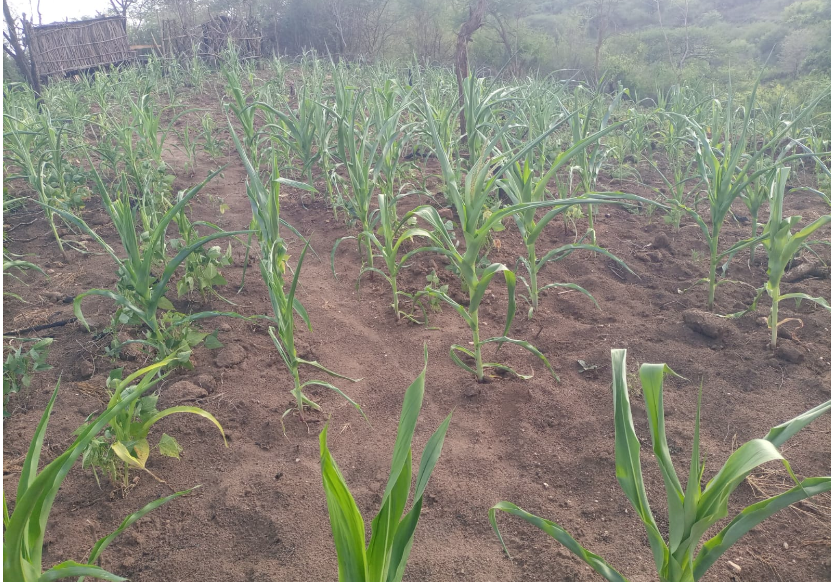
Yields have dropped to below 10 bags per acre in some regions due to crop diseases and erratic weather patterns.
With Bt maize, trials have proved that farmers can get more than 25 bags per acre with minimal spending, boosting their earnings. “We must start adopting seeds that can withstand erratic rainfall, mature fast and withstand the infestation of pests,” Nyabicha said.
Proponents of biotechnology say the focus should shift from fear to informed choice.
They point to successful examples in other African countries where biotech crops have improved yields and farmer incomes without the dire consequences often predicted.
Biotech crops are the fastest adopted crop technology. In 1996, there were 1.7 million hectares (4,200,791 acres) planted with biotech crops, official data show.
By 2019, about 29 countries had 190.400,000 hectares (9,470,488,646 acres) representing a 112 per cent-fold increase. Ninety-one per cent of the area is in the US, Brazil, Argentina, Canada and India, with 42 countries importing.
Crops included cotton (79 per cent), soybeans (74 per cent), maize (31 per cent) and canola (27 per cent), with 146 cases of maize at the time having been approved in 35 countries, with key traits being insect resistance and herbicide tolerance.
Today, the number of countries that have adopted biotech, including in Africa has grown.
For instance, in South Africa, about 80 per cent of maize is currently genetically modified, and this has helped improve yields immensely since the early 2000s.
“Biotechnology when responsibly applied offers practical solutions, from drought-tolerant crops to pest-resistant varieties that reduce losses and dependence on costly inputs,” Bayer East Africa managing director John Kanyingi told the Star.
Kenya has been spending at least Sh500 billion annually on food imports, including maize and wheat, with hunger continuing to sentence hundreds of people and animals to death every time a drought strikes.
Kenya's annual maize requirement stands at 52 million bags — covering human consumption, livestock feed manufacturing and seed multiplication, but production remains only at around 37 million bags, forcing the country to import.
Demand is expected to hit 85 million bags (90kg) by 2050, according to Kalro.
Experts say that bridging the gap, mainly on trust and adoption of GMO by countries like Kenya, will require more than policy approvals.
It will demand transparent communication, farmer education and inclusive dialogue that addresses public concerns without dismissing them, they say.
“No single actor can transform food systems alone. Governments, the private sector, NGOs, academia, and farmers each plays a role,” Kalro’s Karanja says. “Policies must enable scaling while safeguarding health, environment and farmer rights.”
Kenya as of August last year had lost about $157 million (Sh20.3 billion) in five years due to delays in adopting three genetically modified crops — Bt maize, Bt cotton, and a late blight disease-resistant potato, researchers reported.
The government has reiterated its commitment to the safety of GMOs through a robust biosafety regulatory and institutional framework, and proven scientific research on various products.
Agriculture CS Mutahi Kagwe said the Cabinet’s decision was aimed at addressing food security challenges, hastened by prolonged droughts, and enhancing agricultural productivity through biotechnology.