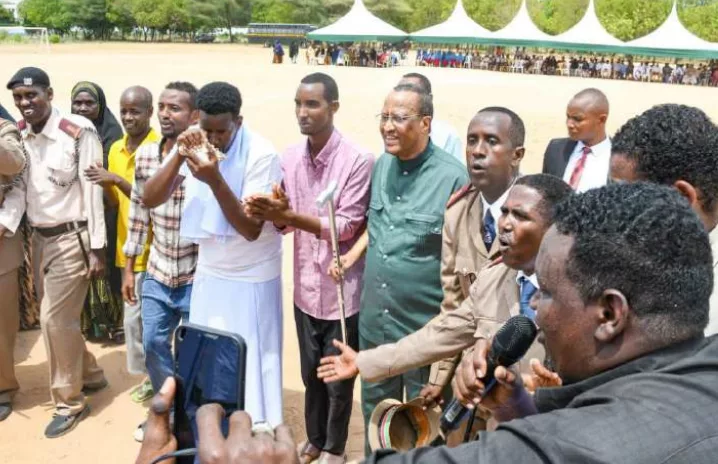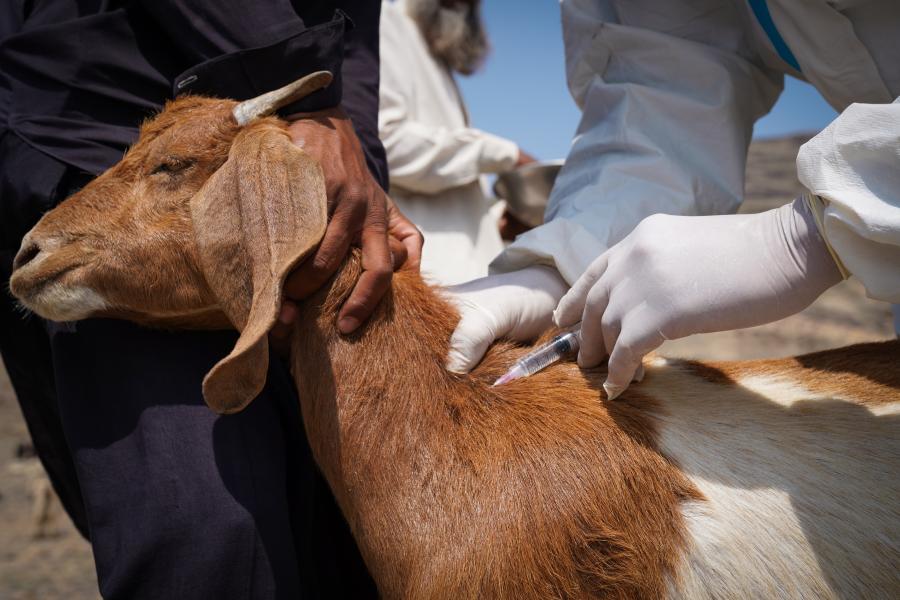
The livestock department in Garissa on Saturday launched a 13-day livestock vaccination campaign in Dadaab.
The vaccination targets at least 80,000 animals to curb disease outbreaks and protect pastoral livelihoods.
The exercise, being implemented in partnership with the Danish Refugee Council (DRC), covers four wards — Liboi, Damajale, Labisigale and Abakaile — where veterinary teams will provide vaccinations, treatment, deworming and vector control services.
The campaign will prioritise vaccination against key diseases, including Peste des Petits Ruminants, Contagious Caprine Pleuropneumonia and Foot and Mouth Disease, which pose a significant threat to livestock productivity and trade.
County livestock executive Milgo Keinan, who led the exercise in Labisigale, urged herders in the targeted areas to present their animals for vaccination.
He emphasised that the success of the campaign depends on community participation.
“Today marks a significant milestone for Garissa county as we officially launch this large-scale livestock vaccination exercise, an initiative that speaks directly to the heart of our economy, our culture and our way of life,” she said.
She said the drive comes at a critical time, as the onset of rains often leads to a rise in livestock diseases.
“We are targeting over 80,000 animals, and we are calling on pastoralists across these wards to take advantage of this exercise by availing their livestock for vaccination,” she said.
County veterinary teams will be deployed across the wards to ensure wider coverage and provide on-site animal health services.
She said the initiative is expected to benefit more than 1,100 livestock-keeping households and help reduce losses linked to preventable diseases.
Mohamed Hussein, a pastoralist in Dadaab, welcomed the exercise, noting that it will go a long way in protecting livestock from major diseases, improving animal health, enhancing productivity and strengthening the economic stability of their communities.
“Healthy animals mean better market value, increased milk and meat production, and improved livelihoods for our pastoralist families,” he said.
“Livestock is not just an economic activity in Garissa; it is the backbone of our livelihoods. It feeds families, pays school fees, sustains trade and supports thousands of households across the county,” he added.