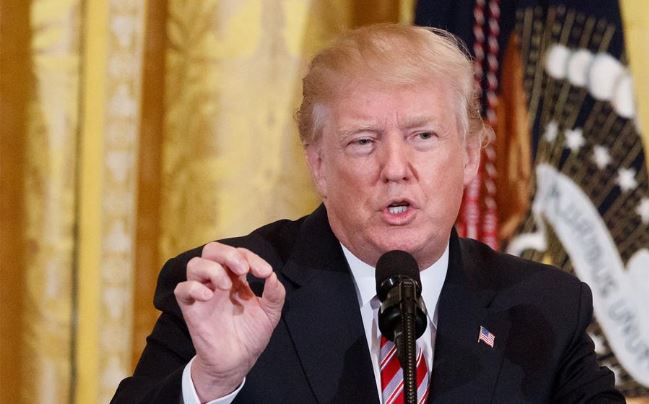
 US President Donald Trump/Screengrab
Trump says Iran has "no choice but to send" delegates to Pakistan for talks with the US. In an interview with CNBC, the president says he is confident the US will "end up with a great deal".
He says that the US is "not dealing with the nicest people" but are doing so "successfully", before calling the US naval blockade a "tremendous success".
Asked if he would extend the ceasefire if negotiations seemingly progress, the US president says: "I don't want to do that."
Trump later says: "I expect to be bombing 'cause that would be a better attitude."
He says there is not "much time" to reach a deal, and that Iran can get themselves on "a very good footing" if they reach one with the US.
The US president is, it seems, so far optimistic about the prospect of negotiations in Iran.
But still, Trump is using a carrot-and-stick approach with regards to Iran. While a deal is still on the table, Trump noted that the US has used the two-week ceasefire to replenish its forces in the region and that he is prepared to continue strikes if need be.
Notably absent from his comments, however, is what concessions he is willing to make in the negotiations. We also don't know the deal he hopes for, other than his red line of Iran "never" being able to manufacture or possess a nuclear weapon.
As the clock ticks down on a ceasefire declared between the US and Israel and Iran, as yet there is no confirmation of further peace talks.
Iran's parliamentary speaker posted on X to say that Iran has been "preparing to show new cards on the battlefield" in the last two weeks and would "not accept negotiations under the shadow of threats".
Meanwhile, Trump has denied he is under pressure to make a deal, while US media report that Vice President JD Vance will travel to Pakistan on Tuesday for talks. Trump adds that it is "highly unlikely" a two-week ceasefire between the US and Iran, due to expire on Wednesday, will be extended.
While there is much uncertainty about the next round of talks between Iran and the US in Islamabad, Iranian officials have been saying most of them have talked about their scepticism of the US, but this is nothing new.
While Iranian Foreign Minister Abbas Araghchi told his Pakistani counterpart yesterday that US actions, statements and "excessive demands" signal Washington’s "lack of seriousness for diplomacy," it wasn’t him who said today that Iran has "no plans for the next round" – that was the foreign ministry’s spokesperson.
After Trump announced the next round of talks, we’re yet to hear from Iran’s parliamentary speaker Mohammad Bagher Ghalibaf, who was leading the delegation during the talks in Islamabad, on whether the talks are going ahead or not.
Meanwhile, Iranian President Masoud Pezeshkian said today that diplomacy "should be used to reduce tensions", but there's a question over how much power he actually comparatively holds.
There are voices inside the establishment who oppose the talks, including hardline clerics. But it is yet to be seen if these voices can stop the talks altogether or not.