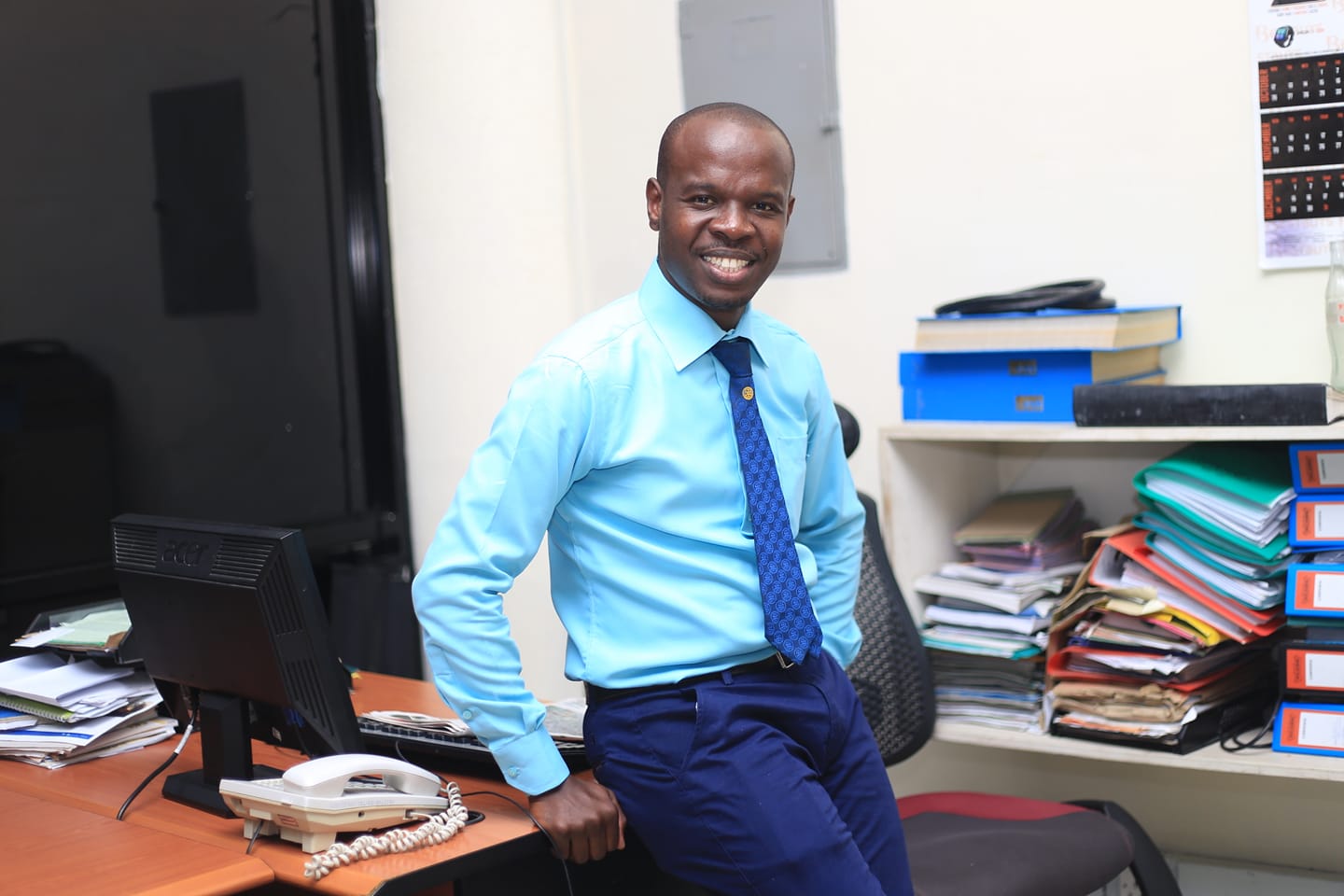
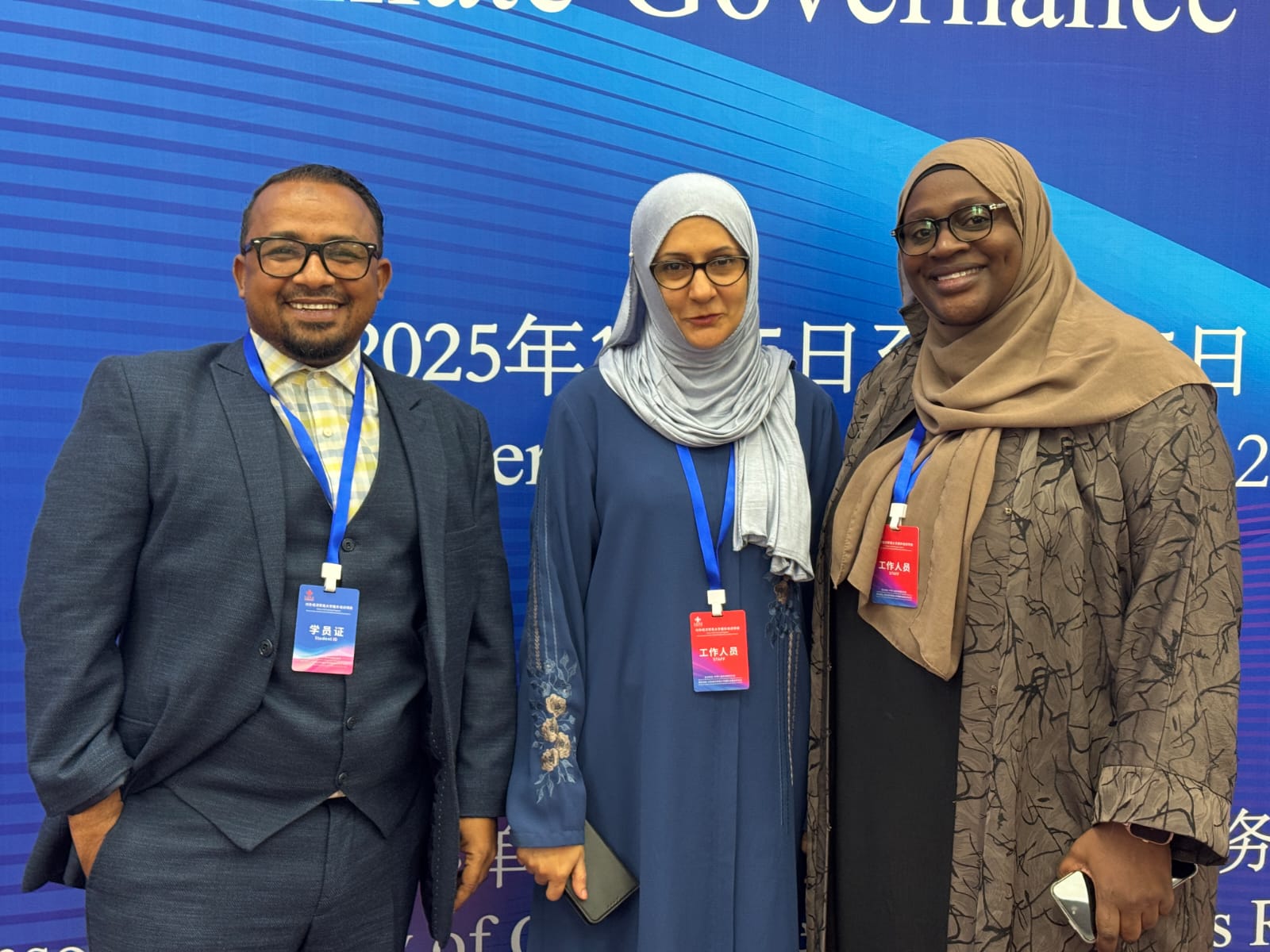
When Mudathir Abdulkarim boarded his flight from Kenya to China in November last year, he carried more than just luggage.
He carried the hopes of a growing network of young professionals under Dream Team CBO, a community-driven organisation rooted in empowerment, human development and opportunity.
What awaited him in Beijing would not only reshape his understanding of the world but also deepen his sense of responsibility to his country and continent.
Mudathir describes the organisation as a lifeline for young people navigating careers and entrepreneurship.
Founded under the guidance of their patron, Mama Salma Noor, the CBO has built a powerful network of professionals, from doctors and lawyers to entrepreneurs and volunteers, all bound by a shared vision of uplifting communities.
“We are like a support system. If I need a doctor, I have one. If I need a lawyer, I have one. If I need people to volunteer for a project, I can call them. It’s about empowering ourselves so we can empower others,” he says.
Through this network, Mudathir earned a coveted opportunity: a three-week training in China focusing on climate change diplomacy for developing countries.
A classroom beyond borders
Hosted at the University of International Business and Economics in Beijing, the programme brought together participants from across the developing world: Kenya, Fiji, South Sudan, Ethiopia, Suriname, Azerbaijan, among others.
For Mudathir, the experience was both academic and deeply personal.
“The training opened my eyes to how fragile our climate is. We are taking too much for granted,” he reflects.
Lectures were delivered by top experts, blending theory with real-world application. Participants explored how countries like China have integrated green energy into industrial growth, from electric mobility to solar innovation.
But the lessons hit closer to home.
Mudathir began connecting global climate discussions to local realities in Kenya: unpredictable rainfall patterns, prolonged droughts, food insecurity and even conflict among pastoralist communities.
“These are not just environmental issues. They are social and economic challenges. When pasture disappears, people move further. Families are left vulnerable. Tensions rise,” he explains.
He also points to the Coast, where fishermen are forced to venture deeper into the ocean due to changing marine ecosystems, often with limited equipment.
Beyond the lecture halls, field visits brought theory to life.
Mudathir toured industrial complexes that have embraced green technologies, witnessing how China is re-engineering its manufacturing systems to align with climate goals.
For him, the takeaway was clear: Africa, and Kenya in particular, has a unique opportunity.
“Kenya is already largely powered by green energy. But we haven’t fully utilised wind and solar. This is our chance to industrialise sustainably, unlike others who relied on coal,” he said.
He sees potential for partnerships between Kenya and China, especially in electric vehicles, solar power and energy storage—sectors that could position Kenya as a leader in East and Central Africa.
“Whatever Kenya does, the region tends to follow. We can set the pace in green industrialisation,” he says.
While the academic experience was enriching, it was everyday life in China that left some of the deepest impressions.
Mudathir admits he arrived with certain expectations: that Chinese society would be rigid, distant, perhaps even unwelcoming.
He was wrong.
“One of the biggest shocks was how hospitable people were,” he says.
He recalls a moment with a taxi driver who refused a tip.
“He told me, ‘What you have paid is my honest wage. You are a guest in my country. I cannot take more from you.’ That stayed with me.”
To Mudathir, it reflected a strong sense of dignity and self-respect embedded in everyday interactions.
Precision and discipline
Another striking difference was time discipline.
“In China, when they say 5pm, they mean exactly 5pm—not a minute later,” he says with a smile.
From transport schedules to academic sessions, everything operated with precision. Buses arrived on time, meals were served promptly and daily routines flowed seamlessly.
The efficiency extended to infrastructure as well. Despite Beijing’s massive population, the city felt surprisingly calm and organised.
“The roads were full of cars, but it was quiet. Most of them were electric vehicles,” he recalls.
Underground subway systems carried the bulk of commuters, keeping the streets decongested and orderly.
Away from modern infrastructure, Mudathir explored China’s rich heritage, visiting landmarks such as the Forbidden City, the Summer Palace and the Great Wall.
Standing before centuries-old architecture, he was struck by the continuity of Chinese civilisation.
“You can see more than 5,000 years of history leading to where they are today. It shows what happens when leadership and people move in the same direction,” he says.
Perhaps the most unexpected lessons came from observing everyday life.
In parks and public spaces, Mudathir encountered elderly citizens—some in their 70s, 80s and even 90s—engaging in morning exercises, dancing and practising Tai Chi.
“They were full of life: happy, energetic, welcoming. We were happy to join them during one of these sessions,” he says.
The contrast with many elderly populations back home in Kenya was stark.
“It made me realise that if you take care of your body now, it will take care of you later.”
Environmental conservation was another standout. In some regions, trees are preserved at all costs, even supported with structures to keep them alive.
“I saw how seriously they take climate and nature. It’s not just policy—it’s a way of life,” he says.
A journey that continues
As Mudathir returns to Kenya, his journey does not end—it evolves.
Armed with knowledge, experience and a renewed sense of purpose, he hopes to contribute to conversations around climate action, youth empowerment and sustainable development.
Mudathir is quick to acknowledge the role of the Chinese government and embassy in making the experience possible.
“My deepest and most profound gratitude goes to the Chinese government and the Chinese Embassy in Kenya for sponsoring this trip. It has opened our eyes to what is possible when you think globally but act locally,” he says.
He notes that in recent years, more Kenyans—including media professionals and industry players—have benefited from similar training opportunities in China, creating a ripple effect of knowledge and exposure.
Back home, Mudathir is already translating lessons into impact.
Working with Dream Team CBO and other community groups, he is involved in reforestation efforts along the coast, particularly mangrove restoration in areas such as Gazi in Kwale and Makupa Creek in Mombasa.
In Kilifi county, he is collaborating with local organisations to rehabilitate areas degraded by sand mining, using indigenous tree species.
“This is just the beginning. We are starting at the grassroots level,” he says.
For Mudathir, the journey to China was not just about learning—it was about responsibility.
From climate diplomacy halls in Beijing to community fields in coastal Kenya, his path reflects a growing movement: young Africans stepping onto the global stage, learning, adapting and returning home to build.