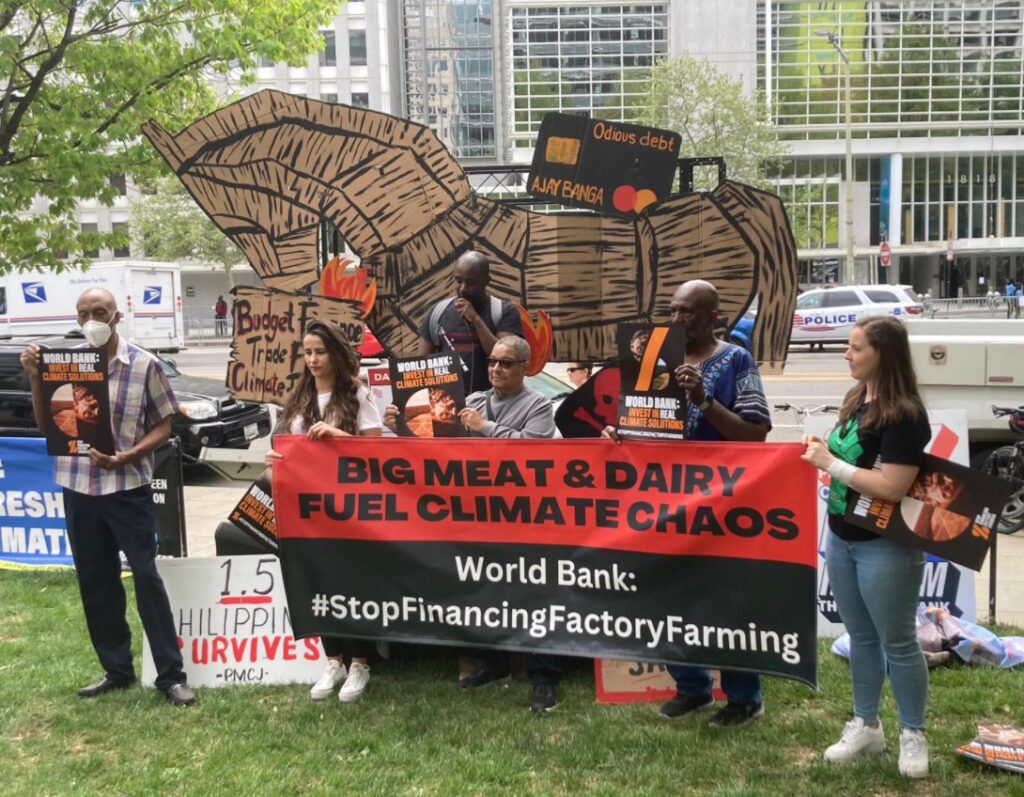
More than 30 civil society organisations have called on the World Bank Group to stop financing industrial livestock production and redirect funds to sustainable, small-scale food systems.
The call comes during coordinated global actions across 25 countries held alongside the World Bank and International Finance Corporation Spring Meetings.
The mobilisation aims to spotlight the continued use of public funds to support factory farming, a model widely linked to climate change, biodiversity loss, public health risks and food insecurity.
Campaigners argued that “public funds should not be used to expand factory farming systems that threaten communities, animals and the environment,” warning that current financing trends are misaligned with global sustainability goals.
Data shows the World Bank Group invested approximately $1.4 billion (Sh182 billion) in industrial livestock production between 2023 and 2024.
Its private sector arm, the International Finance Corporation, approved 38 investments worth nearly $2 billion (Sh260 billion) between 2020 and 2025.
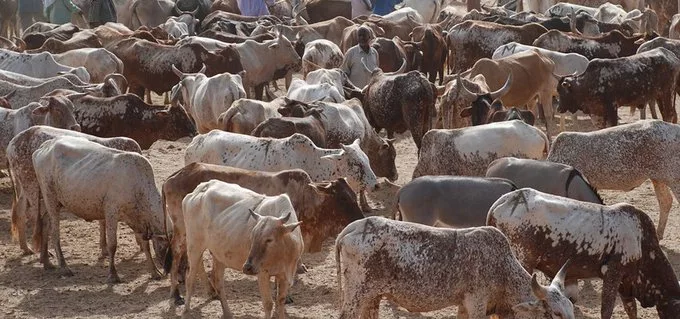
Sub-Saharan Africa has emerged as a key recipient of these funds.
According to a 2023 white paper by the Stop Financing Factory Farming Campaign, the region received 22 of 62 animal agriculture projects across developing regions, valued at approximately $1.395 billion (Sh 181.35 Billion)
This represents 41.9 per cent of the $3.3 billion (Sh429 billion) in total direct support from development finance institutions.
The figures have raised concerns about the long-term impact on rural livelihoods, ecosystems and climate resilience across Africa.
World Animal Protection said such investments risk undermining traditional African food systems, which rely heavily on smallholder farmers.
“Africa’s food future depends on investments that strengthen smallholder farmers, protect ecosystems, and ensure long-term food security,” the External Affairs lead at World Animal Protection, Sally Kahiu, said.
She added, “Public funds should not be used to expand factory farming systems that threaten communities, animals and the environment.”
Despite growing criticism, the World Bank Group plans to expand its agribusiness portfolio to $9 billion (Sh1.17 trillion) annually by 2030.
At the same time, the International Finance Corporation is reviewing its environmental and social performance standards.
Campaigners described the moment as a critical opportunity to align financing with climate commitments, biodiversity protection and sustainable development goals.
The Stop Financing Factory Farming Campaign is urging international financial institutions to adopt transparent policies that phase out funding for industrial livestock operations.
“Public finance should be a force for equitable development, not a driver of environmental harm and social exclusion,” Executive Director of the Youth in Agroecology and Restoration Network, Opeyemi Elujulo, said.
Elujulo said the issue is not just about what is being funded, but also, what is being neglected.
He noted that, “Agroecological and community-led food systems, widely recognised for their potential to enhance biodiversity, strengthen local economies and build climate resilience, remain chronically underfunded.”
The Executive Director therefore said, “Redirecting financial flows toward these approaches is both a moral imperative and a strategic necessity to eliminate dependency and inequality.”
Campaigners said the global actions are intended to push institutions to rethink their investment strategies and prioritise systems that support long-term sustainability and food security.