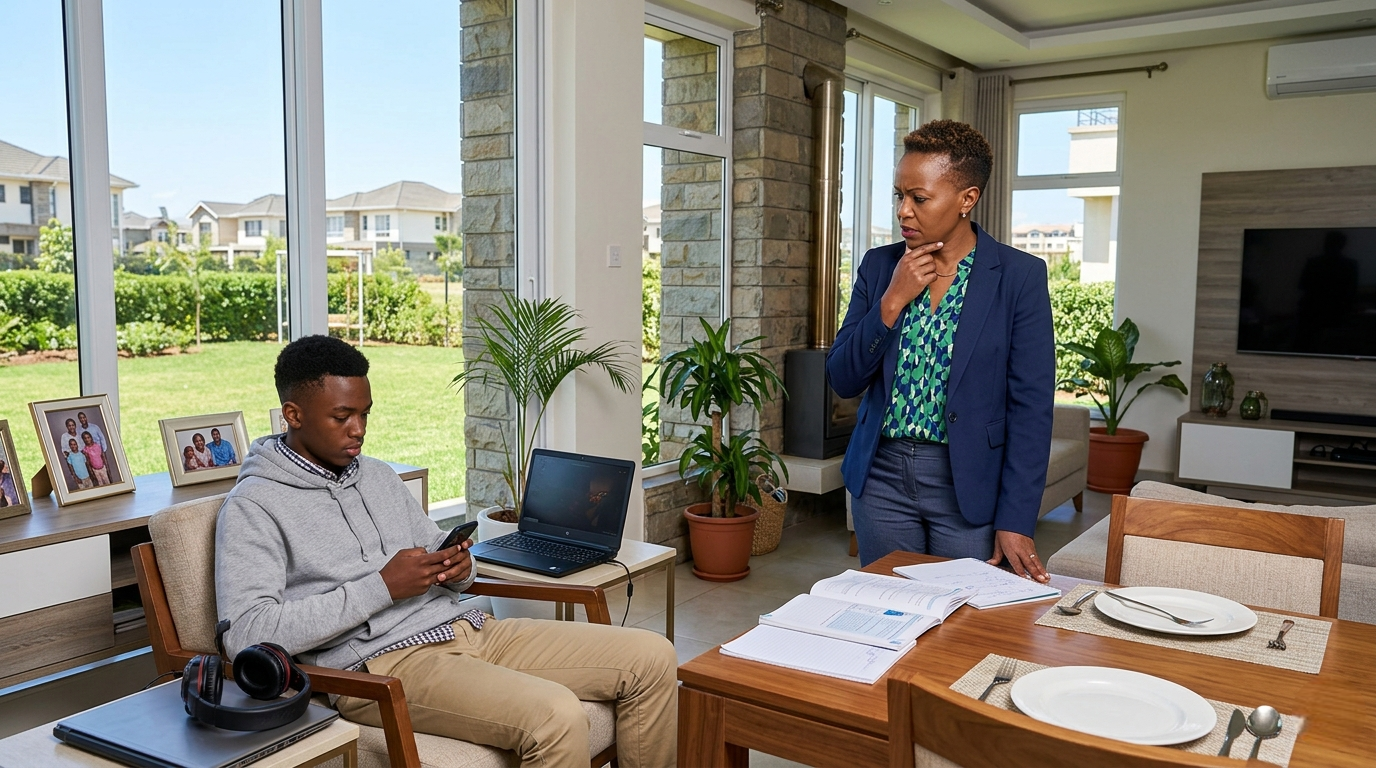
After an emotional conversation with a family member I began to see a pattern that attaches itself to the ‘problems’ of certain people in my life. My relative, like most mothers of teenagers, was going through a rough patch with her son as she found herself using too much energy to force her son to do his school work during this holiday period.
The teenager, according to the mother, had no understanding of how instrumental education is to the life he will live after high school. Like most his age born after the boom of the Internet, he believes he will make a lot of money by staying home and doing something on the Internet.
What is something? What industry will it be in? How will you manage to have the discipline to work certain hours doing whatever it is? These are questions he has no answers to.
As she continued on about the boy’s lack of enthusiasm, especially when there is no electricity, it hit me: The kids who always perform the best in our country always came from the poorest backgrounds, where they had no electricity and definitely none of the comforts middle class kids took for granted.
“You don’t think he is too comfortable because he is middle class, is he?” I found myself asking.
While the middle class makes up a majority of society’s economic strata in every part of the world, there is a reason the middle class has always remained the biggest economic group throughout humanity’s existence. Comfort. There is a certain level of comfort that comes with knowing one has a roof over their head, a car in the garage, three meals a day, tuition and all the small luxuries that make them believe they have everything they need.
As a result, children born into the middle class believe they will be okay no matter what. They believe with or without education, their lives will be pretty much the same. Money can be made somehow and they will be alright. They are imbued with a laziness that is a byproduct of comfort, which is why most parents of teenage kids have a hard time pushing their kids to finish school.
I came to realise that the situation my relative was in was, in fact, more common than we dare to say out loud. Most parents will brag about which school their child goes to, but they will never relay the realities of their mornings and how they have to drag their children out of bed to take them to school. They will not share their feelings of being broken-hearted when they see mediocre school reports after spending two months’ salary on tuition alone.
It reminded me of a similar conversation with my neighbour. Bear in mind I live in a foreign country, with neighbours from foreign countries as well, but the complaint was the same. “I’m sure you can hear me yelling,” she lamented to me as we ran into each other one day. “I have to yell every day for my son to do his homework. I tell him all the time, at this age, your one job is to do your school work.”
She was complaining about how her son came home after school, complained he was tired, found multiple options on the table for lunch, played video games and it was finally time to do his school work but he was still complaining that he was too tired to do his homework.
The problem with the comfort of the middle class extends beyond schoolchildren. Parents work hard enough to afford the house, the car, buying groceries and paying off loans, before repeating the cycle every month of the year. I have walked into multiple offices over the years and found people who worked in the same positions more than 10 years ago, still sitting in the same chair, in the same corner and holding the same title as they did 10 years prior.
I do wonder, though, that other than the comfort we have that we have enough to survive, could the system be rigged to keep us worker bees in our place? Are we meant to work, pay bills, enjoy life just enough to believe that we work hard and play hard?
We live in a world where affording the basic necessities has already put us into a bracket that society and government dictates that what we have is enough. As long as everyone gets their cut (taxes, tuition, bills and so on), then it is enough for today.