As a Gen Z, I used to treat voter registration the way I treat gym memberships in January. A road paved with good intentions, zero follow-through and a quiet belief that my absence wouldn’t really change anything. Elections came and went, politicians made their usual promises and I perfected the art of shrugging. “Nothing ever changes,” I’d say, like I was quoting some sacred Kenyan proverb instead of recycling my own apathy.
Then a Gen Z movement happened. Or more specifically, Niko Kadi happened.
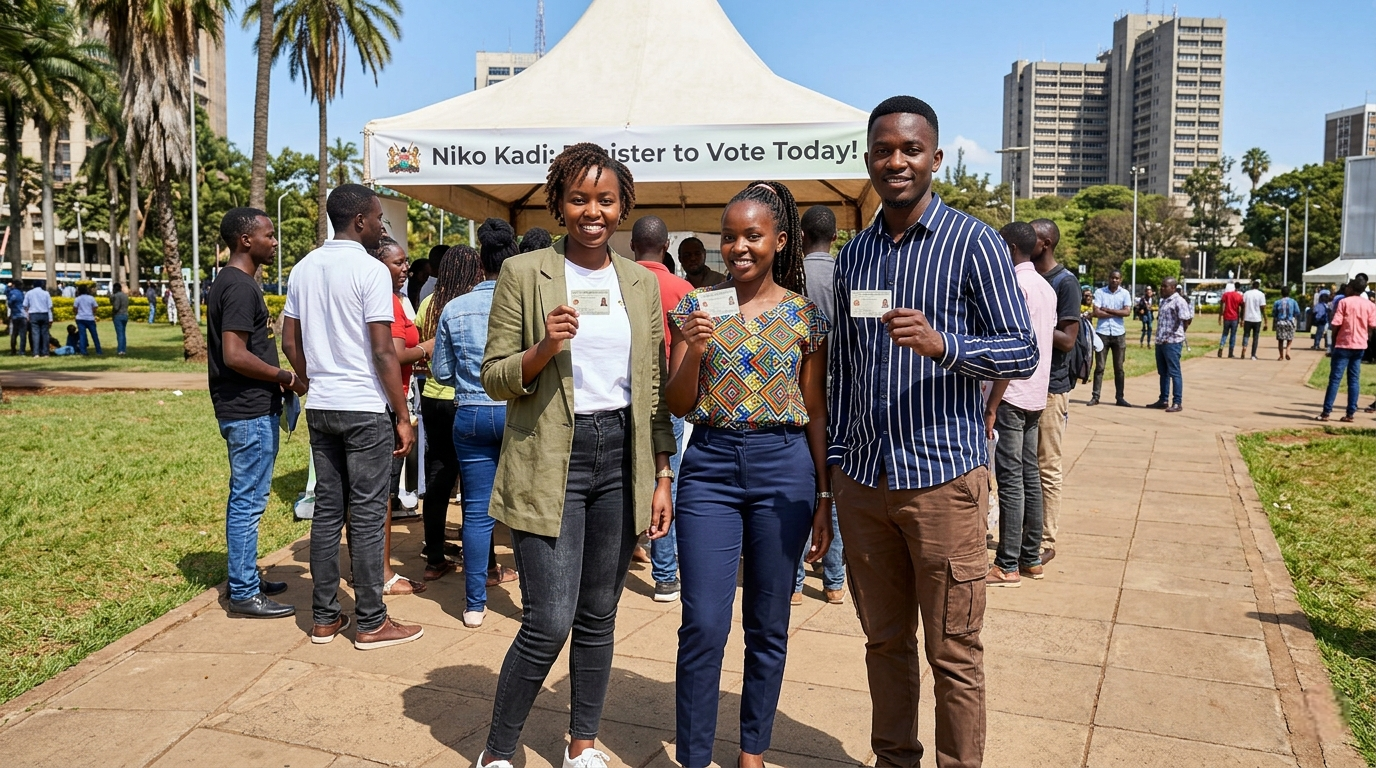
If you’ve been anywhere near Kenyan social media lately, you’ve seen it. Niko Kadi is the rallying cry of a generation that has decided, loudly and unapologetically, to register as voters. It’s not just a statement; it’s a flex. People post selfies outside registration centres, pictures of registration cards held up like badges of honour, captions dripping with pride and just a hint of defiance. It is civic duty turned into cultural currency.
At first, I rolled my eyes. I mean, we’ve had voter drives before. Politicians have always begged young people to show up, usually right before elections, usually with empty promises wrapped in flashy slogans. What made this any different?
But then something strange happened. My group chats changed. Instead of the usual memes and weekend plans, my friends started sending each other locations of registration centres. One Saturday morning, I woke up to 17 missed messages, all variations of: “Uko Kadi” and “We’re going today, no excuses.” It felt less like peer pressure and more like peer awakening.
I remember standing in line outside a registration centre in Ruiru, sweating under the mid-morning sun, wondering how I got there.
In front of me was a girl no older than 20, loudly explaining to her friend why she refused to “complain online and then ghost the ballot”. Behind me, a boda rider kept refreshing Twitter, occasionally chuckling and saying, “Watu wako serious this time.” And that’s when it hit me. This wasn’t just a trend. It was a shift in mindset.
For years, many of us, myself included, have worn cynicism like armour. We’ve watched corruption scandals unfold like predictable soap operas. We’ve seen leaders recycle themselves like plastic bottles. It’s easy to become convinced that the system is rigged beyond repair.
But here’s the uncomfortable truth I had been avoiding: Opting out doesn’t make you neutral. It makes you complicit. By not voting, I wasn’t rejecting bad leadership, I was quietly allowing it.
That realisation didn’t come from a lecture or a political ad. It came from watching people younger than me take ownership in a way I hadn’t. People who have grown up entirely in the digital age, who understand the power of visibility, who know that trends can shape narratives and narratives can shape reality.
Of course, not everyone is convinced.
“I get the hype, but honestly, I don’t think my one vote will change anything,” says Galvin Ogutu, 22, a university student I spoke to. “It feels like the system is already decided before we even show up.”
And I get that. I’ve been Ogutu. There’s a certain comfort in believing your actions don’t matter. It frees you from responsibility. But it also traps you in a loop of helplessness.
On the flip side, there’s Pendo Makena, 19, whom I met in that same registration line. She put it more bluntly. “Our parents voted and still got disappointed, but at least they tried,” she said. “We can’t inherit a broken system and then refuse to touch it.”
That tension between skepticism and hope is exactly where this movement lives. And maybe that’s what makes it powerful. It’s not blind optimism. It’s informed participation.
What’s fascinating about Niko Kadi is how it blends activism with identity. Registering to vote is no longer just a bureaucratic task; it’s a statement about who you are and what you stand for. In a country where youth make up a significant portion of the population, that matters. Numbers matter. Visibility matters. Momentum matters.
And let’s not pretend social media isn’t doing the heavy lifting here. Platforms that once amplified dance challenges and viral jokes are now amplifying civic engagement. The same algorithms that push trends are now, inadvertently or not, pushing democracy.
But trends are fickle. Today it’s Niko Kadi, tomorrow, it could be something else entirely. The real question is whether this energy will last beyond the registration phase. Will it translate into informed voting? Into holding leaders accountable? Into sustained engagement beyond election cycles?
I don’t have all the answers. But I do know this: Standing in that line, ID in hand, I felt something I hadn’t felt before: ownership. Not over the entire system, but over my place in it. And maybe that’s where change actually begins. Not in grand speeches or viral hashtags, but in small, uncomfortable decisions to show up when it’s easier not to.
So yeah, I used to say my vote didn’t matter. Now I’m starting to think that was just a convenient excuse. Because if enough of us decide we’re Kadi, then maybe, just maybe, the system has no choice but to notice.