Last weekend, my best friend and I had an awakening conversation under the moody dark, night clouds, teasing rain while giving a glimmer of hope that the city would remain dry.
Sounds of RnB and alté poured from the container before us, and our dialogue ricocheted between us like it always does.
Amid the usual gripes about death to the patriarchy and the cheeky tactics of capitalism, she interjected with a subject that really piqued my curiosity.
She began to speak about our people with regards to a topic that momentarily drowned out the music.
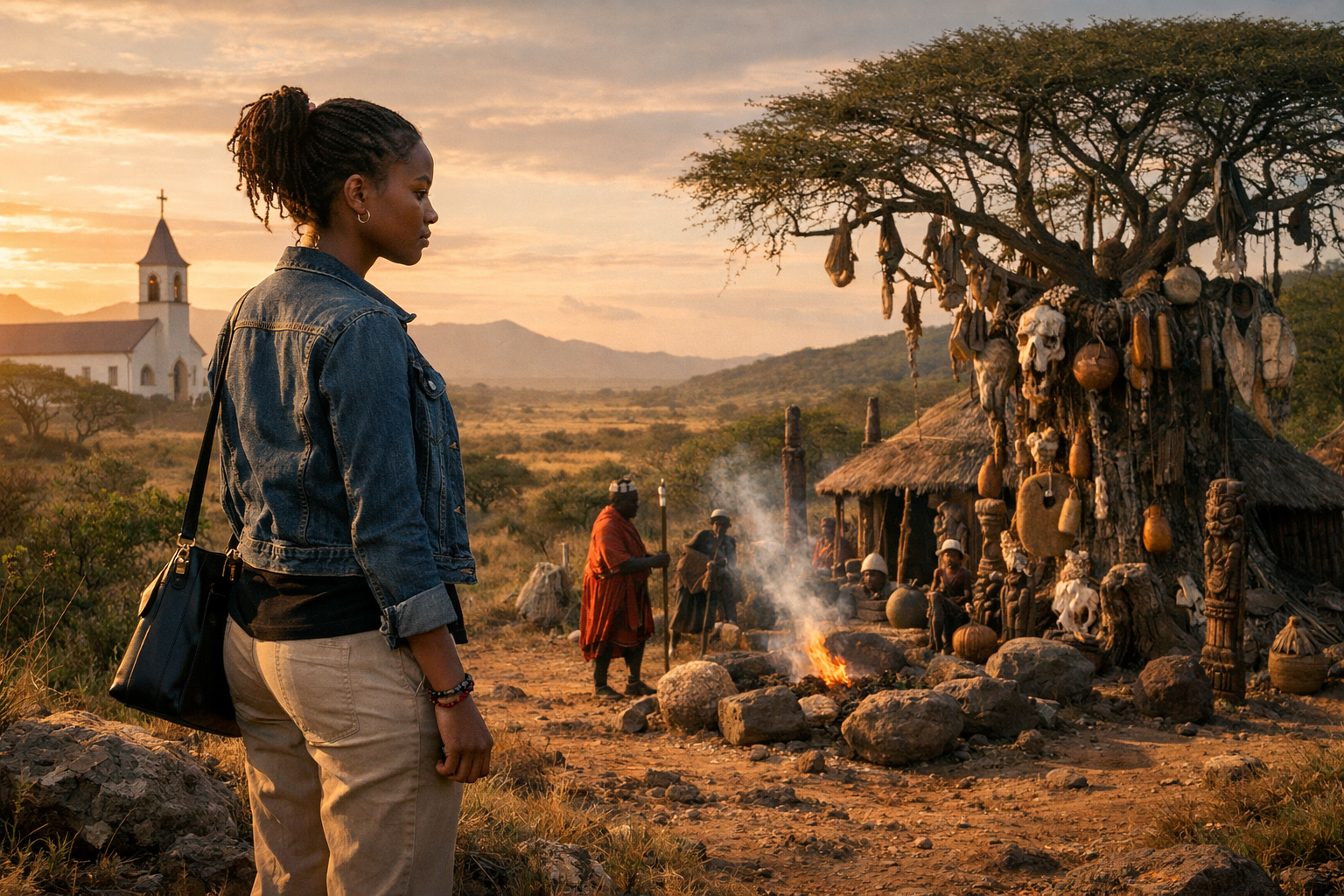
I’ve heard about the Kilumi dance but never paid much attention to it. That’s until my friend shared that it is a spiritual rite performed to appease the spirits, often ancestral, to serve primary purposes, such as invoking rain during droughts, healing, requests for protection and overall communion with the spirits.
During colonial times, unfortunately (though not surprisingly), much like many African traditional dances or rituals, Kilumi was considered ‘witchcraft’ or ‘devilish’ even.
Additionally, and unbeknownst to me until that early night, there is a Kamba museum tucked away in the red-dirt folds of Makueni, undoubtedly bound to offer more than what is portrayed at the National Museum.
Those bits from that conversation left a nagging feeling about the view on spiritualism.
Traditional spiritualism is slowly being eroded as the custodians are literally dying with the secrets, stories and sacred rites of our community, which would be a crying shame.
I felt a new responsibility creep up on me for the continuity of oral traditions, and though many of the predecessors of our lineage are no longer with us, there are other places I can source this historical information.
And as I pondered upon the significance of African spiritualism, I couldn’t help but compare it to the foreign religions imposed on us (and I say ‘imposed’ because that is what candidly happened).
It baffles me that the invocation of spirits in African traditions was spat upon and plastered with descriptions such as ‘ungodly’, yet the Holy Spirit is said to be ‘safe’, ‘godly’ — the manifestation of being covered by the Blood. One is regarded as sacred, the other, sinister.
Are we still mentally colonised, afraid to “emancipate ourselves from mental slavery”, and comfortable not asking uncomfortable questions?
For example, why wasn’t religion presented to us as a choice? Why was the freedom of making independent decisions taken away from us?
Acknowledging that organised religion was instilled in us as a tool for control, and paying attention to the ills of religion rather than sweeping them under the rug, is a difficult truth to unlearn and makes you feel like persona-non-grata at the doors of religion.
Here’s the kicker — hold on to your seat — God’s so-called chosen people, whose scripture was rammed down our throats, have spent the last 1,000 years instigating and puppeteering, moonlighting under some kind of divine intervention, all while pulling the wool over our eyes and over their wolves’ skin.
This happened under our noses (like much does), I surmise, because of the institutions we have been exposed to that subconsciously eat away at our ability to cognitively think for ourselves.
I enjoy philosophical teachings, even though creating time to actively read on them has been damn near impossible. Socrates said that, “Unexamined life is not worth living,” and in the same breath, I agree that unexamined faith is spiritual sleepwalking.
My settlement on spirituality, religion and faith is that they should collectively bring people to a point of deep, unfettered thinking that is objective. I also believe that the next step of evolution for human beings is to be freethinking beings.
And in urging the embrace of freethinking, I’m encouraged by the way spiritual-centric conversations are becoming more rampant, and how conscious the newer generations have become.
So, if along the grapevine you hear that I have undergone initiation and joined community elders in the pursuit of ancestral preservation and future blessings, don’t be too surprised — I’ll be serving my purpose.