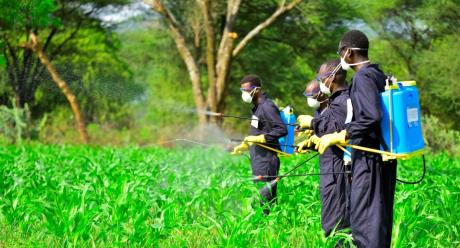
 Pest and pesticide management./FAO
The Pest Control Products Board has raised concern over the growing sale of pesticides through online platforms in Kenya.
The board warned that the trend could open the door to illegal and potentially harmful products entering the market.
PCPB general manager for Analytical Services Grace Muchemi said the rise of unregulated digital marketplaces poses risks to human health, the environment and food safety.
“This is an issue of concern because pesticides sold online may not meet the required standards. That can affect the safety of the food we consume, harm the environment and even impact animals,” she said.
To address the challenge, Muchemi said PCPB is developing guidelines to regulate the sale of pesticides on digital platforms and curb the distribution of unapproved products.
“Selling unapproved pesticides is illegal. Once the guidelines on online sales are in place, we will take action against those flouting the law,” she said.
The concerns were raised during the inauguration of the Knowledge Management Technical Working Group under the FARM project.
This is a global initiative led by the Food and Agriculture Organization (FAO) in partnership with the United Nations Environment Programme (UNEP).
FAO agricultural officer Oxana Perminova said the management of agrochemicals and agricultural plastics is a growing global concern that many countries are grappling with.
She noted that FAO, working with UNEP, developed the FARM project with support from the Global Environment Facility to promote reduced use of agrochemicals, safer application practices and improved management of agricultural plastics.
“The programme focuses on reducing the risks associated with agrochemicals while also addressing the safe management of agricultural plastics,” she said.
Muchemi urged farmers and agro-dealers to purchase only pesticides approved by PCPB and distributed through licensed channels.
She noted that Kenya updated regulations in 2024 to guide the safe use and distribution of pest control products.
As the national regulator, PCPB oversees both conventional pesticides and biopesticides and aligns its decisions with international conventions ratified by Kenya to ensure banned products are withdrawn from the market.
“We continuously review active ingredients through scientific risk assessments to ensure products in the market are safe for use,” she said.
She also pointed out the importance of following product labels, noting that they are based on extensive scientific data. Incorrect use, including applying the wrong dosage, can increase risks to both users and consumers.
Muchemi said PCPB is also promoting safer alternatives, and more than 300 biopesticides have already been registered in Kenya as part of efforts to encourage the use of lower-risk products.
The board is also working with other government agencies and development partners to raise awareness on safe pesticide use, with the aim of improving food safety and supporting agricultural trade.
Meanwhile, the National Environment Management Authority has raised similar concerns about pollution linked to agricultural activities, particularly pesticide waste and agri-plastics.
Dr Catherine Mbaisi, deputy director in charge of environmental education, awareness and training at Nema, said poor disposal of pesticide containers and the widespread use of agricultural plastics are contributing to environmental degradation.
“When pesticide containers are not properly disposed of, they pose serious risks. Plastics used in agriculture, if left in the soil or washed into rivers and lakes, lead to pollution and harm ecosystems,” she said.
Mbaisi warned that microplastics from agricultural waste can contaminate soil and water, affecting both crop production and aquatic life.
Kenya has already taken steps to address plastic pollution, including the 2017 ban on single-use plastics, alongside additional measures such as plastic management regulations and the Sustainable Waste Management Act.
She pointed out the role of Extended Producer Responsibility, which requires manufacturers to take responsibility for their products throughout their lifecycle, including collection and safe disposal after use.
“Producers must put in place systems to collect and manage waste from their products. This is key to reducing pollution,” she said.
The FARM project aims to strengthen investment in the adoption of safer alternatives and sustainable management of agrochemicals and agricultural plastics in Africa and Latin America, with pilot programmes in Kenya and Uruguay.
In Kenya, the project will be implemented in Nakuru, Bungoma and Kirinyaga counties.
According to FAO, agricultural plastics and pesticide waste are a growing global challenge, with a significant portion of plastics used in farming ending up in soils, rivers and oceans.
Participants noted that addressing these challenges will require stronger regulation, increased awareness and wider adoption of safer alternatives to support sustainable agricultural production.