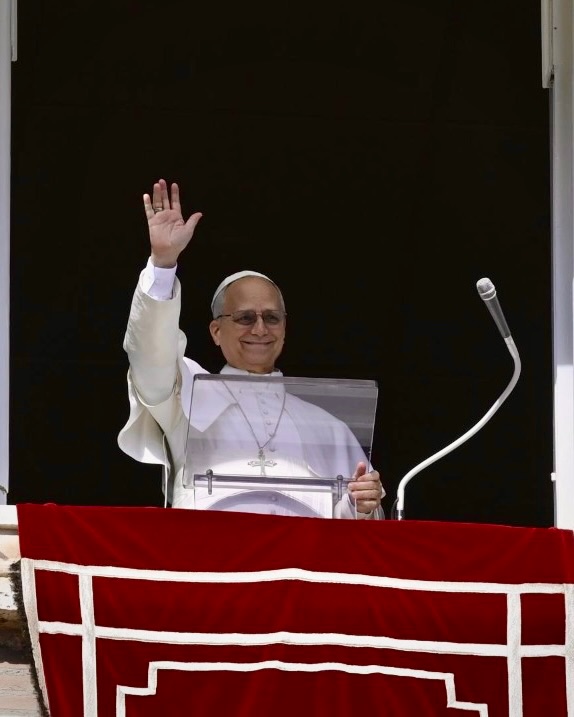
Pope Leo visited the Great Mosque of Algiers during an official trip. Upon entering the mosque, he removed his shoes in accordance with customary practice observed at the site.
Mosque officials received him and guided him through parts of the complex.
The Great Mosque of Algiers is one of the major religious buildings in Algeria and is used for daily prayers and religious gatherings.
Enjoying this article? Subscribe for unlimited access to premium sports coverage.
View Plans
The visit included movement through designated areas of the mosque under the supervision of its administration.
Pope Leo XIV //Mpasho news

Interaction with Mosque Administration

During the visit, Pope Leo met with representatives of the mosque administration. The meeting included an exchange of symbolic religious gifts.
Both sides presented items associated with their respective religious traditions.
No full public list of the items exchanged was provided. The exchange took place within the mosque premises in the presence of officials.
×

Political Remarks Linked to the Visit

Following the visit, former U.S. President Donald Trump made remarks accusing the Pope of catering to the “radical left.” The comments were made in reference to the Pope’s recent public appearances and engagements.
There was no immediate public response from the Vatican regarding the remarks.ALSO READ: Pope Leo XIV Set for Historic 11-Day Visit to Four African Countries (Details)

Public and Institutional Reactions

The visit was recorded as part of Pope Leo’s official schedule. Mosque authorities facilitated the entry, movement, and meeting within the site.
No additional statements were issued by the mosque administration regarding the visit or the remarks made afterward.

Background: Pope Leo XIV’s Africa Trip

Pope Leo XIV’s 11-day visit to Algeria, Cameroon, Angola and Equatorial Guinea is part of a broader pattern of papal trips focused on pastoral outreach and strengthening the Catholic Church’s presence in regions where it is growing rapidly.

Africa is currently one of the fastest-growing regions for Catholicism, with about 20 per cent of the world’s 1.4 billion Catholics.

This growth has made the continent increasingly important in Vatican priorities, especially in areas of interfaith dialogue, peace efforts and community development.

The visit also reflects different contexts in each country. Algeria is significant for Christian-Muslim relations and historical ties to Saint Augustine of Hippo.

Cameroon has ongoing conflict in some regions, where calls for peace and reconciliation remain central. Angola has a large Catholic population and continues to focus on development after years of conflict.

Equatorial Guinea, where most of the population is Catholic, marks the final stop of the journey and highlights pastoral engagement with local church communities.