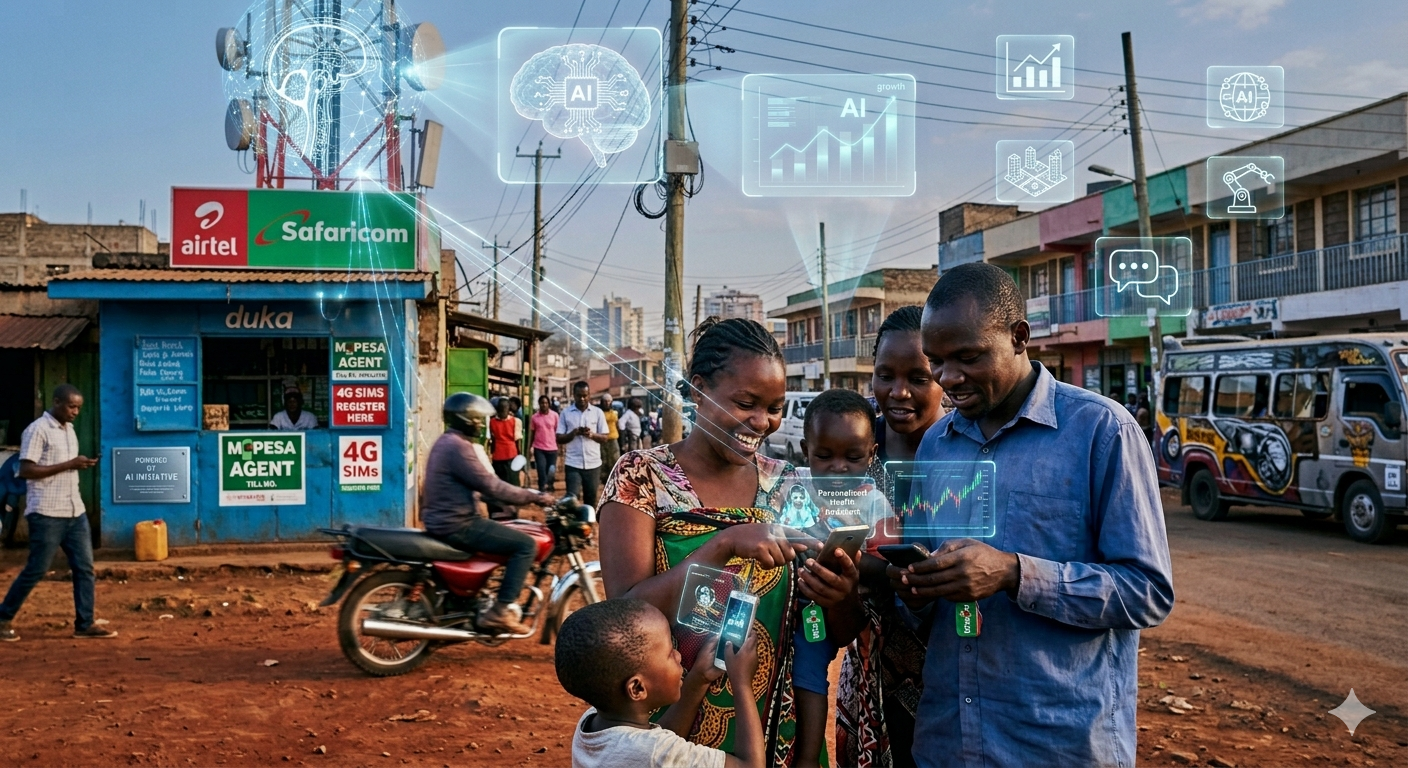
 AI Illustration./Gemini
Kenya is entering a new phase of digital transformation, driven by expanding 4G and 5G infrastructure, increased smartphone penetration, and wider access to mobile broadband internet.
This growth builds on the country’s globally recognised success in mobile money and fintech, which has significantly accelerated financial inclusion and positioned Kenya as a regional digital leader.
According to the latest data from GSMA, Kenya had 23.4 million internet users as of October 2025, translating to an internet penetration rate of 40.5 percent. At the same time, the country recorded 77.5 million cellular mobile connections.
“Data from GSMA Intelligence shows that there were 77.5 million cellular mobile connections in Kenya at the end of 2025,” the report stated.
“For perspective, many people make use of more than one mobile connection, so it’s not unusual for mobile connection figures to significantly exceed figures for total population.”
Kenya’s digital journey is now transitioning into a second wave anchored on artificial intelligence (AI) and machine learning, technologies expected to redefine how financial systems operate. Industry players say the fintech ecosystem is evolving from simply facilitating transactions to analysing and predicting user behaviour.
Safaricom’s M-PESA remains central to this transformation, with 40 million active users as of April 2026, representing a 98 percent population penetration. The platform contributes over 40 percent of Safaricom’s service revenue and processed more than 21.9 billion transactions valued at Sh20.2 trillion by late 2025.
Experts note that layering AI and machine learning onto the vast data generated by mobile money platforms is enabling systems to move beyond traditional financial records to deeper insights into consumer behaviour. United Nations Resident Coordinator in Kenya, Stephen Jackson, said digital transformation remains key to achieving broader development goals.
“In an increasingly interconnected world, digital transformation is crucial for achieving global goals like ending poverty and improving education,” he said.
He, however, cautioned that unequal access to digital tools remains a challenge, particularly among women, youth, and marginalised communities.
“Kenya recognised this issue early and adopted a comprehensive approach to digital transformation. Instead of fragmented initiatives, the country focused on building an inclusive digital system that ensures participation from all backgrounds and strengthens the public sector's ability to govern digital tools responsibly,” he added.
The country is set to host the Gitex Kenya and AI Everything Kenya event from May 19 to 21, which is expected to convene global technology leaders, policymakers, investors, and innovators.
The event will begin with the Inclusive AI Summit at the Sarit Expo Centre before moving to the Kenyatta International Convention Centre for the AI Everything Expo and conference.
Organisers expect more than 500 global enterprises and more than 10,000 tech executives to participate. Key discussions will focus on artificial intelligence, cybersecurity, fintech and agritech, reflecting the sectors expected to drive Kenya’s next phase of growth.
AI is projected to contribute up to $2.4 billion to Kenya’s GDP by 2030, with 68 percent of firms in the country expected to have fully adopted the technology by December 2026.
Organisers say the decision to expand Gitex into Kenya underscores growing global confidence in the country’s position as East Africa’s leading innovation hub and an emerging force in Africa’s AI-driven digital economy.