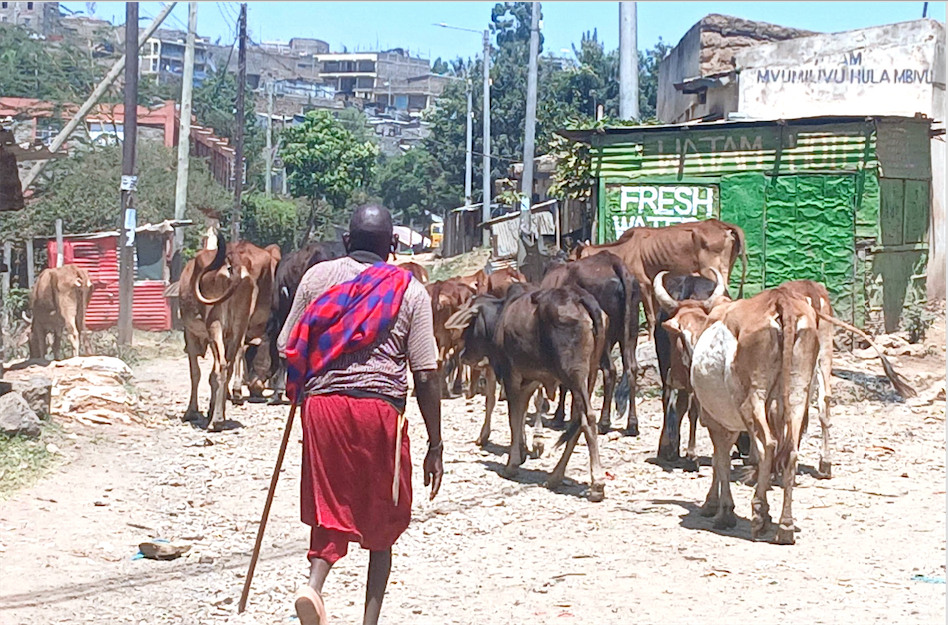
 A Maasai herder drives cattle on Crystal Rivers-Whistling Moran road through Yeyani Resort in search of water and pasture in Athi River, Machakos county, on January 10 /GEORGE OWITI
Two international organisations have warned that ongoing heavy rains across parts of Africa are creating ideal conditions for the spread of Rift Valley Fever (RVF), raising outbreak risks.
The Food and Agriculture Organisation and the Intergovernmental Authority on Development say the continued heavy rains are creating favourable conditions for the spread of the viral disease that affects both animals and humans.
The organisations said saturated soils and standing water are increasing mosquito breeding, raising the risk of outbreaks while also making early detection and control more difficult.
They said that flooding is also disrupting veterinary services, restricting livestock movement and damaging pasture and infrastructure, further heightening vulnerability among pastoral communities.
RVF is a mosquito-borne zoonotic disease that affects livestock such as sheep, goats, cattle, buffaloes and camels, and can also infect humans.
Outbreaks are often linked to heavy rainfall, which creates breeding grounds for mosquitoes that transmit the virus.
FAO and Igad warned that the disease can have severe economic and social impacts, including livestock abortions, loss of herds, reduced household incomes and disruptions to access to healthcare and education.
In some cases, outbreaks can also trigger trade restrictions and affect national and regional economies.
FAO’s Rift Valley Fever Early Warning Decision Support Tool has indicated elevated risk for April, with continued monitoring of environmental conditions that support mosquito proliferation across affected regions.
Torrential rains in recent weeks have already impacted southern Kenya, Tanzania, Burundi, southern Ethiopia and Rwanda, while flooding continues in parts of South Sudan.
Similar conditions have been reported in several Southern African countries, with forecasts indicating sustained heavy rainfall that could worsen the situation.
At the same time, some areas are experiencing dry conditions, which may worsen feed and water shortages for livestock, adding further pressure on animal health systems.
FAO and Igad are urging affected countries to strengthen preparedness measures, including improved surveillance, vaccination campaigns, movement control of animals and enhanced coordination between animal, human and environmental health sectors under the One Health approach.
They also called for better risk communication to communities, including awareness campaigns on early reporting of sick animals, safe handling practices, and protection against mosquito bites.
FAO is a United Nations agency focused on achieving global food security, while Igad is a regional bloc of eight Horn of Africa countries working on development issues, including drought resilience and food security.