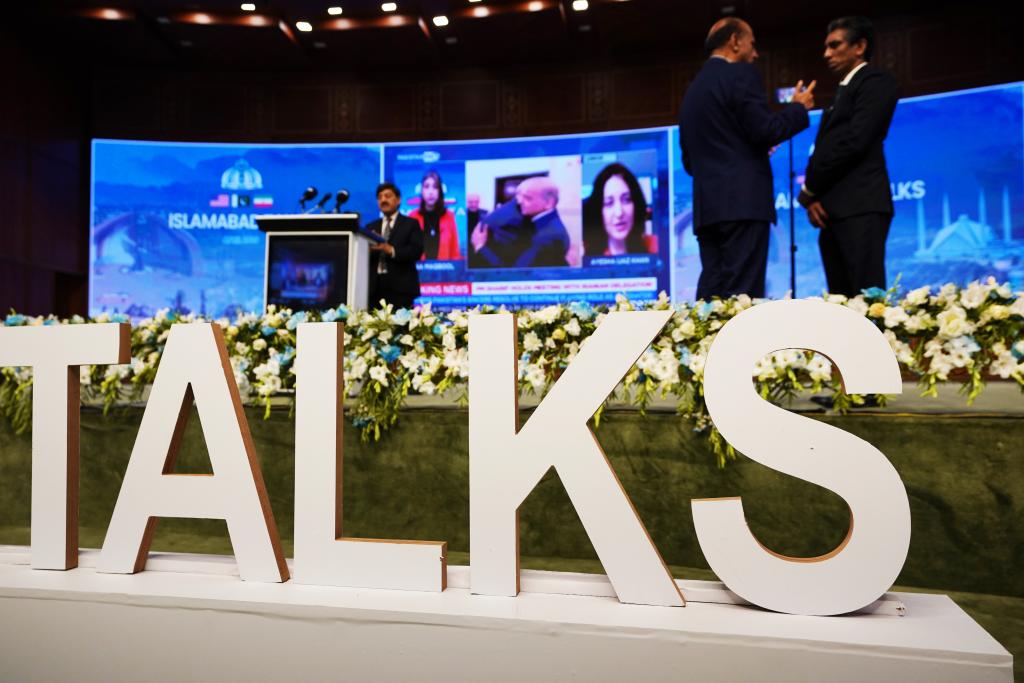
 This photo taken on April 11, 2026, shows a view at the press centre for the talks between the United States and Iran in Islamabad, Pakistan. (Xinhua/Wang Shen)
Iranian Parliament Speaker Mohammad Bagher Ghalibaf, who led Tehran's delegation in the Pakistan talks, says now is the time for the US "to decide whether it can earn our trust or not".
In a post on X, Ghalibaf says he emphasised before the negotiations that Iran had "good faith and will" but due to its experiences of two previous wars, it had "no trust in the opposing side".
He says the Iranian delegation "raised forward-looking initiatives, but the opposing side ultimately failed to gain the trust of the Iranian delegation in this round of negotiations".
He continues: "We will not for a moment cease our efforts to consolidate the achievements of the forty days of Iran's national defense."
He adds that the negotiations were "intense" and thanks Pakistan for facilitating them.
Hopes that had been raised during the marathon talks in Islamabad have for now been put on hold.
The trust needed between the two long-time enemies has not been established, it seems. The key sticking points have not been overcome.
But as the Iranian foreign ministry spokesperson has pointed out, no one realistically expected a deal to be done in one session, no matter how serious, high level and lengthy it was.
What is unknown for now is whether any kind of foundation has been laid for continuing the negotiations during the remaining time of the two week ceasefire - as well as how far each side may be prepared to make concessions to secure a deal that still appears to be in the interests of both, as well as that of the rest of the world.
The fact that Saturday's talks have ended without the two sides making any headway will raise fears of the resumption of the war both among many in Iran, and also among Iran's southern neighbours.
The Strait of Hormuz might prove the first flash point as the United States has begun operations to clear the strait from mines without coordination with the Iranians, who are controlling the passage of ships through the strait.
But all is not lost.
The head of the Iranian delegation at the talks, Mohammad Bagher Ghalibaf, has tweeted, blaming the US side for failing to win the trust of the Iranian delegation "during this round of talks", holding out the possibility of more talks.
Certainly the Pakistanis hosting the talks on Saturday are hoping that both sides will respect the ceasefire that is supposed to remain in place for 10 more days.
This might provide an opportunity for at least another round.
But the remarks of the US Vice-President JD Vance before leaving Islamabad left little room for optimism.
He said Iranians had failed to agree to the US terms. And he added: “We leave here with a very simple proposal - a method of understanding. This is our final and best proposal. We will see if the Iranians will accept it.”