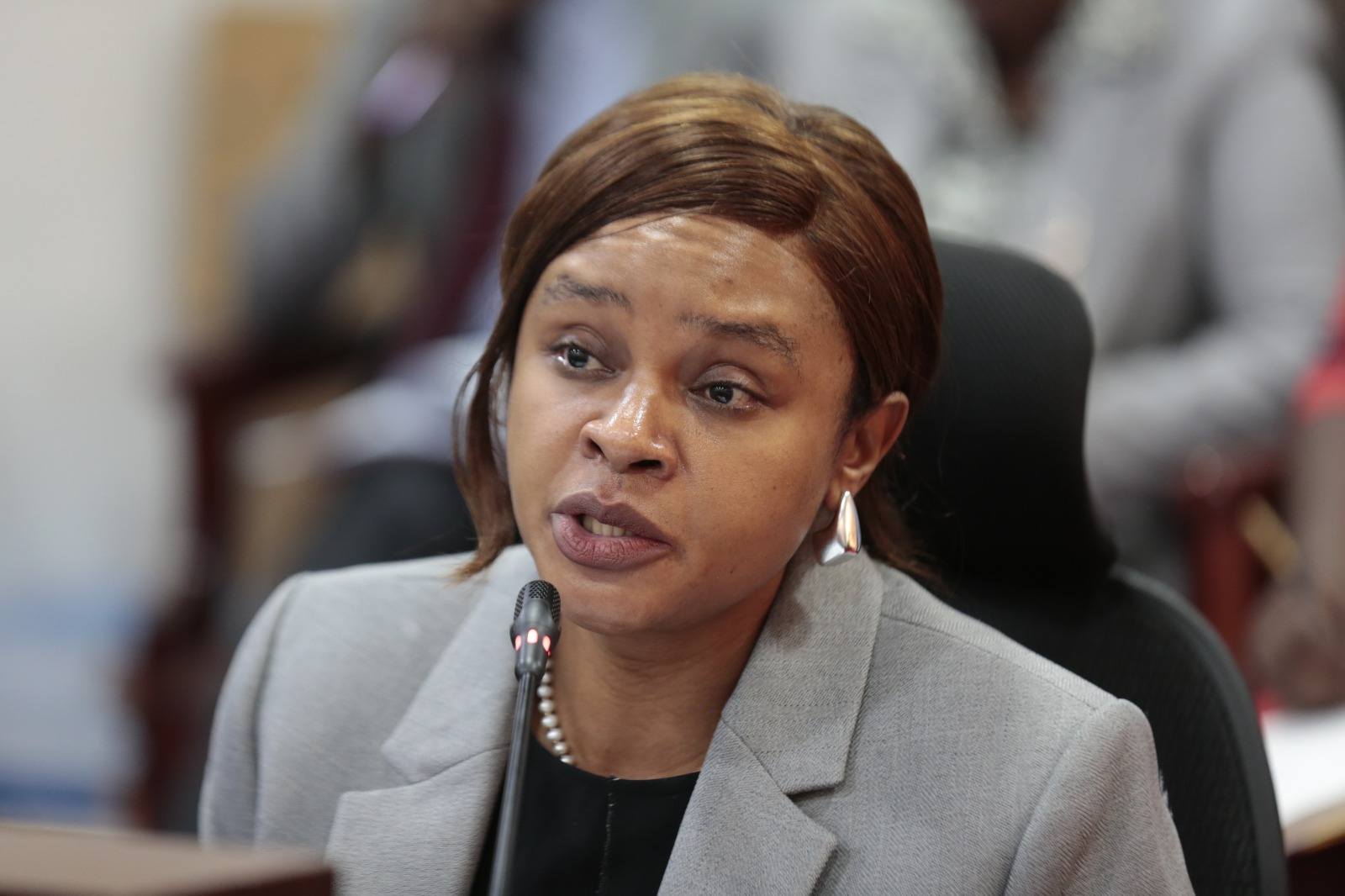
 Dr Mercy Mwangangi, the CEO of the Social Health Authority (SHA), was interviewed at the SHA offices on April 10, 2026 / Ezekiel Aming’a
One of the most closely watched benefits under the Social Health Authority is the overseas treatment package.
This is a lifeline for patients needing specialised care unavailable locally. SHA begins today to accept applications from Kenyan patients to travel abroad.
The authority’s CEO, Dr Mercy Mwangangi, explained how the new system works, what has changed from the NHIF era, and why access will now be more tightly controlled.
She outlined the eligibility criteria, the list of approved procedures, and the strict referral and approval process that patients must follow.
Mwangangi spoke to the Star at the authority's headquarters.
What exactly does SHA’s overseas treatment package cover and how does it work?
We would like to share with Kenyans some of the work we have been doing, particularly in the rollout of the overseas programme. It has been a long journey since the inception of the Social Health Authority. We are about 17 months into this new reform agenda, and one of the key components and benefits that Kenya has had in this agenda is access to overseas treatment.
So we're very pleased to inform Kenyans that starting April 14, Kenyans can access the overseas treatment package. We've heard you. There's been a lot of hue and cry from Kenyans wanting to access this package, and we've finally been able to meet the requirements of the law. We've finally been able to complete the contracting process, and we have nine providers in India, Turkey and Saudi Arabia.
The contracting process is ongoing, so more providers will be added. But for now, you can only access services from these nine. We've also been able to determine the conditions under which Kenyans can travel abroad under the SHA. In the previous NHIF (National Health Insurance Fund) system, a Kenyan leave the country, go abroad, even for a simple procedure like a kidney transplant.
These benefits are enshrined in Legal Notice 56, whereby SHA makes provisions for its beneficiaries who have paid up for overseas treatment. This service was also previously available in the NHIF days. However, there were certain challenges that we have now streamlined to ensure this service is available in a structured manner that protects Kenyans against some of the previous flaws.
What has changed from NHIF in terms of overseas treatment?
Previously, NHIF would send patients abroad to providers outside of contracting mechanisms. Essentially, NHIF did not undertake the due diligence required to determine whether a provider was regulated, whether they were offering quality services, or whether the procedure was available locally.
So many issues bedevilled the previous programme. In the new reform, we are putting together mechanisms and systems. SHA is now required, in line with the Procurement Act and the Public Finance Management Act, to procure services only from contracted overseas facilities.
Which conditions qualify for overseas treatment?
We activated what is known as the Benefits Advisory Panel last year, and this panel has determined there are 36 procedures that Kenyans can access overseas, with clear reasons as to why these procedures are not available in the country.
For example, kidney transplants for adults are no longer eligible because we have providers locally. However, paediatric kidney transplants are still eligible because that speciality is not well developed in Kenya.
Hip and knee replacements are also no longer eligible, as they are now widely available locally. However, procedures such as wrist replacements, complex congenital heart conditions in children, and advanced cancer treatments like proton therapy are included. All 36 conditions are available in the Legal Notice 56 published last year.
How does a SHA beneficiary access overseas treatment under the overseas fund?
Step one is that you must be seen by a doctor in Kenya who will provide a referral note confirming that your condition cannot be managed locally. The doctor must then fill out a KMPDC referral form, which is certified by the regulator. This ensures that the referral is coming from a qualified and recognised practitioner.
After that, there is a SHA referral form that must be completed to confirm that you are an active, paid-up member and eligible for the benefit. In addition, the patient must submit a comprehensive medical report detailing their condition and the justification for overseas treatment.
You are also required to provide a care plan from the overseas hospital, clearly outlining the proposed treatment, as well as a proforma invoice indicating the expected cost of that treatment.
All these documents are then submitted to SHA for review. The case is assessed internally by a team of doctors and relevant experts to confirm the procedure is not available locally and that the request meets the approved criteria.
Once the review is complete and approval is granted, the patient can then proceed with travel arrangements and treatment in one of the contracted overseas facilities.
How long will approval take, and is there an appeal mechanism?
We are targeting a 72-hour processing period if all documents are submitted.
There is no appeal mechanism because everything is clearly defined — the hospitals, the procedures and the tariff are all fixed.
How much does SHA cover, and what costs must patients meet?
SHA has put in place a tariff of Sh500,000 for overseas treatment. If the total cost exceeds this amount, the balance will be paid out of pocket by the patient.
We recognise that healthcare costs are high, and this is just a starting point. It may not be enough, but it reduces the financial burden, and we will progressively improve it.
Will SHA cover travel, accommodation and related costs?
Unfortunately, to begin with, the answer is no. Patients will have to arrange and pay for their own air tickets and accommodation. We have to start somewhere with the resources we have. Universal health coverage is a progressive journey.
How does SHA ensure quality and prevent abuse in overseas treatment?
We have contracted specific hospitals and conducted due diligence through regulatory bodies and Kenyan missions abroad. We also review care plans before treatment begins and monitor patients on a weekly basis while they are abroad. If a care plan changes or costs increase, the patient is notified. We have also put in place a team of 15 doctors within SHA to review and question any inconsistencies in treatment plans.
Will SHA pay for experimental treatments or clinical trials?
No. The 36 procedures approved are not experimental. If a patient is diverted into a clinical trial, SHA will decline that care plan. In very rare cases, a clinical trial may be considered, but only after rigorous verification.
What happens after the patient returns to Kenya?
Patients must submit a discharge summary, a post-treatment plan, and a referral to a local facility for follow-up care. SHA will track follow-up care for up to two weeks before closing the case and making payments.
What happens to patients who were already abroad before this programme starts on April 14?
If you are in a hospital that is not contracted by SHA, we cannot pay for that treatment. You would have to meet those costs yourself.
Is there a cap on overseas treatment spending for SHA?
There is no cap, but there are internal actuarial estimates. The only limit for patients is the Sh500,000 annual cover. If the treatment exceeds this amount, then the patient will be notified at each stage because they will pay for the difference. This Sh500,000 is only available once a year. So if it's exhausted in one year, a SHA member will wait until the next year to access the full amount.
What happens if a patient dies abroad?
Currently, SHA does not cover repatriation costs. Families will have to meet those expenses.
Can patients choose overseas treatment even if services are available locally but are cheaper abroad?
No. If the service is available locally, SHA will not pay for overseas treatment.
Many health systems require a specialist consultant, not just any doctor, to initiate overseas referrals. Who exactly has the authority to approve referrals under SHA?
Referrals must align with the type of condition. For example, an orthopaedic surgeon would be expected to refer orthopaedic cases. SHA verifies this through regulatory systems and internal review.