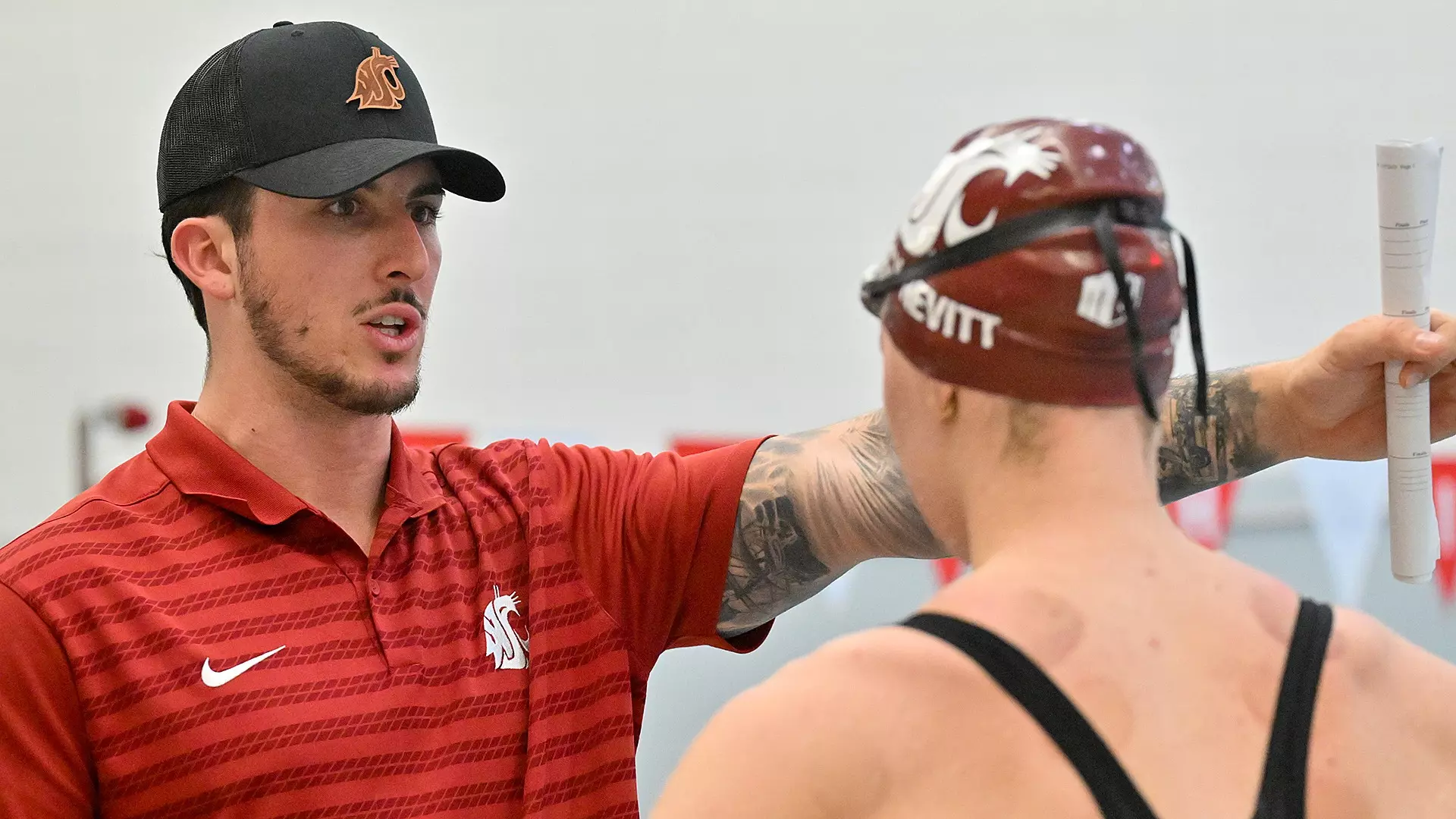
 American swimming coach Austin Pillado / HANDOUT
Kenyan swimming coach Abu Kishada has called for more advanced training facilities and techniques for Kenyan swimmers in order to match their counterparts at the global stage.
Tsama said although swimming is fast regaining its position among the top sports at the Coast and in Kenya, is hampered by lack of training facilities.
This comes as American swimming coach Austin Pillado is set to lead a high-performance training camp scheduled to take place in Mikocheni, Dar es Salaam from May 4 to May 14.
The 10-day camp, which will be held at the Monti International School, seeks to equip both athletes and coaches across East Africa with the requisite skills and techniques needed to perform at a high level on global stages like the Olympics.
Kishada said such a training camp will greatly benefit both swimmers and coaches, adding that it is time Kenyan swimmers take the next step.
“We have been crying out for advanced facilities and training techniques. It is like God has heard our cries and is bringing master coach Pillado closer home,” Kishada said.
Pillado, an associate head coach at the Washington State University, is one of the top swimming coaches in the US.
Pillado is in his second season at the WSU after joining the program as an assistant coach prior to the 2024/2025 season. He was last summer promoted to associate head coach.
Monti International School was chosen as the venue due to its advanced facilities.
The school’s 25-meter swimming pool is equipped with underwater cameras, the first and only swimming pool in East Africa to have such cameras which are expected to enhance technique analysis and athlete performance.
According to organizers of the training camp, swimmers will benefit from master elite swim techniques in freestyle, breaststroke, butterfly and backstroke.
“The camp will be offering specialized training in stroke techniques, race strategy, strength conditioning, and recovery methods,” the organizers said, urging both swimmers and coaches to attend.
“There will be power up starts, turns and underwater techniques in the training. There will also be race strategy for speed and endurance,” the organizers said.
There will be National Collegiate Athletic Association-level workouts for sprints and distance.
The NCAA is a member-led NGO that regulates athletics for over 1,100 colleges, universities and conferences in the US and Canada.
“If you want to improve core strength, mobility and flexibility, and learn recovery and nutrition secrets for higher performances, then you need to be in this camp,” the organizers said.
They said there will be a coaches’ clinic to boost coaching and coaches in East Africa.
Organizers said the camp aims to elevate swimming standards in the region, where swimmers are showing rapid improvement in technique and regional competitiveness.
However, swimmers in the region usually lag behind the global stage regarding elite times and Olympic success.
Kishada said while young swimmers like Andy Kodonde are making waves at local and national meets, the region currently lacks sufficient world-class facilities and high-level, consistent coaching to bridge the performance gap to global standards.
He said while East African swimmers dominate regional competitions, they often exit in the preliminary stages of major international competitions like the Olympics.
“Kenyan swimmers, for instance, often focus on attaining qualifying times only,” Kishada said.
This, he said, is because international competitors benefit from advanced technology and training regimes, while East Africa coaches implement non-breathing zones and improving techniques to close the gap in class.
The Monti International School training camp is expected to attract participants from across the region, positioning Tanzania as a growing hub for elite swimming development.