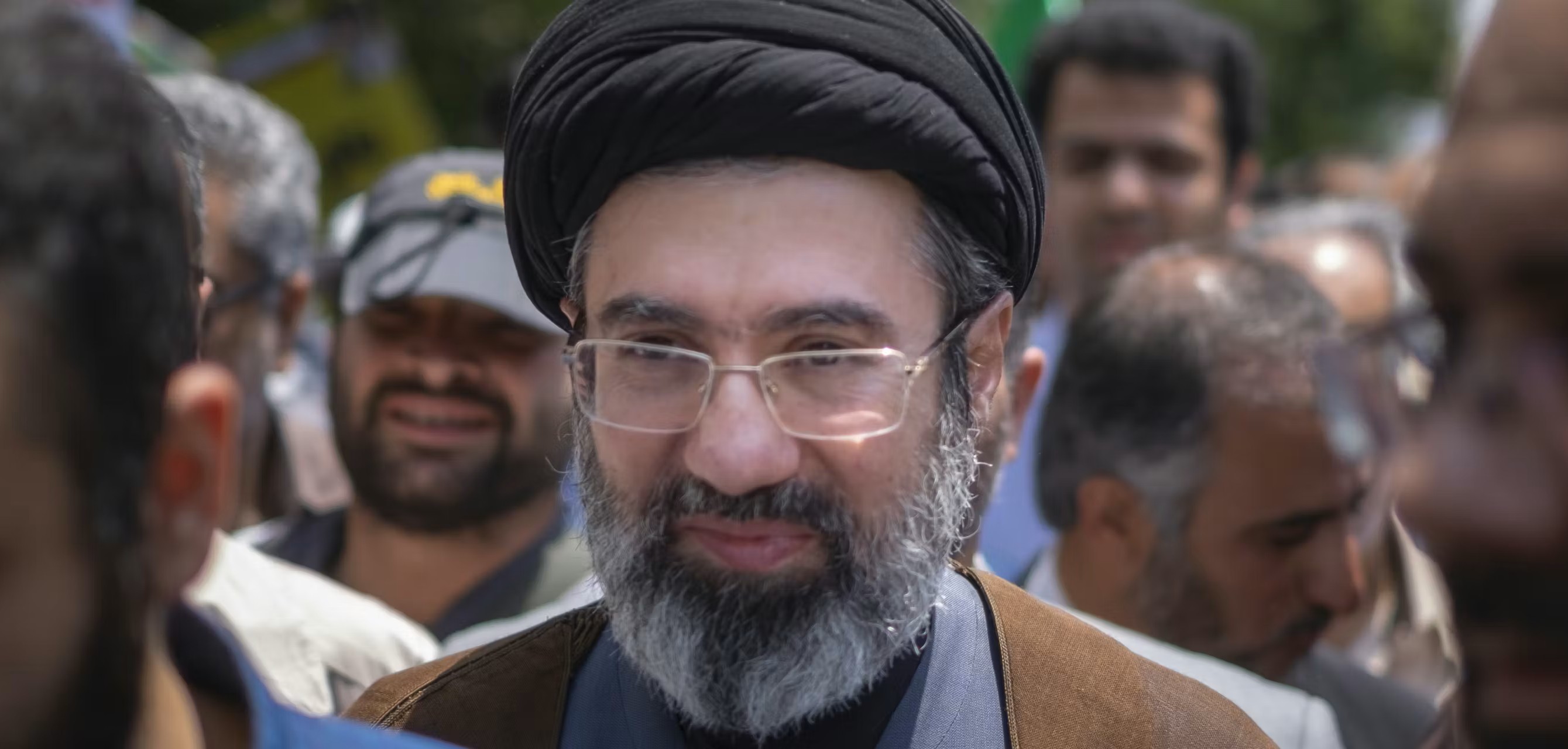
 Mojtaba Khamenei, Iran’s supreme leader/FILE
More than six weeks after the killing of Ali Khamenei in a US-Israeli airstrike, and over a month since his son Mojtaba Khamenei was installed as his successor, the new supreme leader of Iran has yet to appear in public.
Wednesday, April 8, marked the end of the traditional 40-day mourning period following Ali Khamenei’s death, even as his burial remains pending.
The day also coincided with the start of a two-week ceasefire between Tehran and its adversaries, the United States and Israel.
Despite the significance of these developments, Mojtaba has remained conspicuously absent from public view. His prolonged silence has fueled widespread speculation about his condition, with some reports suggesting he may be wounded or incapacitated.
Iranian authorities have, however, consistently dismissed such claims, but apart from written statements attributed to him, there has been no visual or audio confirmation of his status since his appointment.
Following the ceasefire agreement, Iranian Deputy Foreign Minister Saeed Khatibzadeh sought to quell the speculation, stating that Mojtaba was in “perfect health” and had “everything under control,” adding that he was “in his office.”
Rumours about his well-being intensified after a report by the UK's The Times claimed the Iranian leader was “unconscious” and “gravely ill,” citing an alleged US and Israeli intelligence memo.
In contrast, a separate report by Axios suggested Mojtaba played a central role in facilitating the ceasefire. That account, however, remains contested, particularly given repeated declarations by the United States and Israel to eliminate him.
Throughout the 40-day conflict, Iran has maintained operational continuity, responding to US and Israeli strikes with sustained counterattacks.
But according to Axios, Mojtaba is said to have, for the first time during the war, instructed negotiators to pursue a diplomatic resolution.
Even so, his continued absence has raised questions. Speeches attributed to him have been delivered by state television announcers or circulated via official social media channels, rather than being presented directly.
In the latest statement released on Thursday, Mojtaba was quoted as saying Tehran does not seek to prolong the war, while encouraging citizens to continue public demonstrations, noting that “voices in public squares are undoubtedly influential” in negotiations.
The statement further asserted that Iran would “not let go” of those responsible for the attacks and would “not renounce legitimate rights” under pressure.
It described Iran as the “definite victor” in the conflict and indicated that Tehran would pursue compensation for damages suffered during the war.
It also stated that Mojtaba had vowed to avenge those killed, including his father, and addressed neighbouring countries, signalling Iran’s expectation of a response that would allow it to demonstrate “brotherhood and goodwill.”
According to the statement, Iran’s management of the strategic Strait of Hormuz would enter a “new stage,” while reiterating that the country does not seek war but will not relinquish its rights, framing regional resistance movements as a unified front.
The absence of any direct appearance by Mojtaba has nonetheless intensified speculation that communications attributed to him may be managed by the Islamic Revolutionary Guard Corps.
Last week, Iranian Foreign Ministry spokesman Esmaeil Baqaei dismissed the rumours, maintaining that Mojtaba was “perfectly healthy” and that his lack of public visibility was “not unusual” during wartime conditions.
Earlier reports had indicated that Mojtaba may have been wounded—though not seriously—in the same airstrike that killed his father and other family members.
Despite repeated assertions by Donald Trump that Iran had been severely weakened, the Islamic Republic has continued to demonstrate resilience, responding to attacks with sustained force and maintaining internal stability.
While the initial objective of the United States and Israel was widely seen as an attempt to destabilise Iran’s leadership, critics have pointed to the unintended consequence of replacing an ageing leader with a younger and potentially more hardline figure.
For now, despite persistent speculation over Mojtaba’s condition and whereabouts, there is little indication of a power vacuum in Tehran.
The Iranian state continues to function, projecting authority even as its new leader remains out of sight.