 National Biosafety Authority principal biosafety
officer Eric Korir [L] with farmers from Coast at Kalro Mtwapa on Wednesday /
BRIAN OTIENO
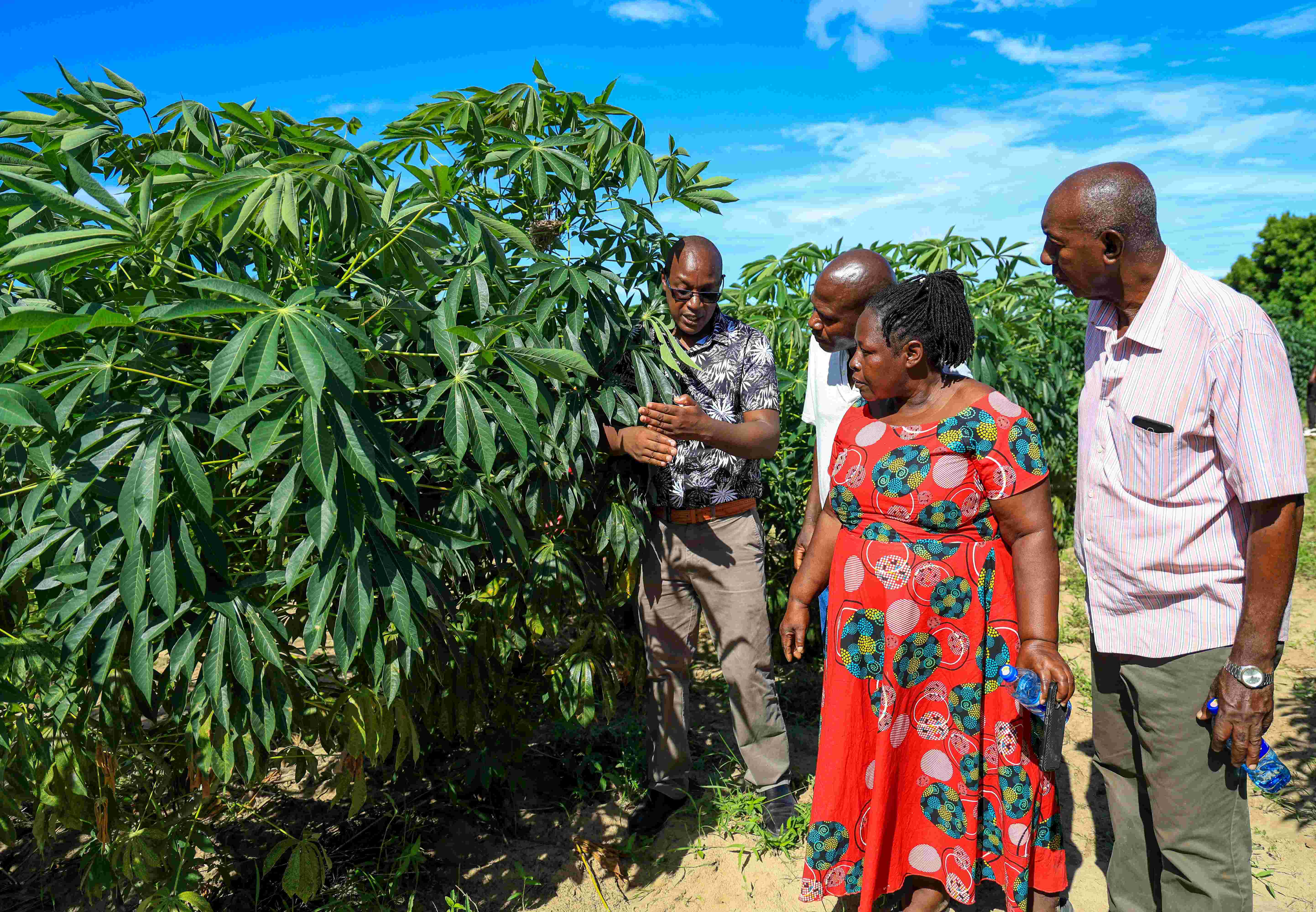
National Biosafety Authority principal biosafety
officer Eric Korir [L] with farmers from Coast at Kalro Mtwapa on Wednesday /
BRIAN OTIENO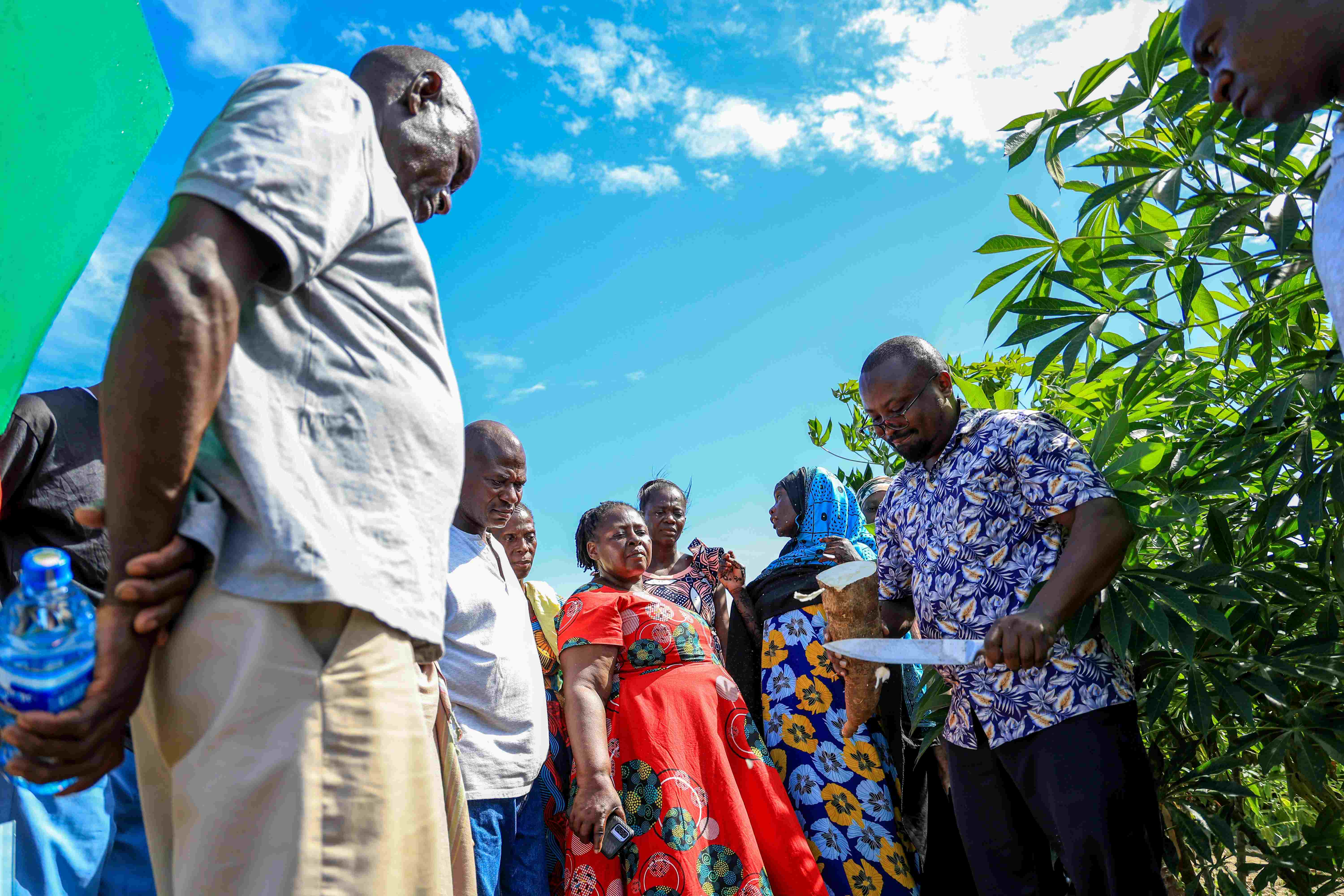 Kalro chief research scientist Paul Kuria [R] demonstrates
to farmers about the new varieties of cassava at Kalro Mtwapa on Wednesday /
BRIAN OTIENO
Kalro chief research scientist Paul Kuria [R] demonstrates
to farmers about the new varieties of cassava at Kalro Mtwapa on Wednesday /
BRIAN OTIENO
Read Also
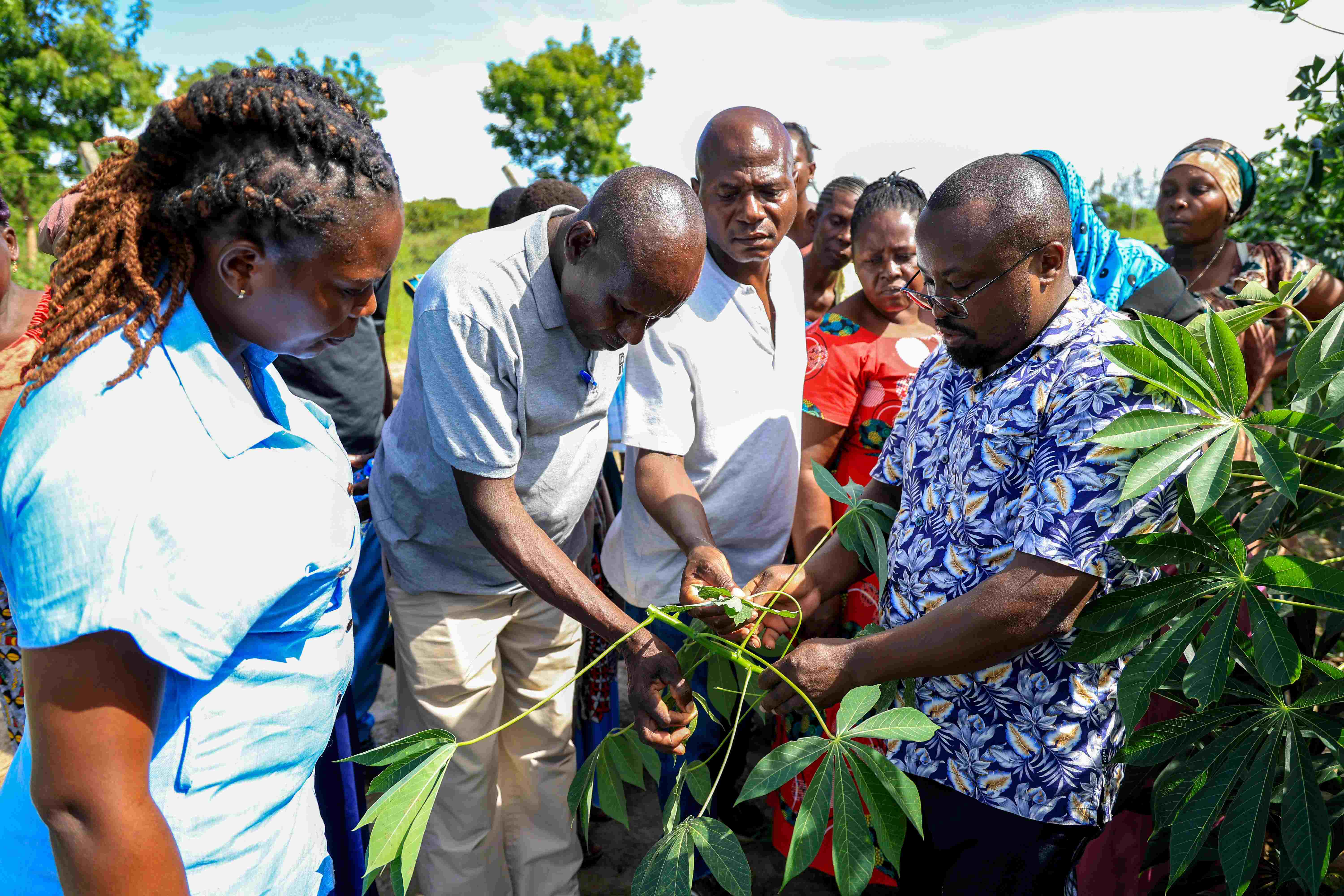 Kalro chief research scientist Paul Kuria [R] demonstrates
to farmers about the new varieties of cassava at Kalro Mtwapa on Wednesday /
BRIAN OTIENO
Kalro chief research scientist Paul Kuria [R] demonstrates
to farmers about the new varieties of cassava at Kalro Mtwapa on Wednesday /
BRIAN OTIENOCassava farmers on the Coast will soon plant superior varieties of the crop that are high-yielding and highly resistant to viruses that blight cassava.
The Kenya Agricultural and Livestock Research Organisation (Kalro) is in the final stages of developing eight varieties of genetically modified cassava, which will be released to farmers around August.
This is under the Virus Resistant Cassava for Africa (Virca/Virca Plus) project, which is developing genetically modified cassava to combat mainly Cassava Brown Streak Disease (CBSD) and Cassava Mosaic Disease (CMD).
These diseases cause up to 80 per cent yield losses.
Using RNA interference (RNAi) technology, researchers in Kenya, Uganda and Nigeria are creating high-yielding, virus-resistant and farmer-preferred varieties to secure food supplies.
RNAi is a biological mechanism in which double-stranded RNA molecules trigger the sequence degradation of messenger RNA (mRNA), preventing protein production in a process known as gene silencing.
The research organisation on Wednesday and Thursday demonstrated to coastal farmers how technology can be used to address challenges affecting cassava production.
Kalro chief research scientist Paul Kuria said both conventional breeding and modern biotechnology were used to produce the eight superior cassava varieties.
“Together, we are selecting these materials with the farmers at the Coast, from Kilifi, Kwale and Taita Taveta counties. We have demonstrated to the farmers that using modern biotechnology, we can control the most devastating cassava viral diseases, the CBSD and the CMD,” Kuria said.
CBSD and CMD are transmitted by whiteflies and through the use of infected planting materials.
“As you know, cassava is vegetatively propagated, so once farmers recycle the seed, they spread viruses even to regions where the viruses were never present before,” Kuria said at Kalro Mtwapa.
The research has been ongoing for the past decade and is a collaborative effort between Kalro and several international organisations within East Africa and the United States.
Kuria said the varieties are currently undergoing varietal registration so that the materials can be released to farmers later this year.
“Also, using modern technology for rapid seed multiplication, we have produced enough planting materials in readiness for varietal release to the farmers,” Kuria said.
He added that the varieties also offer other farmer-preferred qualities, including high dry matter content, high starch content, good plant architecture and a maturity period within the range of conventional cassava, which is eight to 12 months.
Kuria said consultative meetings will be held with farmers to name the new varieties.
“Through that, farmers appreciate the characteristics of the varieties and give us local names that are easily associated with the characteristics. At the moment we are using the breeder’s code,” Kuria said.
National Biosafety Authority principal biosafety officer Eric Korir said GMO technology has been misconstrued to mean poison.
Korir said the authority has strict protocols that any technology must undergo before being approved for food production.
“Before any GMO is introduced into the country, the authority has to license it. Before this is done, it must undergo various tests to ensure safety,” Korir said.
He said the GMO must not be harmful to humans, animals or plants.
He assured Kenyans and farmers that the genetically modified cassava varieties are safe.
He added that Kalro received a permit from the National Biosafety Authority in 2021 to develop the new varieties.
“Kalro made an application to the NBA for environmental release. They conducted national performance trials and are now waiting for the registration of the new varieties,” Korir said.
David Mwanzia, a cassava farmer from Taita Taveta county, said the training had changed his view of GMOs.
“I have been suffering because of diseases that attack my cassava. The diseases were persistent and untreatable. But now that we hear there are varieties that will not be harmed by the diseases, I am glad. It gives us hope,” Mwanzia said.
He said he started as a cassava seed entrepreneur, selling seeds to farmers, but suffered massive losses when his four acres of cassava were attacked by diseases.
“I went to Kalro, and they gave me some other resistant cassava, but I am not sure about them because I have an acre of the same and I still weed out some diseased cassava. With the new varieties, I am very hopeful,” he said.
Dorcas Nthoka, from Shimba Hills in Kwale County, has four acres of cassava in her first year of farming.
“I used to think GMOs were monsters that came to devour our yields. But now I am wiser. I know GMOs have come to enhance our yields,” she said.