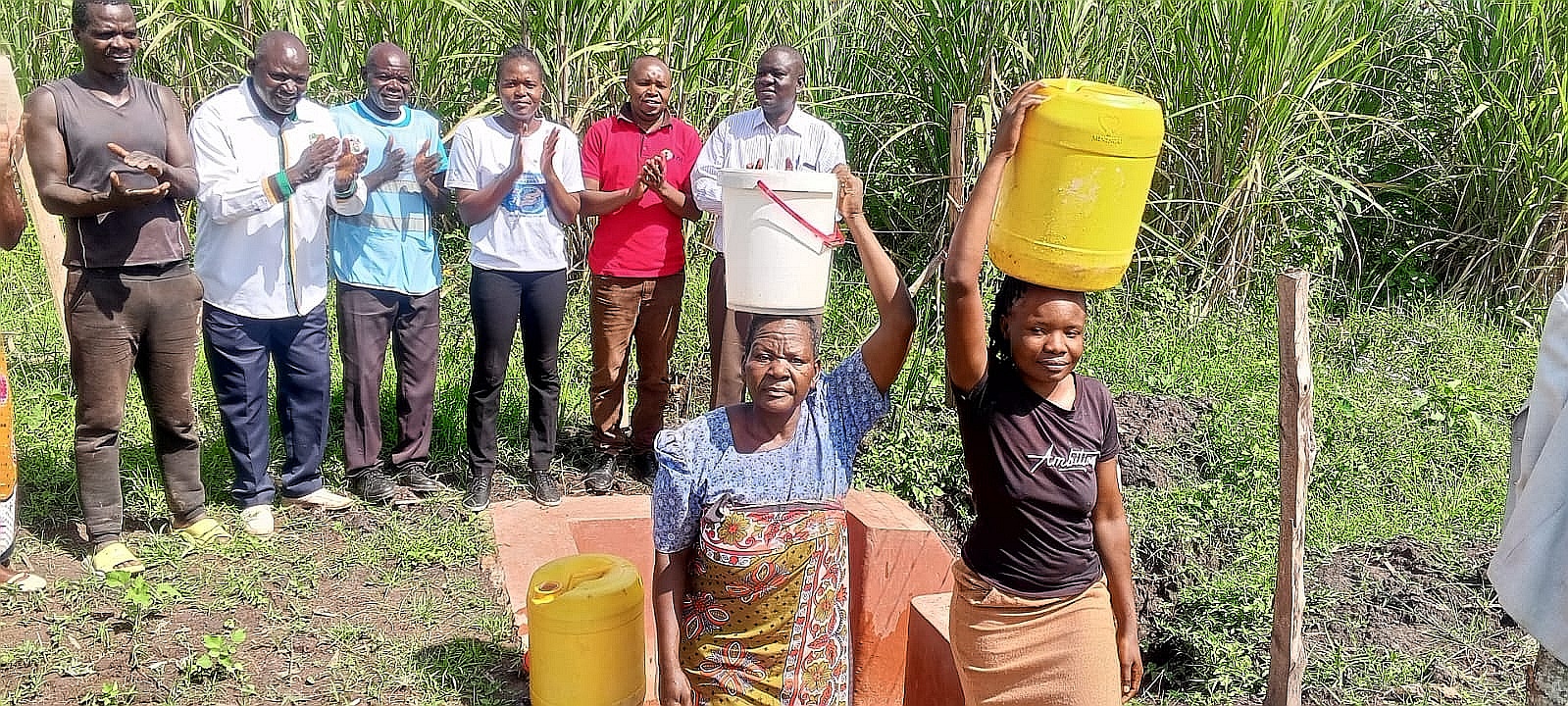
Women carry away water drawn from Karonje water spring at Mulukanjo village in Butere on Tuesday/IMAGE /HILTON OTENYO
The Kakamega county government is working with partners to expand access to clean drinking water and eradicate waterborne diseases.
The initiative focuses on ensuring residents use safe water by protecting natural springs, which remain the primary source of water for most households.
The county is also reviving and upgrading existing community water projects under the World Bank-funded FLLoCA programme to increase coverage.
“We have upgraded Iranda Water Project to a piped scheme connecting 112 households. We are also targeting to revive and upgrade Firatsi and Emasiba community water projects,” said Ruth Khisa, Butere subcounty water officer.
Partners in the initiative include the World Bank-supported Financial Locally-Climate Action (FLLoCA), Sustainable Organic Farming Development Initiative (SOFDI) and Community Asset Building and Development Action.
The programme also addresses issues around Neglected Tropical Diseases (NTD).
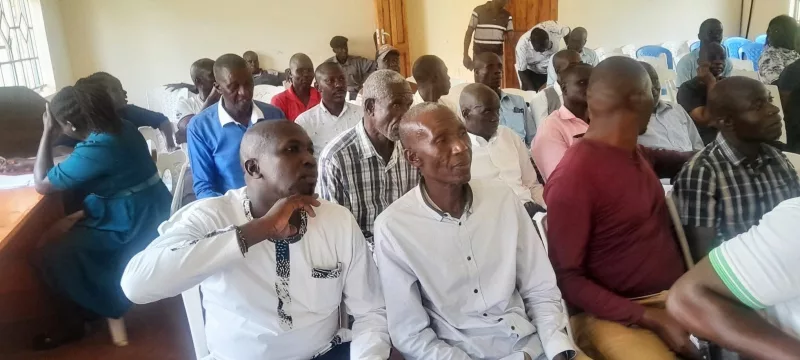
Khisa spoke during the handing over of Mulukanji, Emachifi and Emitsesa springs on Tuesday.
SOFDI representative Simon Shikalo said the organisation is implementing sanitation projects across Kakamega and Vihiga counties.
He noted that 2,338 springs have been protected in Khwisero, Ikolomani, Shinyalu, Malava, Navakholo, Mumias East and Lurambi, with ongoing work in Butere.
“Subject to identification and verification approval, and in coordination with the public health office, we plan to protect more springs, working closely with the communities,” Shikalo said.
He added that the level of community contribution determines the number of springs that can be protected in each area.
Shikalo emphasised that involving the community through spring protection committees creates ownership of the projects.
The cost of protecting each spring ranges between Sh60,000 and Sh70,000.
“We are trying to avoid a situation like the Kenya-Finland cooperation water projects in the 1980s, where people drew water from Kefinco boreholes without feeling ownership,” he said.
He also highlighted that the initiative creates awareness of NTDs through the Agri-Nutrition programme.
Butere NTD coordinator Eliud Asinyama said the county needs to administer deworming drugs alongside behaviour change communication and water sanitation and hygiene initiatives to eradicate worms.
“Spring protection is part of water sanitation and hygiene efforts, ensuring communities can access safe water treated with chlorine to remove disease-causing micro-organisms,” he said.