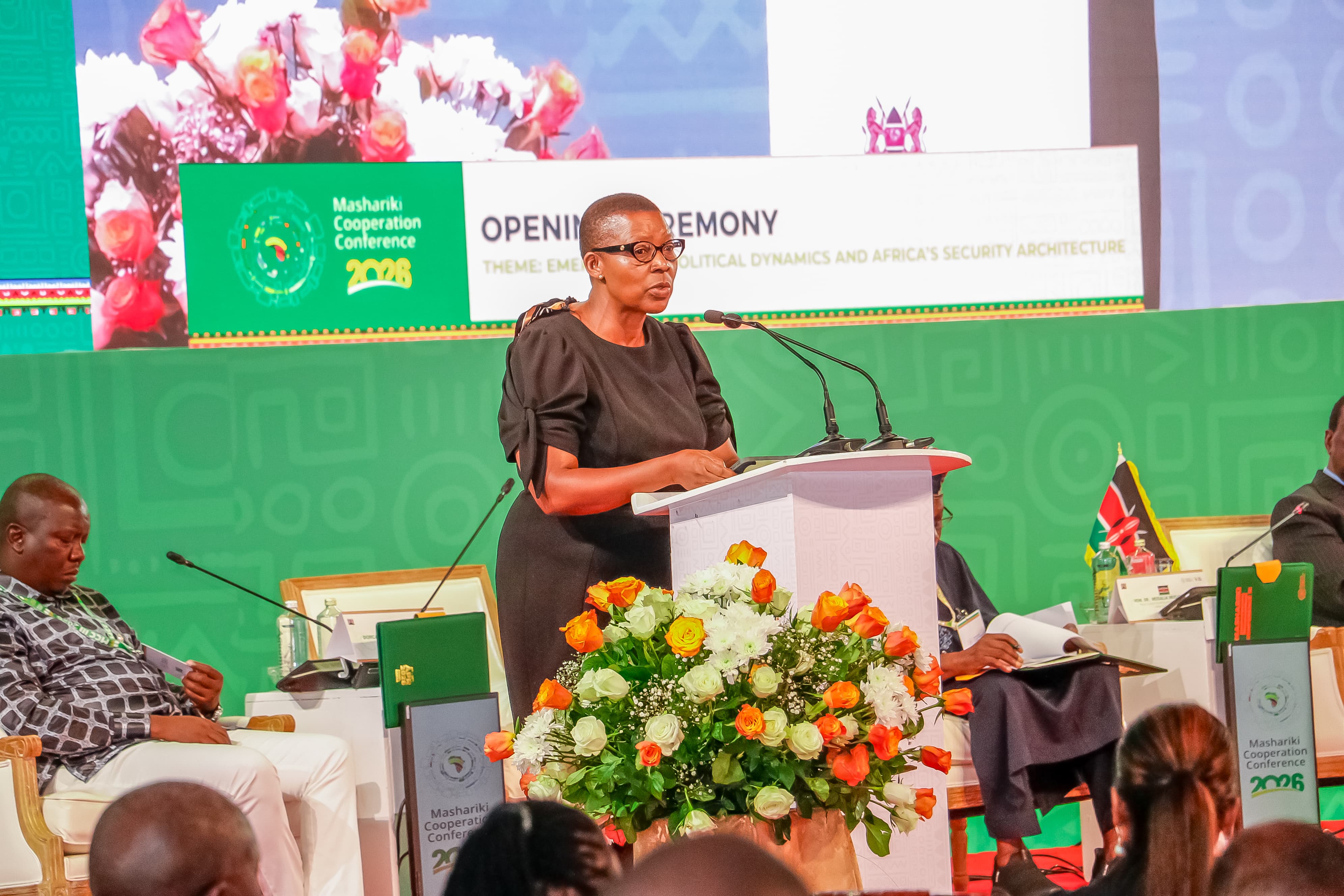
 Attorney General Dorcas Oduor in Diani, Kwale county
on Thursday / BRIAN OTIENO
Attorney General Dorcas Oduor in Diani, Kwale county
on Thursday / BRIAN OTIENO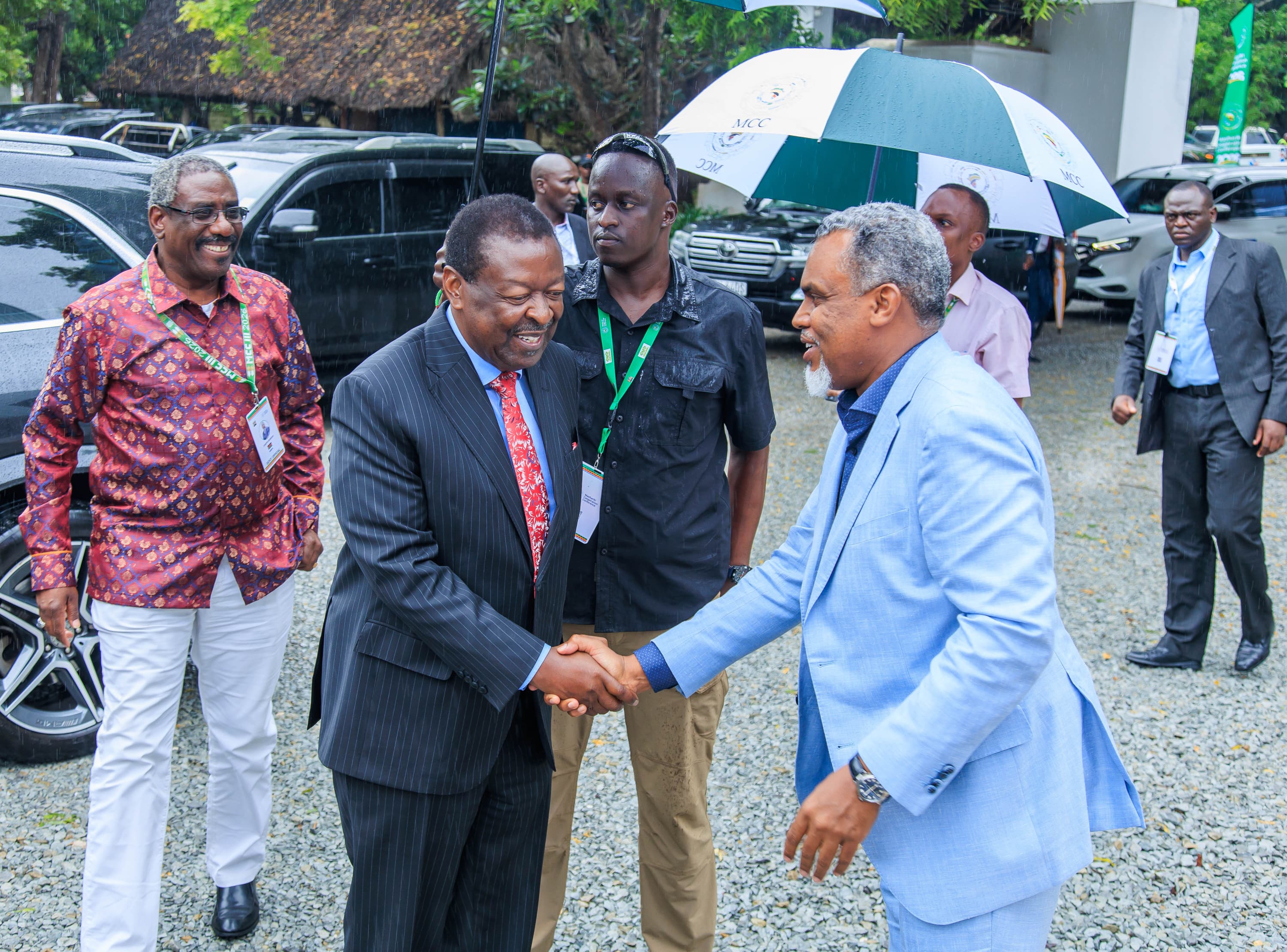 Prime Cabinet Secretary Musalia Mudavadi and NIS
boss Noordin Haji in Diani, Kwale county on Thursday / BRIAN OTIENO
Prime Cabinet Secretary Musalia Mudavadi and NIS
boss Noordin Haji in Diani, Kwale county on Thursday / BRIAN OTIENO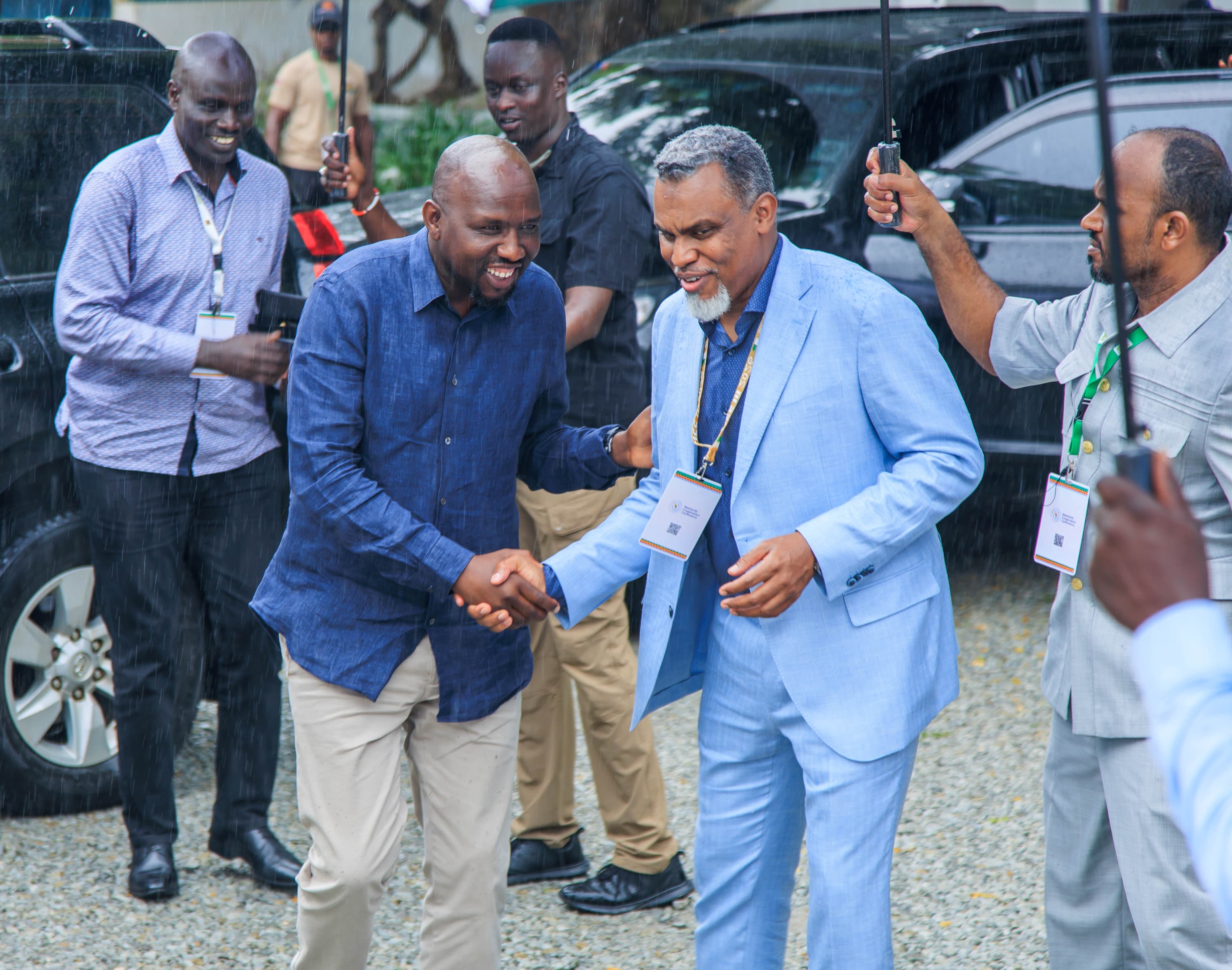 Interior CS Kipchumba Murkomen and NIS boss Noordin
Haji in Diani, Kwale county on Thursday / BRIAN OTIENO
Interior CS Kipchumba Murkomen and NIS boss Noordin
Haji in Diani, Kwale county on Thursday / BRIAN OTIENOAfrica is increasingly being turned into a playground for terror networks, fueled by shifting global power dynamics, emerging technology and weak security coordination, a high-level security forum heard on Thursday.
This comes as Artificial Intelligence, intertwined with the changing face of terrorism, and response to global resource competition, calls for reshaping of security conversations.
Speaking during the third edition of the Mashariki Cooperation Conference in Diani, Kwale county, National Intelligence Service director general Noordin Haji called for cooperation among security agencies saying Kenya and Africa must rethink its security architecture.
“Emerging political geopolitics have their own challenges which we must be able to address through collaboration,” Haji said.
The NIS DG said instability in one region can have far reaching consequences in the rest of the region.
“These conversations must allow us to meaningfully contribute to strengthening our collective capacity to anticipate, prevent and respond to emerging threats,” Kenya’s chief spy said.
The conference has brought together policymakers, intelligence leaders, security experts, and thought leaders from 76 countries across the globe.
Interior CS Kipchumba Murkomen said security agencies must be proactive in tackling the intertwined nature of security threats in the region and the continent.
“Currently, Africa is experiencing the biting effects of climate-induced pressure that are becoming increasingly intense and frequent, with far reaching consequences on human security,” Murkomen said.
He said political dynamics are intensifying the convergence of terrorist networks and organized criminal groups which increasingly undermine state sovereignty and complicates national security threats.
The threats are further magnified by technological advancement that are not only force multipliers of existing risks but also create entirely new vectors of vulnerability.
“Further, misinformation and disinformation campaigns erode public trust and social cohesion as cyber criminals target critical infrastructure and financial systems, while crypto-currencies are facilitating untraceable funding channels for nefarious actors,” the Interior CS said.
Prime Cabinet Secretary and Foreign Affairs CS Musalia Mudavadi said the economic value of peace and security outweighs many of the prevailing material economic objectives pursued by states.
He said secret treaties are mostly considered the causes of war in many parts of the world, adding that treaties are supposed to be open and public.
Mudavadi said the world is increasingly using non-combative means to start wars which eventually benefit some nations at the expense of others.
“We are witnessing weaponization of tariffs alongside increasing and broadening of sanctions in this arena of geo-economics,” the PCS said.
He said the fundamental principles of diplomacy are being eroded with militarism re-emerging as a common instrument of foreign policy.
“In such a world, clarity of national interests is often blurred, highlighting the need for advanced intelligence-led geo-economics and geopolitical decision-making.
“We must begin to strategically prepare for the world beyond the current global order,” Mudavadi said.
Attorney General Dorcas Oduor said Africa, blessed with natural resources, a youthful population, and immense strategic significance, finds itself at the centre of intensified global competition.
“This competition brings opportunity but also the risk of fragmentation and external dependency,” Oduor said.
The AG said the threats facing Africa are evolving and now the continent is not only fighting insurgencies but also algorithms.
“Violent extremism continues to bite parts of our continent while civil wars have produced catastrophic humanitarian crises,” Oduor said.
She said intelligence agents need to know the laws that government them and the country saying the intelligence sector needs to work more closely with the law sector for effective and efficient service delivery.