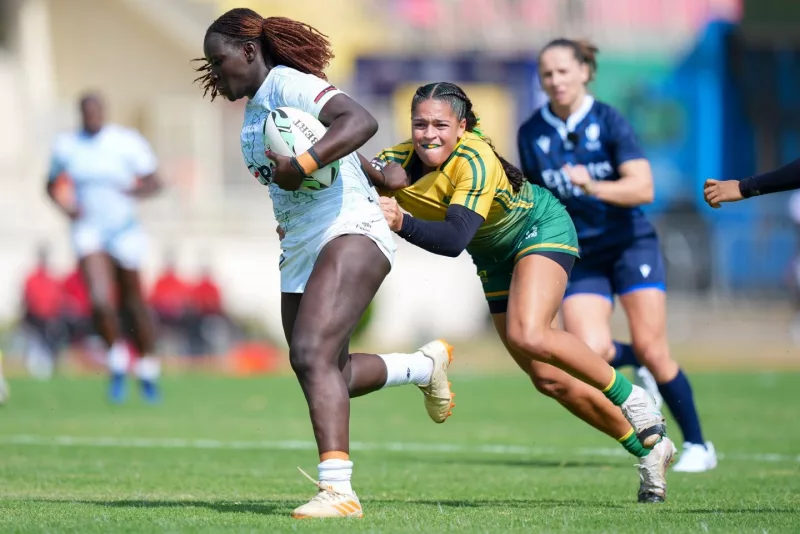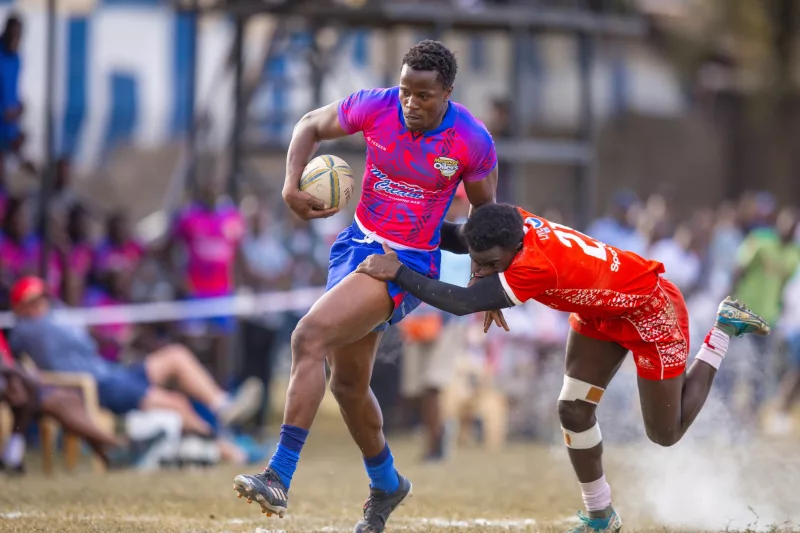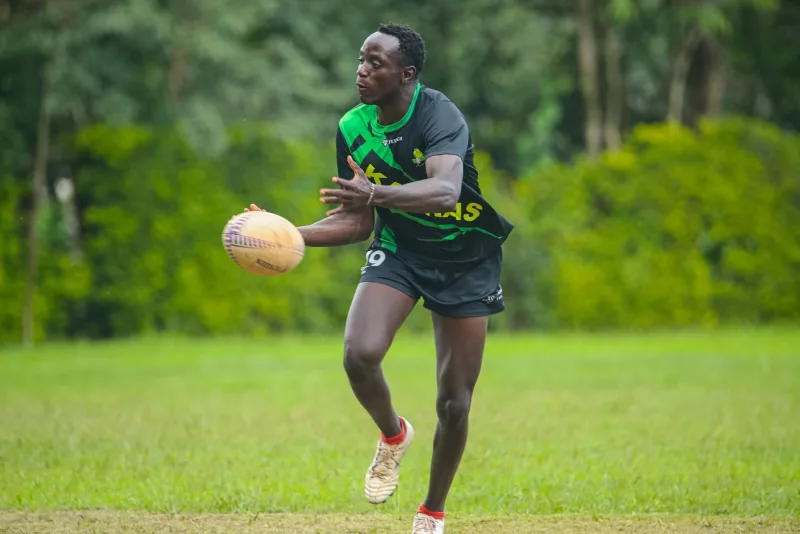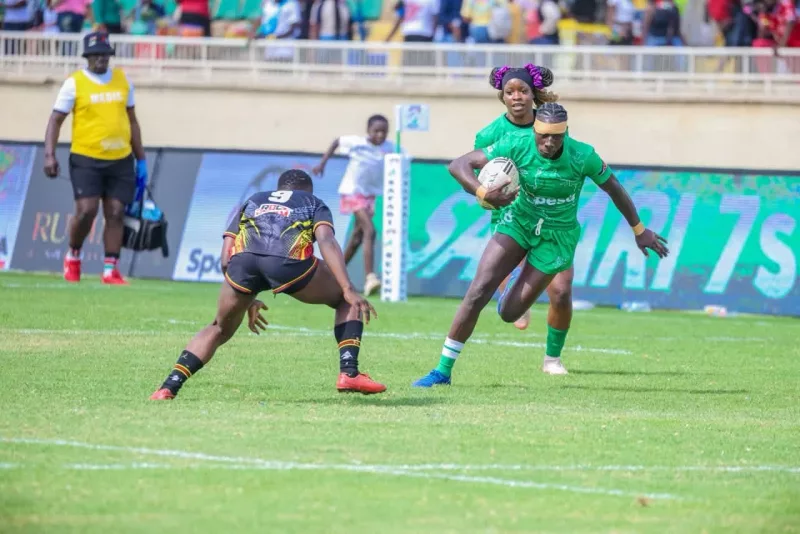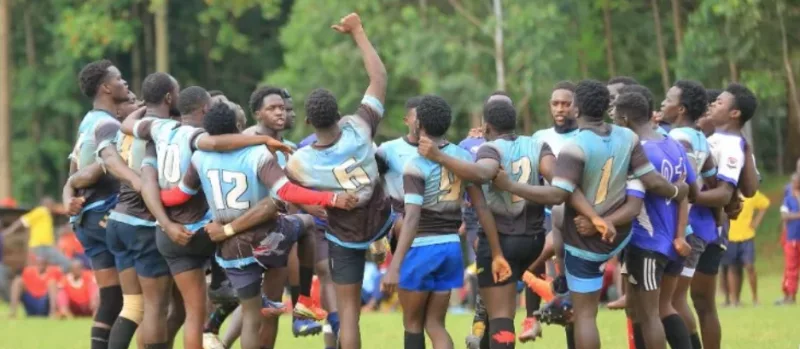
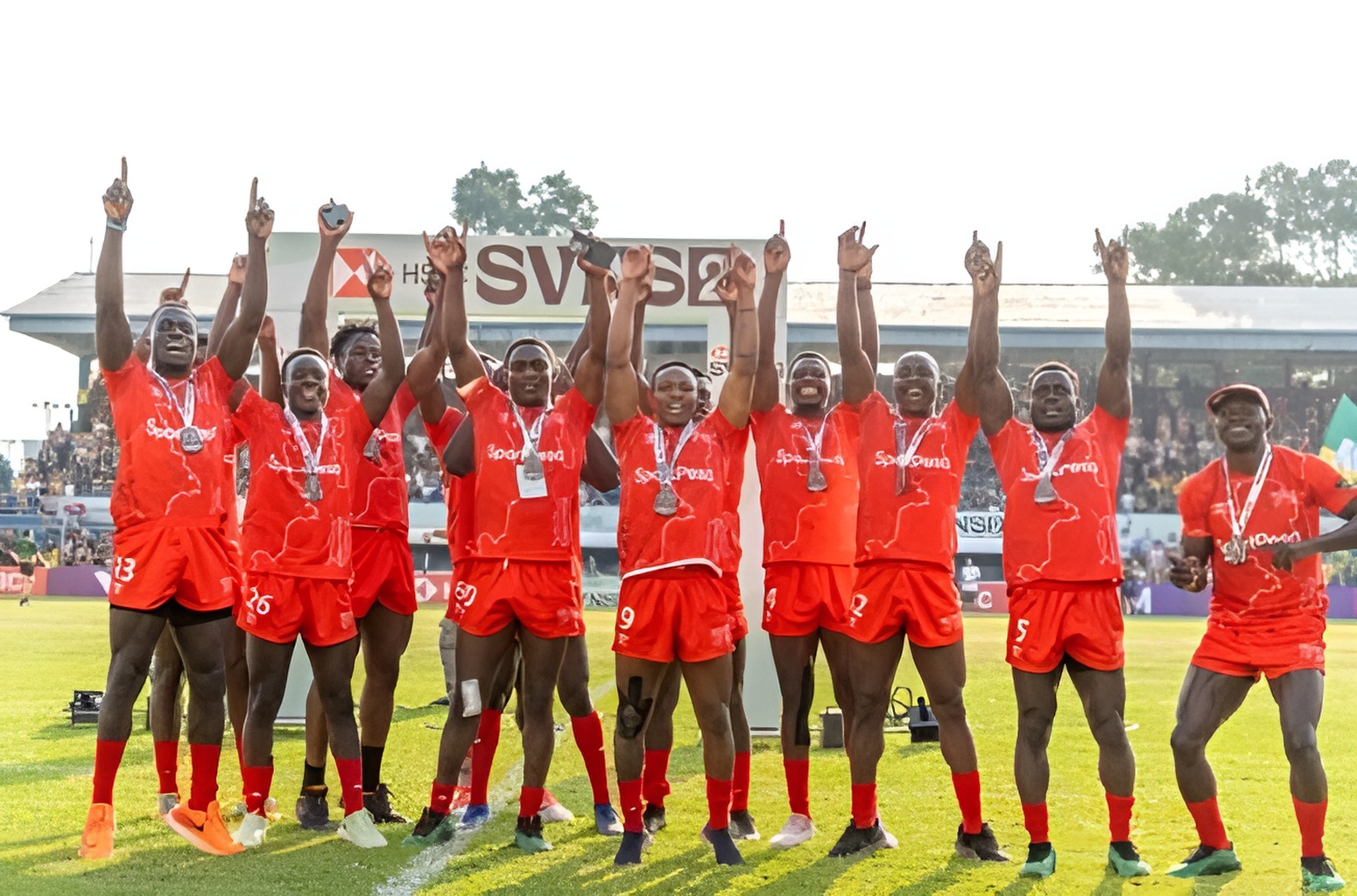
 Shujaa players celebrate after qualifying for HSBC SVNS World Championship/HANDOUT
 The Kenya Sevens team, Shujaa, deserve applause for their resounding return to the HSBC SVNS World Championship playoffs.
Their resurgence marks a powerful restoration of pride, purpose, and presence among rugby’s elite, reasserting Kenya’s place on the global stage.
For Kenya, Shujaa’s presence among rugby’s elite carries enduring historical weight. This is a team that once shook the HSBC SVNS circuit to its core before its fortunes faded.
The 2016 Singapore Sevens remains the defining reference point: a commanding 30–7 victory over Fiji in the final that was not merely an upset, but a recalibration of what was possible in the game.
Kenya’s triumph was the result of years of relentless pursuit at the top level of sevens rugby, shaped by explosive pace, daring improvisation, and an unshakable refusal to be defined by hierarchy.
Yet what followed underscores a hard truth of elite sport: permanence is an illusion. Kenya’s relegation in 2023, after a razor-thin play-off defeat to Canada in London, ended a two-decade run as a core team.
Another blow in 2025 widened the fracture, casting Shujaa fully outside the elite frame.
The restructuring of the global Sevens circuit, aimed at refining competition and concentrating excellence, also narrowed the pathways to survival.
What followed, however, was a slow and deliberate rebuilding of identity, a patient restoration of belief carried out in the long shadow of diminished status.
The Division 2 campaign of 2025–26 became a study in patience and reconstruction. Under head coach Kevin Wambua, emphasis shifted from romantic memory to functional reality: defensive structure, decision-making under fatigue, and consistency across successive tournaments.
With experienced figures such as Andrew Amonde providing continuity with an earlier era, Kenya’s rebuild was grounded not in nostalgia but necessity.
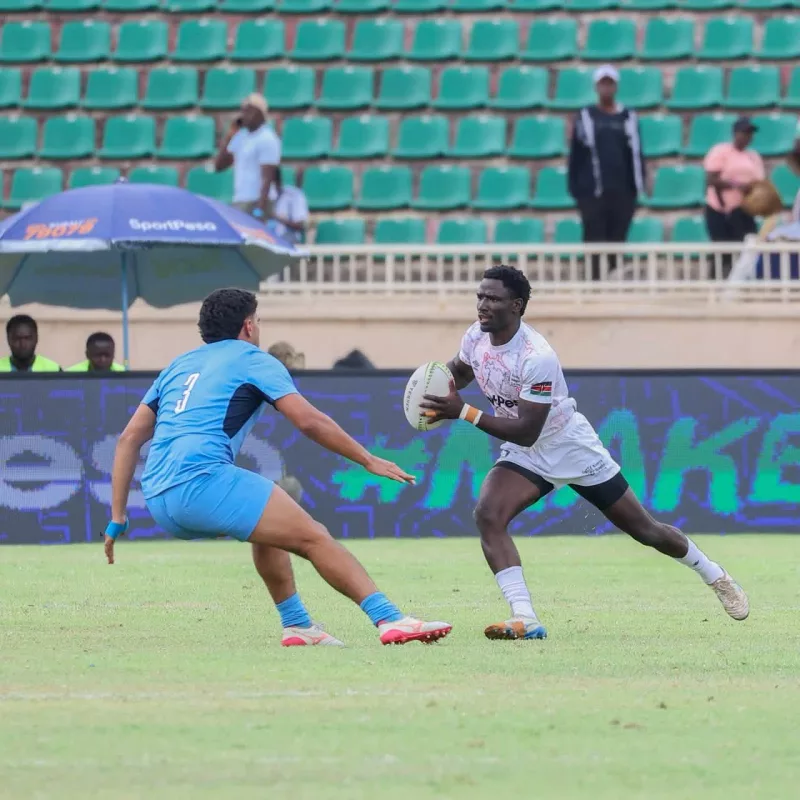
Progress came quietly, but unmistakably. Podium finishes in São Paulo, Nairobi, and Montevideo did not announce dominance; they signalled something more important—stability. In a format defined by volatility, stability is the quiet prerequisite of return.
That return now carries its own conditions. Re-entry into the HSBC SVNS World Championship is not a destination but an examination.
Across stops in Hong Kong, Spain, and France, Kenya must finish among the top eight to secure its place for next season's World Sevens Series.
The opening assignment in Hong Kong — against Australia, New Zealand, and the United States — offers no easing into elite competition, only immediate exposure to its most established systems of excellence.
The deeper question is whether Shujaa can sustain their place in a Sevens landscape that has shifted in structure, tightened in demands and moved decisively beyond its former contours.
Modern Sevens is faster, more structured, and increasingly homogenised. The space once reserved for improvisation—the instinctive unpredictability that defined Kenya’s identity—has narrowed significantly.
This creates a tension at the heart of their return. Kenya’s rugby identity has long been built on instinct: explosive running lines, rapid transitions, and turnovers converted into immediate momentum. Yet survival at the top now demands the opposite virtues—repetition, discipline, and controlled execution under relentless pressure.
The task facing the coaching group is therefore not only technical, but philosophical. Too much structure risks erasing what once made Kenya distinctive. Too little invites the instability that contributed to their earlier decline. Between those poles lies the difficult work of synthesis.
There is also a wider institutional reality behind the sporting story. Kenya’s fall from core status was shaped not only by results but by structural constraints: inconsistent funding, governance instability, and the difficulty of sustaining high-performance systems.
For a country that remembers 2016 vividly, expectation is inevitable. But expectation can also distort understanding.
The current squad, including emerging talents such as Patrick Odongo and Samuel Asati, are not heirs to a single moment of glory, but participants in an ongoing process of renewal. Their task is not to recreate history, but to ensure it does not become a ceiling.
What defines this moment is its conditional nature. Kenya is not simply back among the elite; it is being tested within it. Every match becomes a measure of belonging, every performance a test of endurance, every tournament a question of sustainability.
The challenge ahead is not to recall what Shujaa once was, but to define what it can remain in a game that no longer pauses for nostalgia.