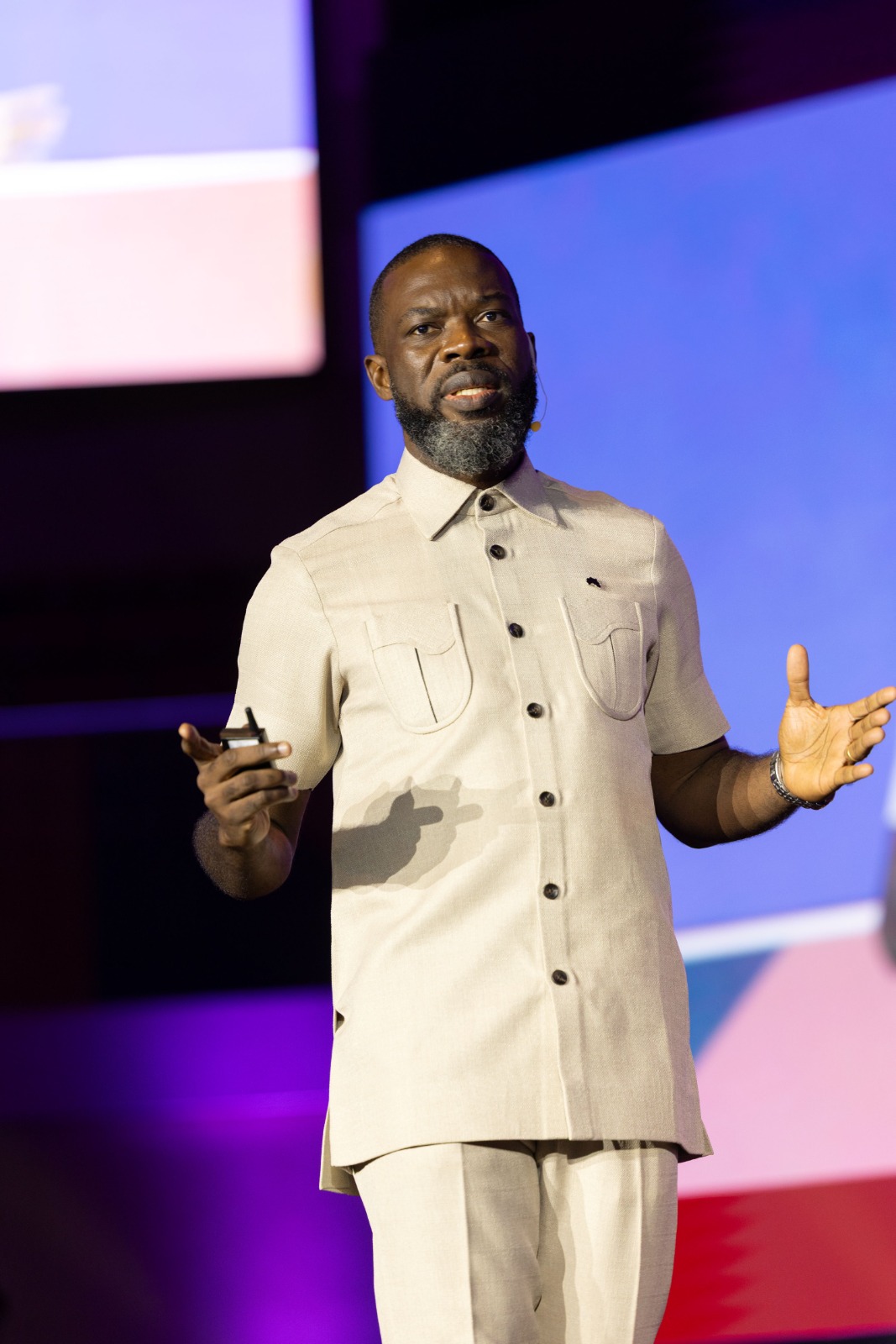
PMI sub-Saharan Africa managing director George Asamani at the AU conference in Addis Ababa, Ethiopia in March / BRIAN OTIENO
With the Iran war causing disruptions in businesses, most enterprises are facing rising pressure to reinvent, which might lead to mass layoffs.
This is especially so for Kenyan tea exporters, who have so far lost more than Sh3.1 billion as more than eight million kilogrammes of tea is stuck at the Mombasa port.
The challenge is not recognising change and the need to adapt faster, but rather the conversion of strategy into action, the Project Management Institute said on Thursday.
“For instance, tea companies in Kenya need to think of alternative markets for their teas, especially where delivery will be faster and have less hurdles,” PMI sub-Saharan Africa MD George Asamani said.
He was addressing an online forum during the launch of the Manifesto for Enterprise Agility.
The manifesto is a leadership guide for organisations facing frequent disruption and rising pressure to reinvent.
Asamani said Kenyan tea exporters must start thinking about the African market more and lobby for policies that will reduce transportation costs intra-Africa.
“While 85 per cent of C-suite executives recognise enterprise agility as critical and very important, 65 per cent admit they implemented it to a limited extent or not at all,” he said, citing global research by PMI.
C-suite executives are the topmost leaders in an organisation. They are responsible for making high-stakes strategic decisions, setting company vision, driving performance and managing overall operations to ensure long-term success.
The study found that 93 per cent of senior executives say they must rethink and challenge assumptions of their operating models or business approaches at least every five years.
Nearly 65 per cent say they are doing so every two years or faster.
Asamani said enterprise agility is about building organisations that can adapt quickly without losing alignment, so leaders can respond to disruption while keeping their people and priorities focused on delivering value.
He said the Manifesto for Enterprise Agility moves agility beyond teams and projects to the entire enterprise, including leadership behaviour, operating models, governance and culture.
“Rather than prescribing a framework, the Manifesto focuses on how leaders build and run the system for enterprise-level agility,” he said.
That, he said, includes, governing with guardrails instead of gatekeepers, funding intent instead of activity and moving authority closer to where value is created.
GE Appliances CEO Kevin Nolan said today’s business landscape demands rapid adaptation and greater agility.
“Agile organisations adapt faster and take the lead, while those not embracing agility risk falling behind as collaboration becomes essential in a dynamic environment,” Nolan said.
Sagar Kochhar, former CEO and co-founder of Rebel Foods, said enterprise agility is less about frameworks and more about leadership courage, the courage to reset the vision, dismantle legacy assumptions and trust teams to execute within systems designed for speed.
“This manifesto captures a critical truth. Enterprise agility is not a transformation initiative but a leadership mindset required to continuously reinvent vision, structure and execution in a volatile world,” he said.
Superagency co-author Greg Beato said 25 years after the Manifesto for Agile Software Development presented a new way to think about software development, it is time to apply similar thinking to enterprises as a whole, not just to projects or products.
“Just as the Agile Manifesto was a response to a major change in technological conditions driven by the Internet,” he said.
"The growth in physical and digital networks around the world compels enterprises to incorporate and deploy agility to their entire organisational systems, including leadership, operating models, execution governance and culture."