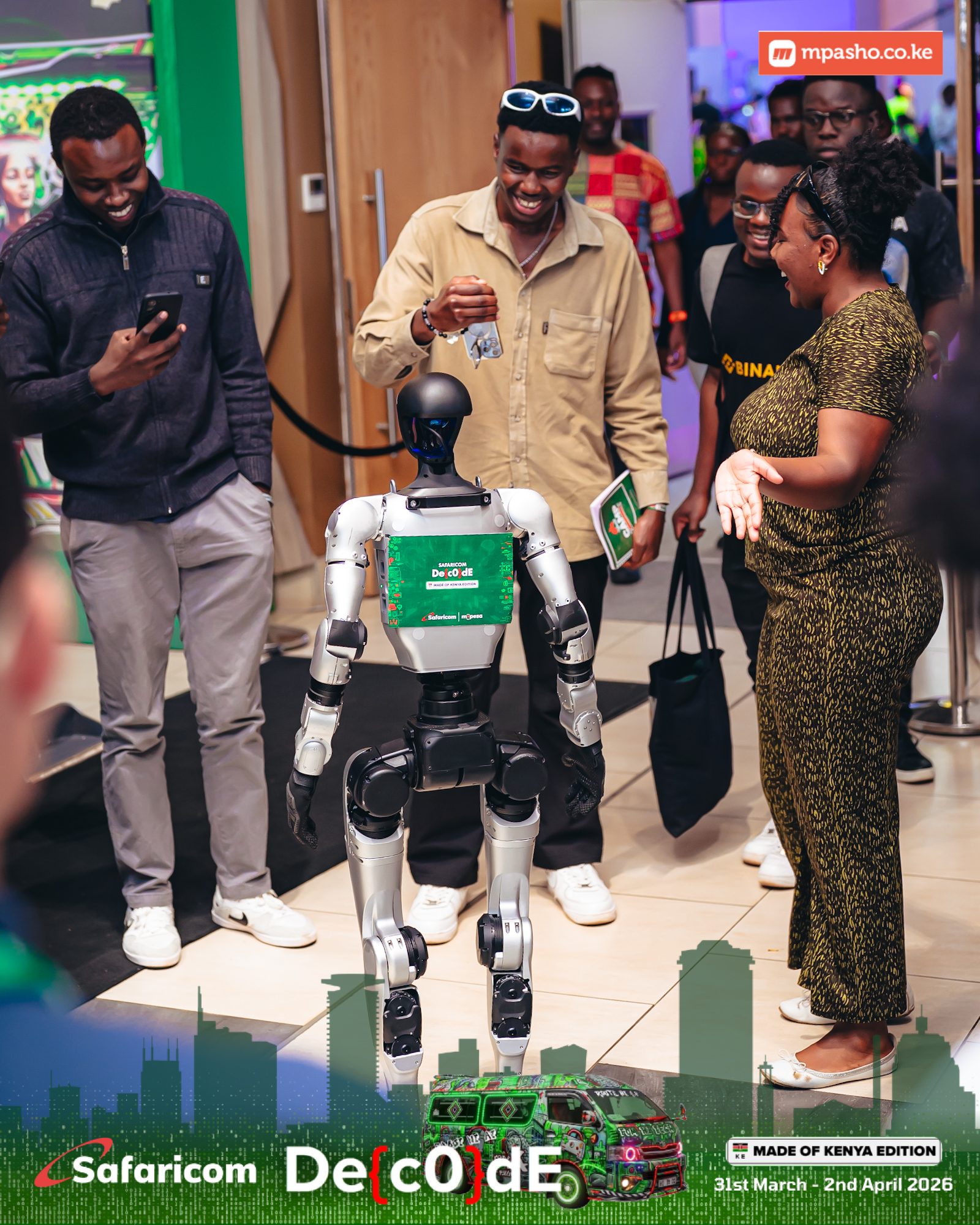
At the recent Safaricom Decode 4.0 event, Alen Ren, Huawei Kenya’s Solution Director, introduced a glimpse into the future of African technology: a humanoid robot named Sara.
The innovation, a joint effort between Huawei and Safaricom, is aimed at propelling Safaricom toward its vision of becoming a leading technology company in Africa by leveraging advanced robotics and AI.
Why “Sara”?
Ren explained that the robot’s name was intentionally selected to feel relatable, noting it was chosen to be “friendly and local,” while also starting with the letter “S” to align with the Safaricom brand.
While Sara currently demonstrates physical motions such as waving and bouncing, she represents a broader ambition.
According to Ren, the humanoid is “the face of a comprehensive AI program” and will eventually be integrated into a new innovation hub planned by Safaricom.
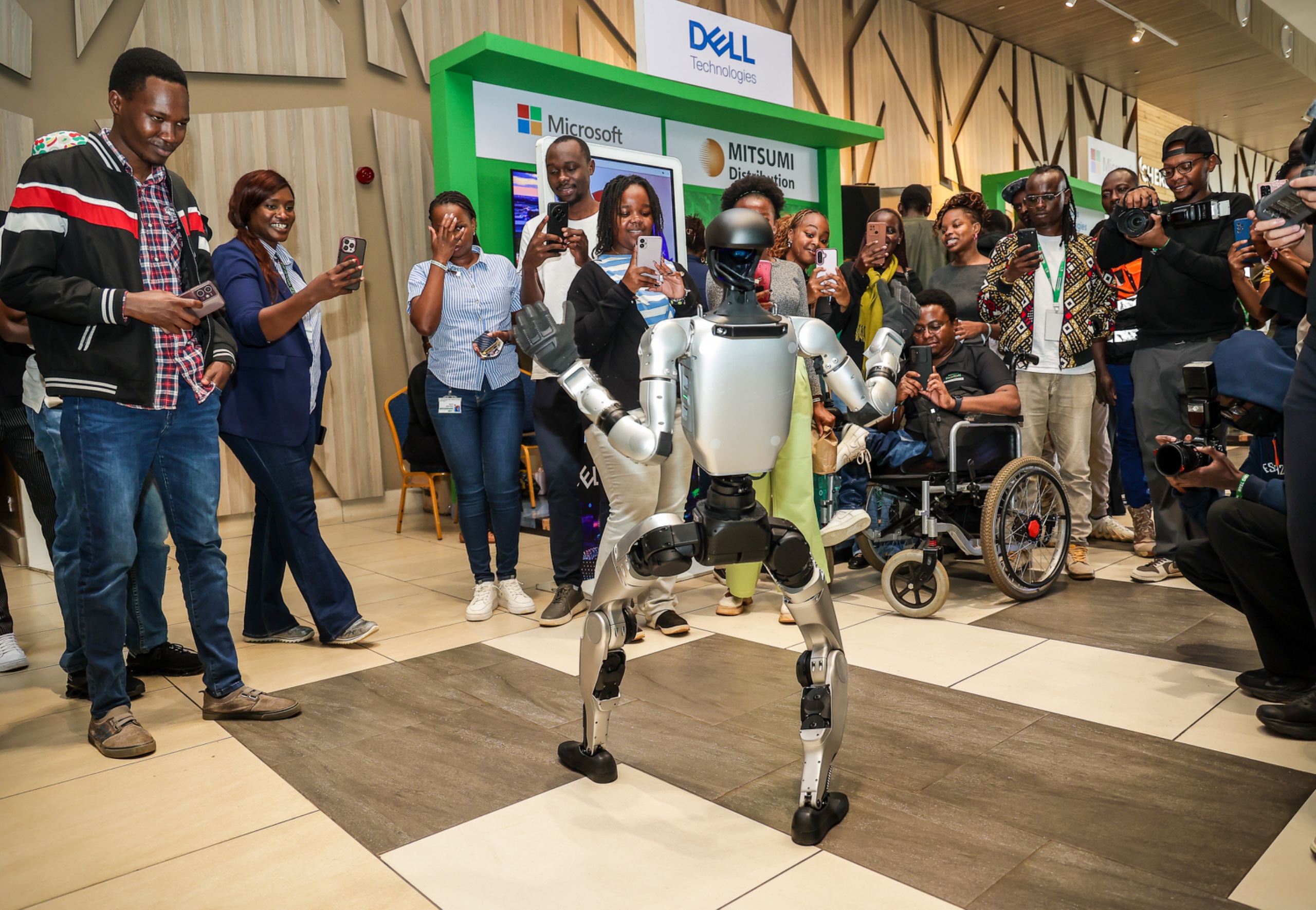
Beyond Motion: Real-Time Interaction
The next phase of development will focus on Large Language Model (LLM) training. Ren stated that within a month, Sara is expected to support real-time interaction, allowing users to speak with her and receive both verbal and physical responses.
He noted that this capability is designed to mirror developments already seen in China, where similar robots are deployed in delivery services and industrial environments.
Transforming High-Risk Industries
A key application of the technology lies in high-risk industries. Ren explained that robots are already being used in mining operations to detect hazards and carry out tasks that would otherwise endanger human workers.
He pointed out that Kenya presents similar opportunities, including detecting dangers in deep-earth mining, supporting logistics operations in ports and delivery services, and enabling industry trials.
Safaricom, he added, is the first in Kenya to test these use cases to determine where they can provide the most value.
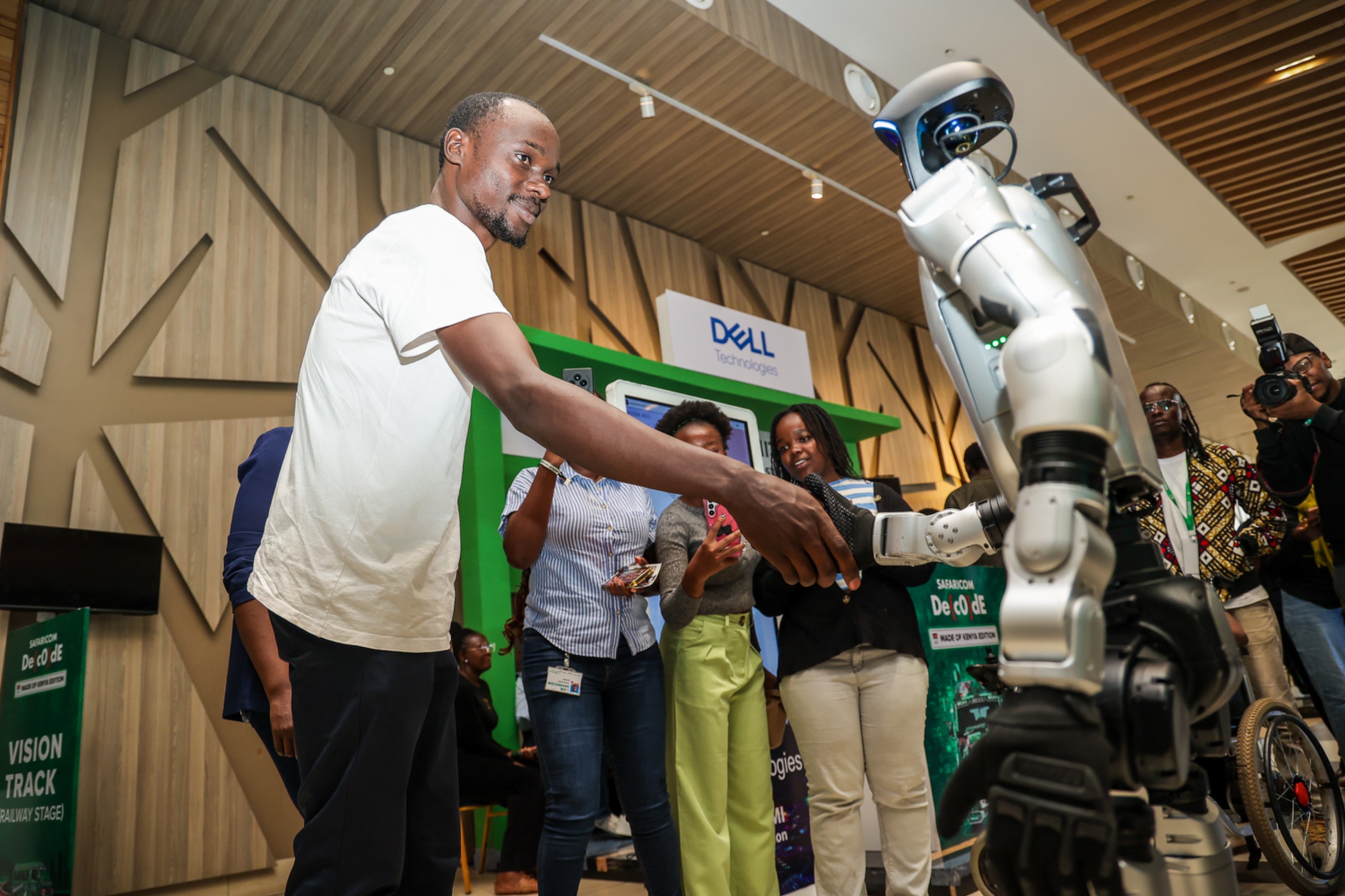
Will Robots Replace Humans?
Despite the rapid pace of advancement, Ren maintained that robots are not designed to replace humans. He argued that while AI can generate content such as videos or cartoons, it cannot “seek out new ideas” or alter world-changing algorithms.
“Robot is only used to run tasks designed by human beings,” Ren stated, while acknowledging that the pace of innovation means the technological landscape in five years may be difficult to predict.
He also noted that the biggest challenge in developing Sara was not the AI itself—described as a mature technology—but the mechanical engineering required to ensure the robot’s limbs and joints move with human-like smoothness.
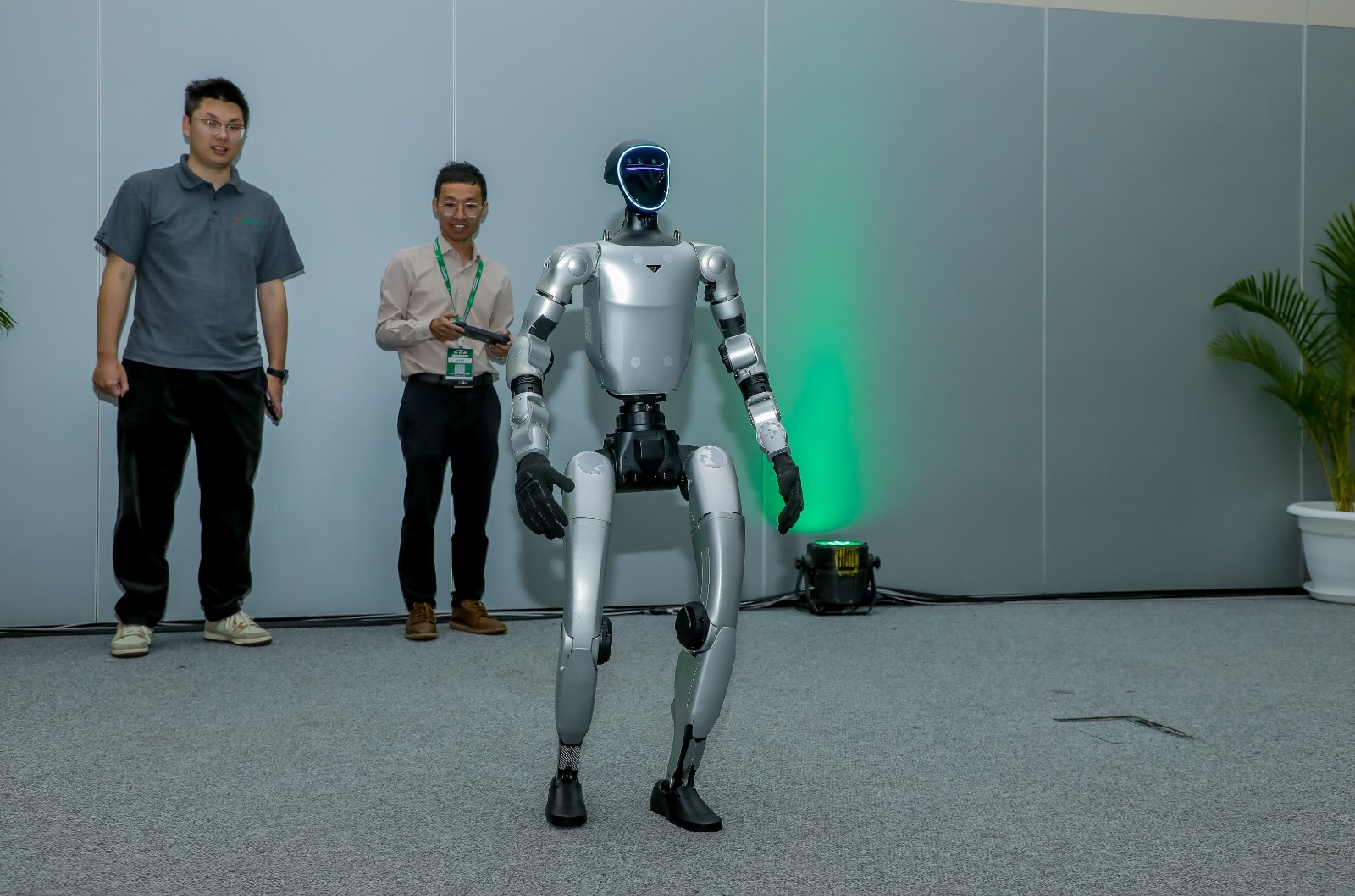
Safety and Regulation
On safety and regulation, Ren emphasised that the robot can be manually stopped at any time. He also highlighted the need for structured oversight in Kenya, pointing out that in China, strict regulations limit robot ownership and training to specific organisations and individuals.
The Five-Year Outlook
Looking ahead, Ren predicted that within five years, humans may no longer need to work in hazardous environments, as robots could take over such roles.
Drawing comparisons to the rapid adoption of self-driving cars in China, he said the coming years will bring changes that people “didn’t even imagine beforehand.”
He added that Sara represents only the first step as Huawei and Safaricom work to bring global technological advancements into the local context.
Turning Ideas Into Reality with 3D Printing
The event also showcased innovations in manufacturing and design. Dennis Poriot, a product designer with Beyond 3D Africa, demonstrated how modern tools are transforming ideas into tangible products.
Describing the company’s mission, Poriot stated: “we help people make things.” He explained that the process begins with an idea, which is then designed and printed into a “physical product to solve a problem,” whether for business, commercial sale, or simply to “fix a [problem].”

Demystifying 3D Technology
For many attendees, the demonstrations challenged existing perceptions. Poriot observed that some people believed “3D printing is something far off,” only seen “in movies or online.”
However, the live sessions showed that the technology is already “here and it’s for everyone” and remains “quite accessible.”
He added that individuals do not need to own equipment themselves, as they can “work with people like us to help you turn your idea into [reality].”
A Mesmerising Experience
The printing process itself drew significant attention. Poriot described it as “almost mesmerizing,” noting that many attendees found themselves “staring at it working for quite a bit,” with some saying, “I could stay here for hours.”
This experience helped make what is often seen as a complex industrial process more engaging and understandable.
Inspiring the Next Generation
The event attracted a wide audience, including high school and university students interested in technology.
Poriot stressed that such platforms are “quite important” for connecting industry professionals with emerging talent.
He noted that these interactions help young people stay “engaged in what is happening in the industry” and allow them to see that there are practical opportunities to use technology in solving real-world challenges.