The proposed Daua Multipurpose Dam, a joint initiative by Kenya, Ethiopia and Somalia, is being positioned as a flagship project aimed at addressing shared challenges in food security, water management and energy supply across the region.
But even as momentum builds, officials at the Irrigation department have pointed at coordination and financing challenges, noting that project’s success is dependent on diplomatic engagements and the ability of the three states to jointly mobilise financing.
A high-level meeting was held between the top leadership at the Ministry of Foreign Affairs and the Ministry of Water and Irrigation to seek ways of unlocking the project implementation.
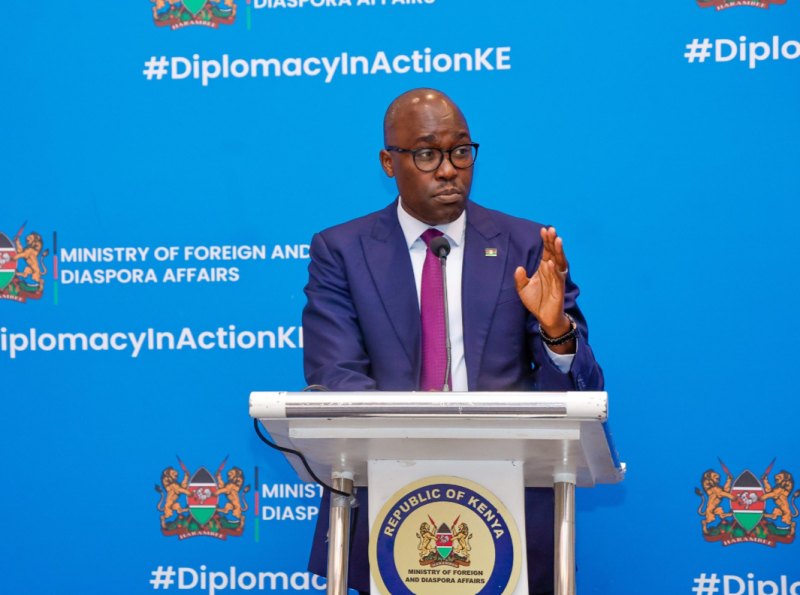
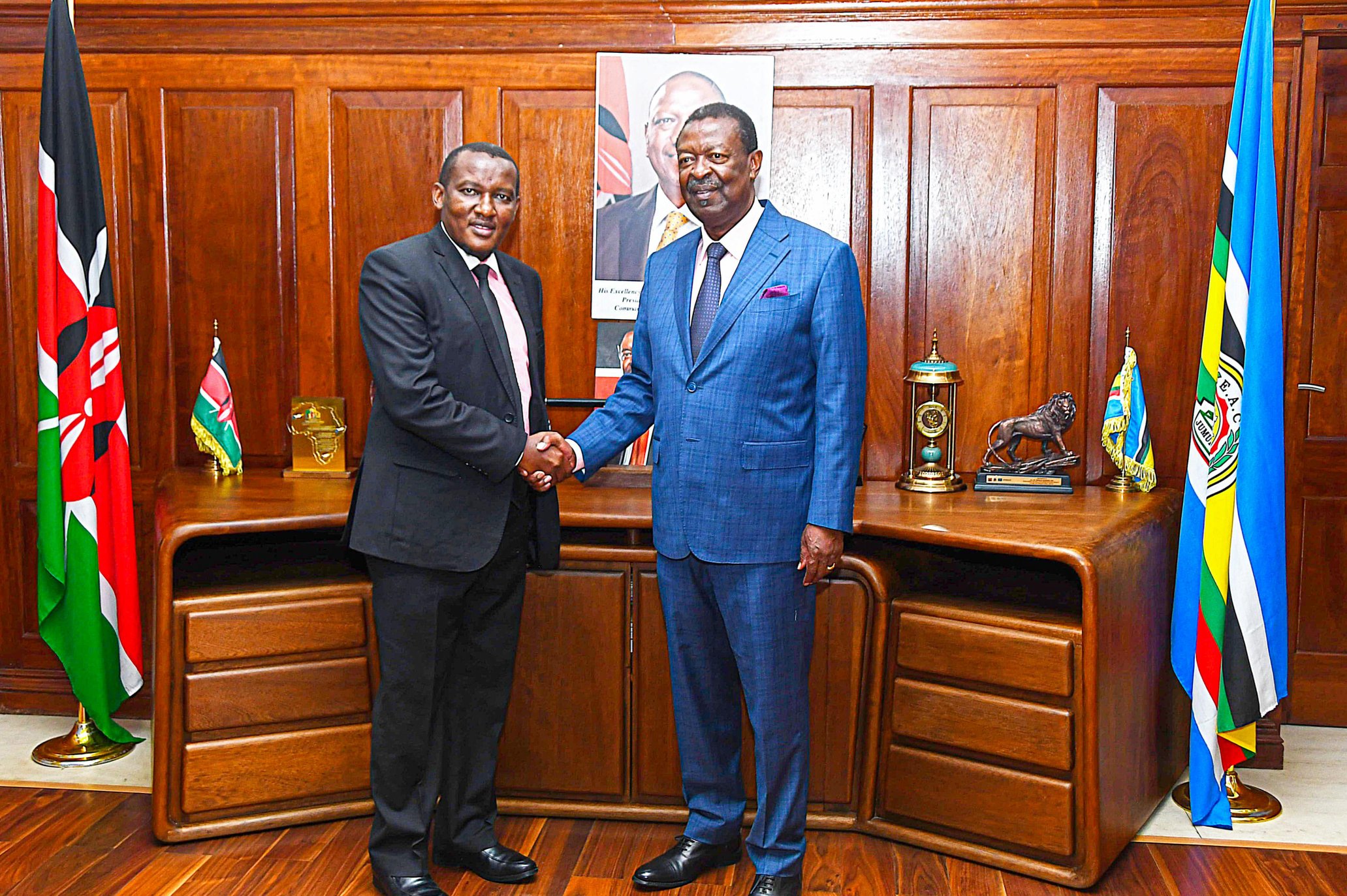
Irrigation Principal Secretary Ephantus Kimotho met with PCS and Foreign Affairs CS Musalia Mudavadi to explore ways to align strategy and fast-track engagement with the regional partners.
The meeting pointed to existing bottlenecks that have frustrated the implementation of the project. This has necessitated the establishment of a joint technical team comprising experts from the three states, and a high-level delegation to Ethiopia mid-April led by Mudavadi to unlock the project.
According to the Department of Irrigation, the mission will focus on fostering “mutual understanding and strengthening cooperation frameworks” to facilitate the development of the dam.
The joint technical team is expected to fast track progress by spearheading feasibility alignment, technical harmonisation, and the development of a coordinated implementation roadmap.
Kimotho emphasised the need for coordinated diplomatic engagement to align the interests and commitments of the three partner states.
“I appreciate the Prime Cabinet Secretary’s commitment to championing diplomatic engagement, including the upcoming high-level mission to Ethiopia aimed at aligning partner states and accelerating implementation. We remain committed to fostering strategic partnerships that deliver sustainable and shared socio-economic benefits across the region,” Kimotho said.
Mudavadi’s mission is seen as a critical step in ironing out competing national interests and securing political buy-in, which is essential for the transboundary infrastructure project.
“The project cannot move forward without alignment at the highest political levels. Water, energy and land use are highly sensitive issues, especially when they cut across borders. The countries we are dealing with also have different priorities and challenges as well,” a senior state official aware of the discussions told the Star.
Ethiopia is currently prioritising the Grand Reconnaissance Dam, which has triggered a diplomatic row with Sudan and Egypt.
In February, visiting Egyptian Foreign Minister Badr Abdelatty announced Kenya would be prioritised under its new $100 million (Sh12.9 billion) Nile Development Fund. The initiative is aimed at financing dam and water infrastructure projects across Nile Basin states.
The announcement came as Cairo intensified its appeal for African backing against what it terms Ethiopia’s “unilateral” actions on the Nile.
Such competing interests are said to have negatively affected the implementation momentum of the flagship project.
The project, with an expected capacity of four billion cubic meter and 8.2 MW of hydropower generation , is also expected to cushion the recurrent drought in arid and semi-arid regions.
It also fits into a broader strategy by President William Ruto to invest in irrigation and climate-resilient infrastructure amid increasing weather volatility.
If implemented, the Daua Dam is expected to support irrigation, hydropower generation and sustainable water supply, offering wide-ranging socio-economic benefits to millions of people across the three states.
However, beyond diplomacy, financing remains a major hurdle.
The three states are now working on a joint resource mobilisation strategy, with the expectation that development partners, multilateral lenders and private investors will be brought on board to fund the broader Daua Basin Development Programme.
Given the scale of the project, coordinated financing will be critical to its viability.
“Single-country financing models are not feasible for projects of this magnitude. It requires pooled resources, shared risk and long-term commitment from all participating states,” the Irrigation official said.
According to the project description, the dam will cost $620.5 million, compromising preparation costs ($12 million) capital expenditure ($603.5 million) and the overall operation and maintenance set at $5 million.
Proposed type of financing is 76 per cent of either grant or loan from development banks to cater for the actual work, while 19 per cent is to be equity from respective governments to cater for land acquisition and environmental conservation. The five per cent balance to be from the beneficiaries to cater for operations and maintenance of the infrastructure.
The Daua project reflects a growing trend in Kenya’s big-infrastructure policy, where infrastructure is increasingly being used as a tool for regional influence and economic diplomacy.
This month President Ruto and his Ugandan counterpart launched the SGR extension to Malaba, a project expected to open up the Eastern African logistics business.
By spearheading cross-border initiatives, Nairobi is positioning itself as a key player in shaping economic integration within the Eastern Africa.