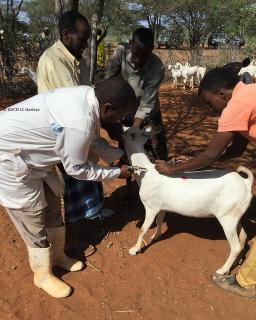
 Livestock disease detection./HANDOUT.
 Kenya is stepping up efforts to strengthen livestock disease detection and surveillance systems. The move is aimed at protecting farmers’ livelihoods, safeguarding public health, and securing access to lucrative export markets.
According to ILRI, livestock diseases remain a major challenge in the country, with outbreaks such as Foot-and-Mouth Disease (FMD), Peste des Petits Ruminants (PPR), and Contagious Bovine Pleuropneumonia (CBPP) continuing to reduce productivity and disrupt trade. Some of these diseases are zoonotic, meaning they can spread from animals to humans, posing additional public health risks.
Despite the threat, many smallholder farmers and pastoralists still lack access to affordable and reliable diagnostic tools, limiting early detection and timely response to outbreaks.
To address this gap, experts drawn from government, research institutions, the private sector, and farmer organisations convened in Nairobi to discuss on improving access to livestock disease diagnostics. The discussions centred on practical ways to make testing more accessible, affordable, and responsive to farmers’ needs.
Director of Veterinary Services Dr Allan Azegele said strengthening diagnostics is key to improving animal health systems in the country.
“Early and accurate disease detection allows us to respond quickly to outbreaks, reduce misuse of veterinary drugs, and guide targeted vaccination campaigns,” he said. “It is critical for protecting livestock productivity, public health, and food security.”
According to the State Department of Livestock, the country has an estimated 22 million cattle, 23 million sheep, and over 35 million goats. The sector supports livelihoods for up to 80–90 per cent of households in arid and semi-arid lands (ASALs), where livestock keeping is the main economic activity.
The dairy sector alone produces about 4.3 billion litres of milk annually, with the government targeting an increase to 10 billion litres, according to the Kenya Dairy Board. However, disease outbreaks and limited diagnostic capacity continue to undermine these ambitions.
He added that Kenya also faces a beef deficit estimated at about 300,000 metric tonnes annually, while export earnings from sheep and goats, particularly to Middle Eastern markets, have been affected by both disease-related restrictions and geopolitical disruptions.
Azegele noted that disease outbreaks can trigger market closures, restricting animal movement and cutting off income for farmers.
“When outbreaks occur, local and international markets are shut, and pastoral communities lose their primary source of income. This directly affects their ability to meet basic needs such as food and education,” he said.
Currently, Kenya has about eight veterinary diagnostic laboratories serving all 47 counties. The government now plans to double this capacity to 16 laboratories to improve coverage and reduce turnaround time for test results.
The initiative is being supported through partnerships with organisations including the International Livestock Research Institute (ILRI) and GALVmed under the Transforming Animal Health Solutions and Services (TAHSSL) platform.
GALVmed’s Head of Research and Development, Dr Karelle De Luca, said partnerships are crucial in ensuring that small-scale farmers benefit from improved technologies.
“We are committed to working with governments and partners to ensure that livestock keepers can access the tools they need to manage animal diseases effectively,” she said.
Participants at the meeting pointed out the need to bridge the gap between laboratory services and on-the-ground realities, particularly in remote pastoral areas. They called for innovative delivery models, including mobile diagnostics and strengthened community-based surveillance systems.
“Diagnostics are the eyes of the surveillance system,” said Musa Mulongo, TAHSSL Programme Coordinator. “By aligning efforts from county-level disease reporters to national laboratories, we can build a system that controls disease, supports trade, and safeguards public health.”
Azegele said the discussions come at a critical time, as Kenya remains on high alert during the rainy season, when disease risks tend to increase.“While no major outbreaks have been reported so far, veterinary authorities have intensified surveillance, particularly for Rift Valley Fever,’ he said.
Rift Valley Fever is associated with flooding and increased mosquito populations, according to the Food and Agriculture Organization (FAO).
He said a roadmap outlining key actions, partnerships, and investment priorities is expected following the meeting. The plan will guide efforts to integrate diagnostics into routine animal health services and strengthen Kenya’s alignment with global targets, including the eradication of PPR by 2030.
“Improving disease detection will not only keep animals healthy, but also enhance food safety, boost farmer incomes, and protect the country from future outbreaks that could affect both animals and humans,” said Azegele.