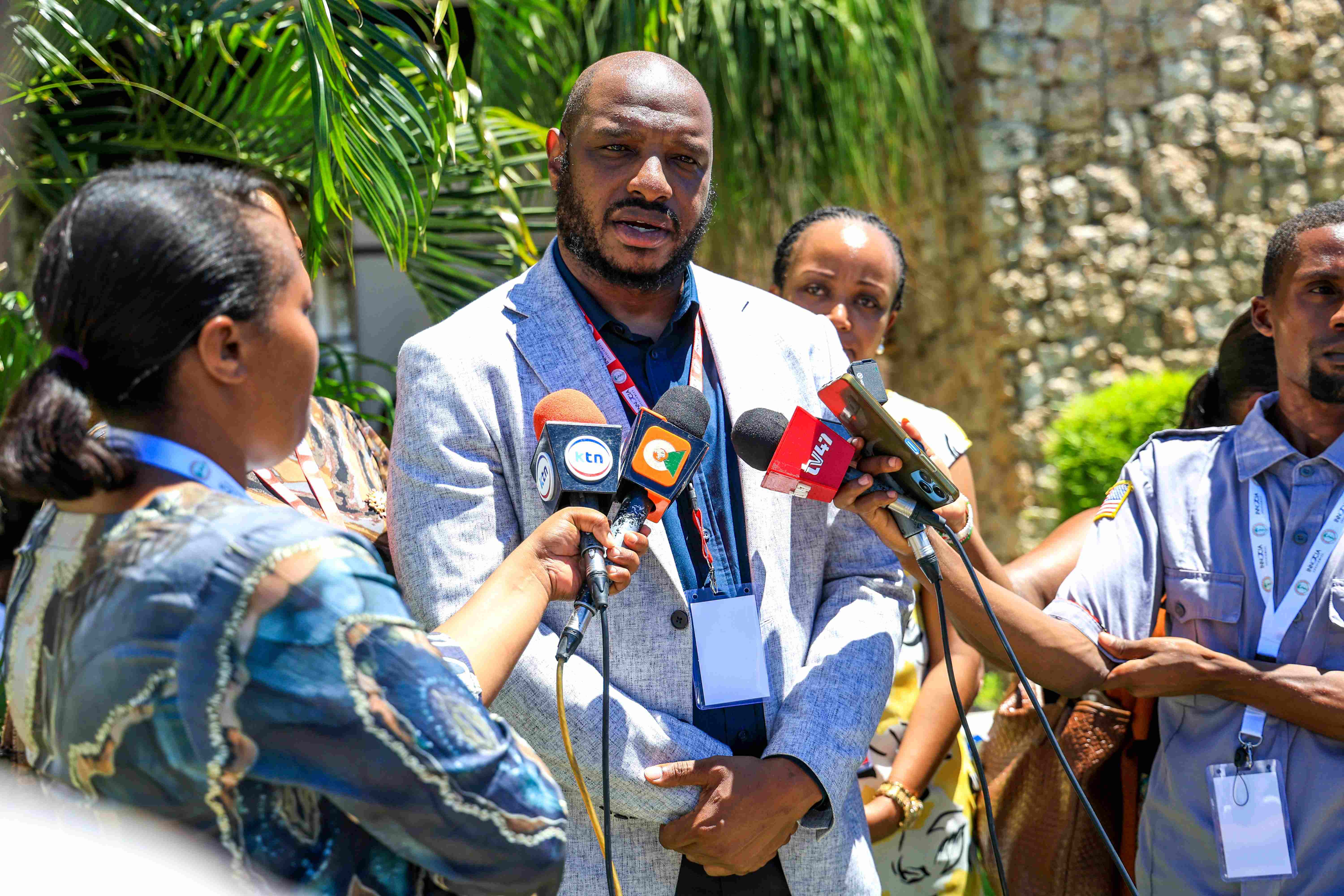
 KAP president Eric Njenga in Mombasa on Thursday /
BRIAN OTIENO
KAP president Eric Njenga in Mombasa on Thursday /
BRIAN OTIENOKenya’s healthcare system faces challenges, including a growing shortage of doctors, poor communication between urban specialists and counterparts in remote areas and misdiagnosis.
The Kenya Association of Physicians (KAP) says these obstacles can be addressed through the use of Artificial Intelligence.
Speaking during a three-day conference in Mombasa last week, KAP President Eric Njenga said improving healthcare requires collaboration between the government, non-governmental organisations and medical professionals.
“There’s a need to train more doctors on AI, which advances modern medicine and service delivery,” Njenga said. “We are looking at AI and cutting-edge medicine, and its role in improving healthcare not only in Kenya but across sub-Saharan Africa and globally.”
The conference brought together physicians, trainees and specialists from cardiology, oncology, renal medicine and infectious diseases fields.
Research presentations were shared by institutions such as the University of Nairobi and Aga Khan University.
Njenga said AI is increasingly being used to enhance communication between doctors and improve patient care, especially in underserved areas.
“Digital tools, including radiology technologies, are enabling collaboration across facilities and supporting clinical decision-making,” said physician Irene Njeri.
“With AI, doctors in remote counties can communicate with urban specialists, diagnose patients from afar and follow up on outcomes more effectively.”
Efforts to expand physician training include the East Central Southern Africa College of Physicians programme, a regional initiative spanning Kenya, Malawi, Tanzania, Uganda, Zambia and Zimbabwe.
The programme seeks to address the shortage of physicians and standardise postgraduate training. It is delivered through in-service apprenticeship models in existing health facilities.
Physician Olive Akunga said the programme emphasises mentorship, research and emerging technologies, including AI.
“Trainees learn alongside senior physicians, which strengthens clinical practice and research capabilities,” she said.
Njenga stressed the importance of funding to support training and employment.
“We need resources to ensure trainees are employed where they train. After completing the four-year programme, they can serve their counties,” he said.
The conference also included workshops on point-of-care ultrasound and renal vascular access.
These sessions reinforced the importance of hands-on skills alongside technological advancements.
On AI governance, Njenga said frameworks are in place to safeguard patient data.
The Kenya Medical Practitioners and Dentists Council and the ICT Authority ensure strict adherence to guidelines to maintain data accuracy and reliability.
As Kenya works to address a severe shortage of doctors — currently only 14–23 per 100,000 people, far below the WHO-recommended 217 — AI is emerging as a vital tool to help bridge gaps in healthcare delivery.