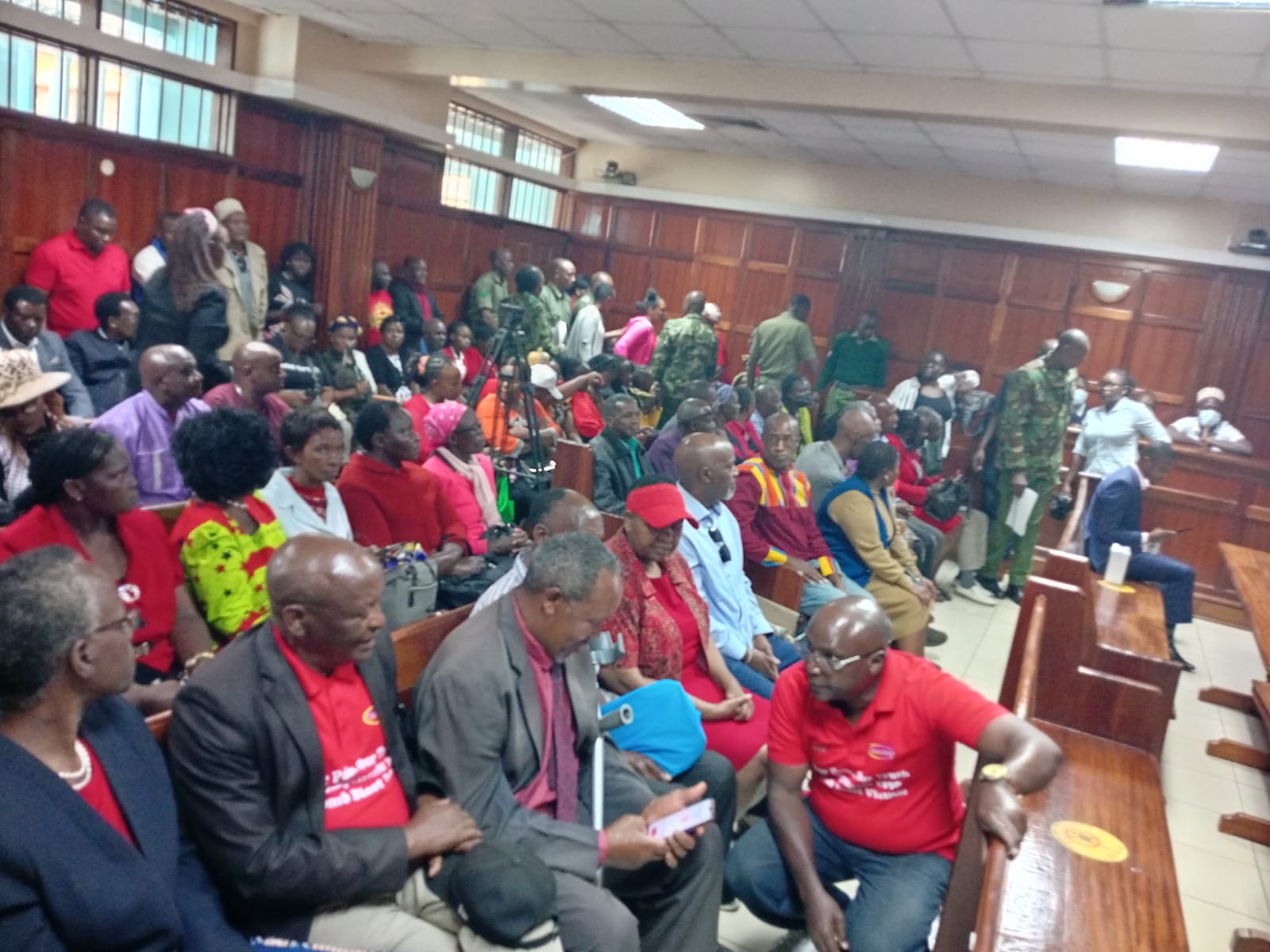
Victims of the 1998 Nairobi bomb blast and their families have moved to the Court of Appeal in a renewed push to seek justice and reparations following the dismissal of their petition by the High Court.
The appeal follows a High Court ruling delivered by Justice Lawrence Mugambi, which dismissed the petition filed in 2021, finding that the applicants had failed to prove that the State had neglected its duty to prevent the attack.
The judge held that while the petitioners alleged that the government ignored early warnings and failed to secure Kenya’s borders, they did not sufficiently discharge the burden of proof required to establish state liability.
The appeal has been filed by Legal Advice Centre Kituo Cha Sheria alongside several individuals, who are suing on their own behalf, on behalf of deceased family members, and about 337 victims of the 1998 bomb blast terrorist attack.
The appellants are challenging the entire judgment, arguing that the court erred in law and fact by failing to hold the State responsible for failing to prevent the attack.
In their memorandum of appeal, the appellants contend that the High Court failed to properly evaluate evidence showing that the government had prior knowledge or ought to have known, about terrorist cells and the planning of the 1998 bomb blast.
"The learned judge erred in law and in fact by holding that only general information of a possible attack existed, when in fact the Petitioners had presented evidence of specific, wide-ranging, and actionable intelligence regarding the 1998 bomb blast," part of the appeal states.
"This includes detailed warnings from the US Embassy, the presence of active terrorist cells and prior raids on suspects’ premises, which the state knew or ought to have known and acted upon."
In their case, they cite credible reports, publications and warnings, including intelligence from the US Embassy and prior security operations targeting suspected terrorists, pointed to a clear and actionable threat that required urgent intervention.
The appellants further fault the High Court for finding that Kenyan authorities had discharged their duty of due diligence, maintaining that repeated warnings were ignored and necessary security measures were not implemented to prevent or mitigate the attack.
They argue that the court failed to recognise the state’s constitutional and international obligation to protect human life, security and dignity, insisting that the inaction amounted to a violation of the right to life, security and freedom from inhuman treatment under both domestic and international law.
The victims also maintain that the state bears responsibility to provide reparations even though the immediate perpetrators were non-state actors.
They argue that international human rights principles and the state’s positive duty to protect citizens require compensation once harm has occurred.
In the appeal, the petitioners further argue that the government had created a legitimate expectation of compensation through correspondence and ongoing engagements with victims, and that this should have been considered by the High Court in determining liability and reparations.
"The learned judge erred in law and in fact by failing to consider and undervaluing the extensive evidence of psychological, economic and physical harm suffered by the victims and their families, including loss of life, injuries and trauma, and by failing to award appropriate compensation," they say in their court documents.
The appellants are now seeking orders to set aside the High Court judgment, vacate the decision and grant orders that would ensure justice for the victims, including compensation and other appropriate remedies.
The case arises from the 1998 bombing of the US Embassy in Nairobi, which killed more than 213 people and injured over 4,000 others.