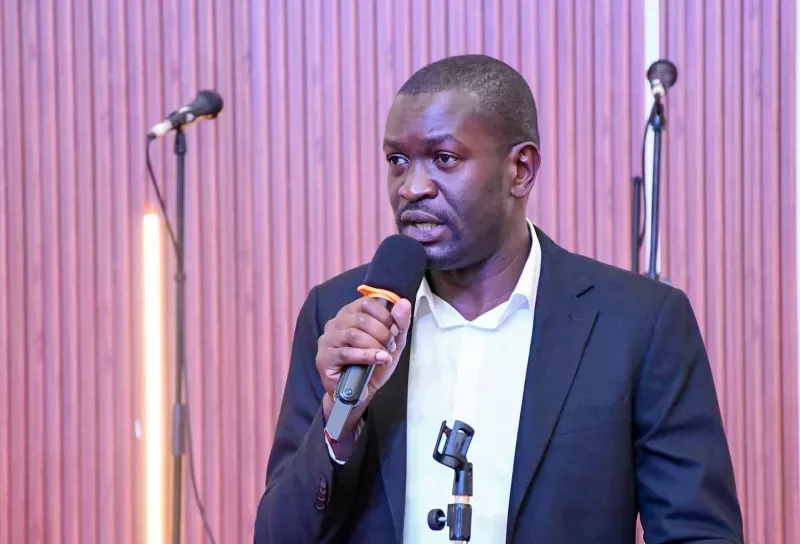
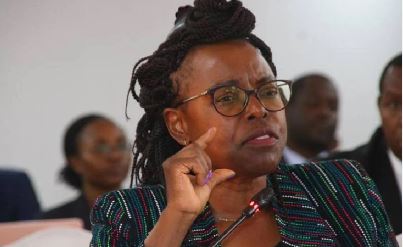
 Controller of Budget Dr. Margaret Nyakang'o./FILE
Controller of Budget (CoB) Margaret Nyakang’o has warned that Kenya’s rising debt could choke government revenues and deny the country resources for economic development.
As of December 31, 2025, Dr. Nyakang’o revealed that Kenya’s debt portfolio stood at Sh12.29 trillion, equivalent to 67.8 per cent of GDP.
By the end of last year, external debt rose by Sh68.4 billion (1.3 per cent) from Sh5.39 trillion in September 2025 to Sh5.46 trillion, while domestic debt grew from Sh6.65 trillion to Sh6.83 trillion.
Commercial debt accounted for the largest inflows, totaling Sh202.46 billion—84 per cent of total disbursements—while concessional financing (bilateral and multilateral) declined slightly, reflecting a shift towards more expensive borrowing.
“The level is significantly above the statutory debt ceiling of 55 per cent of GDP and continues to exert substantial pressure on public finances,” Dr. Nyakang’o told MPs during the tabling of the CoB’s report to the Public Debt and Privatization Committee of the National Assembly.
Although debt growth moderated to 4 per cent during the first half of the 2025/2026 financial year, the overall debt burden remains high, with domestic debt growing faster than external debt.
The report shows that external loan disbursements during this period totaled Sh240.5 billion, while principal repayments stood at Sh272.35 billion.
Meanwhile, domestic borrowing—including Treasury bills and bonds—rose by Sh156.08 billion, highlighting continued reliance on the domestic market to finance budget deficits.
While this rebalancing aims to reduce foreign exchange exposure and external financing risks, Dr. Nyakang’o warned that increased domestic borrowing carries its own risks.
“It’s worth noting that increased reliance on the domestic market introduces new vulnerabilities, including crowding out private sector credit, upward pressure on interest rates, and potential dampening of economic growth,” she said.
She added: “While the domestic market has demonstrated short-term resilience, sustained expansion of domestic borrowing at projected levels may prove fiscally and economically costly.”
The CoB emphasized that public debt sustainability depends on credible fiscal consolidation, strengthened revenue mobilization, rationalized recurrent spending, and prioritisation of high-impact development projects.
“Without sustained deficit reduction, liability management operations and maturity profile adjustments, though beneficial, will only redistribute risk over time rather than resolve the underlying fiscal imbalance,” Dr. Nyakang’o warned.
The report also shows that interest payments of Sh464.49 billion account for 50.4 per cent of total debt service, meaning half of Kenya’s debt payments go to financing costs rather than reducing the principal.