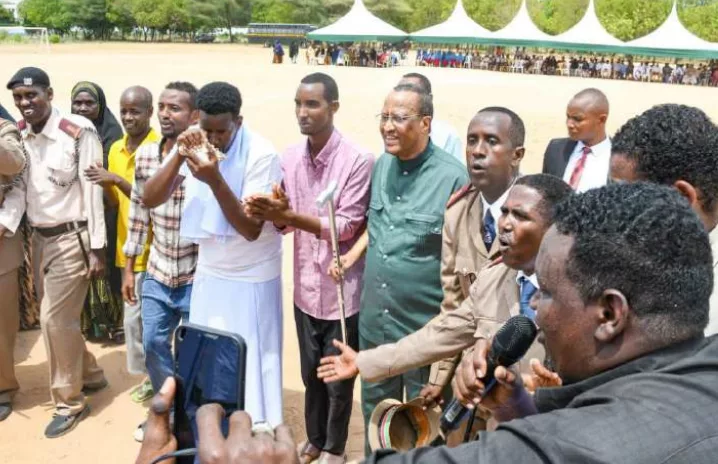
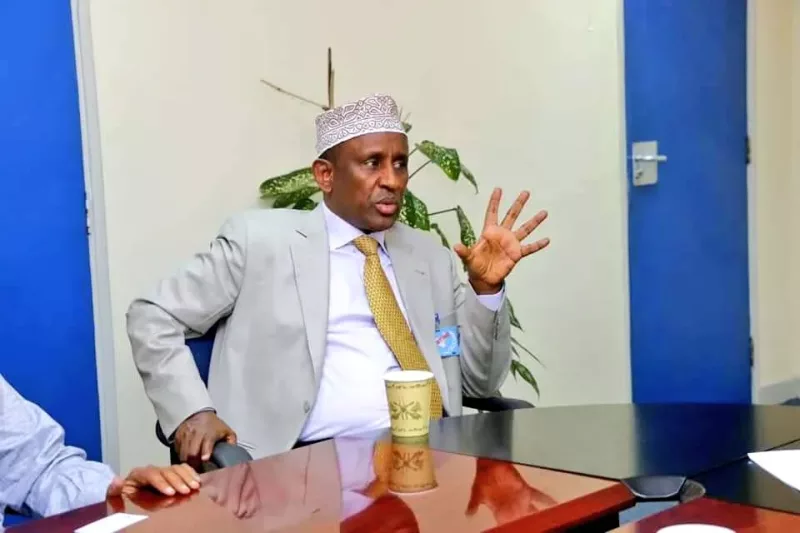
 Ismail Arale, Balambala constituency parliamentary aspirant
speaking to the press at a Garissa hotel. He is flanked by leaders and youth
from the County./STEPHEN ASTARIKO
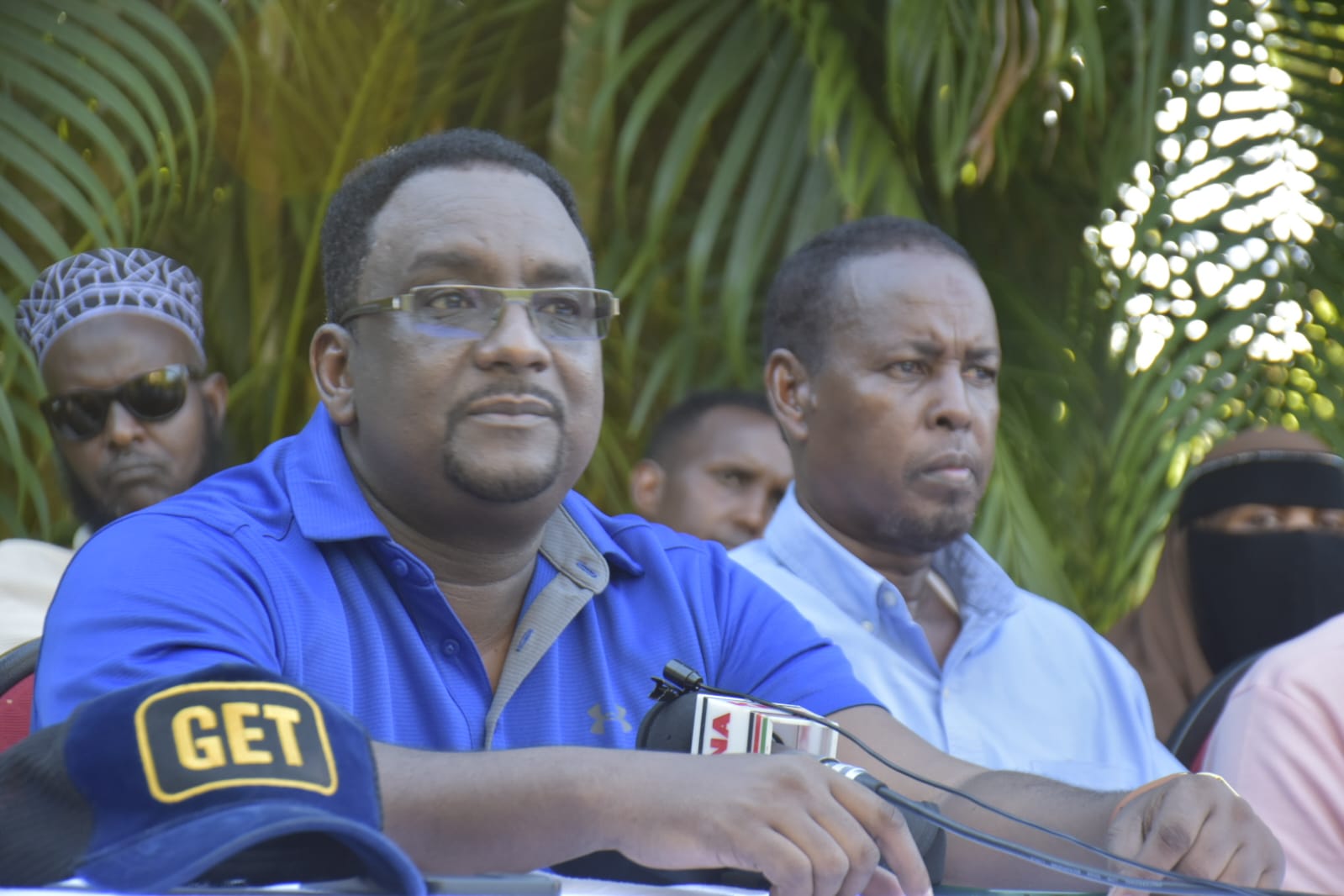
Ismail Arale, Balambala constituency parliamentary aspirant
speaking to the press at a Garissa hotel. He is flanked by leaders and youth
from the County./STEPHEN ASTARIKO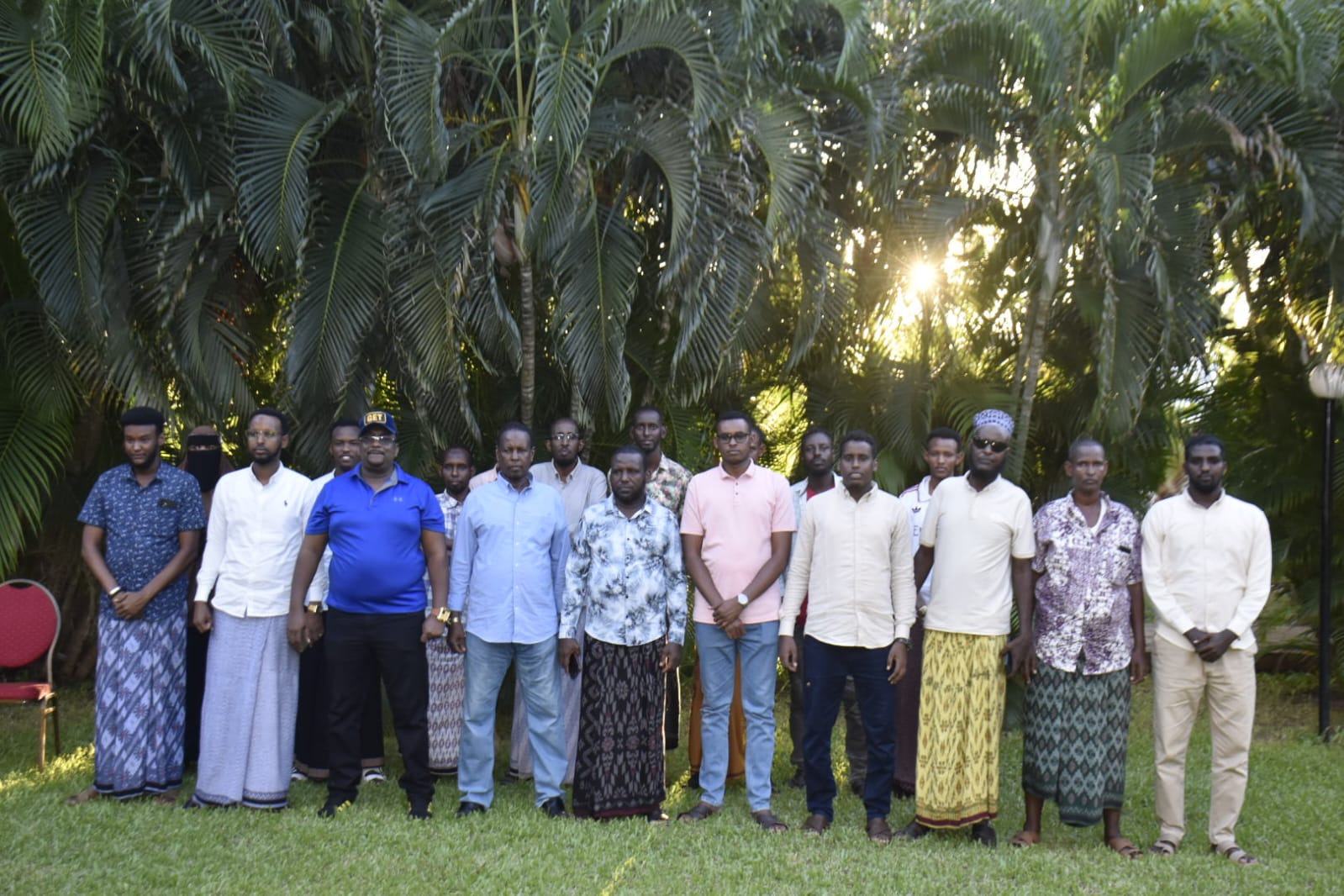 Leaders, youth and aspirants from Garissa and Balambala sub
counties pose for a group photo after the press briefing at a Garissa
hotel/STEPHEN ASTARIKO
Leaders, youth and aspirants from Garissa and Balambala sub
counties pose for a group photo after the press briefing at a Garissa
hotel/STEPHEN ASTARIKO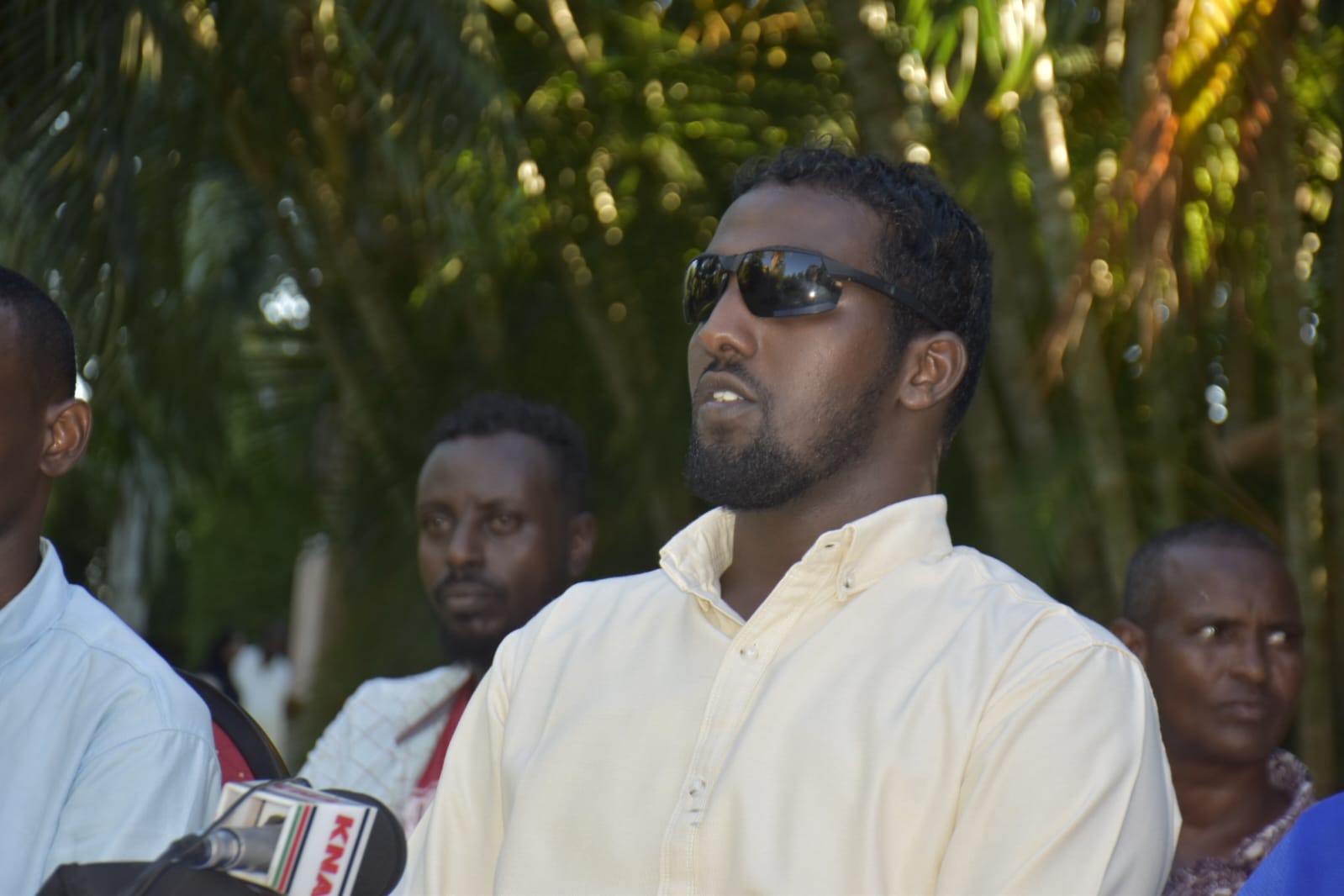 Hassan Somane , a youth and aspirant for the Saka ward
speaking to the press at a Garissa hotel. /STEPHEN ASTARIKO
Hassan Somane , a youth and aspirant for the Saka ward
speaking to the press at a Garissa hotel. /STEPHEN ASTARIKO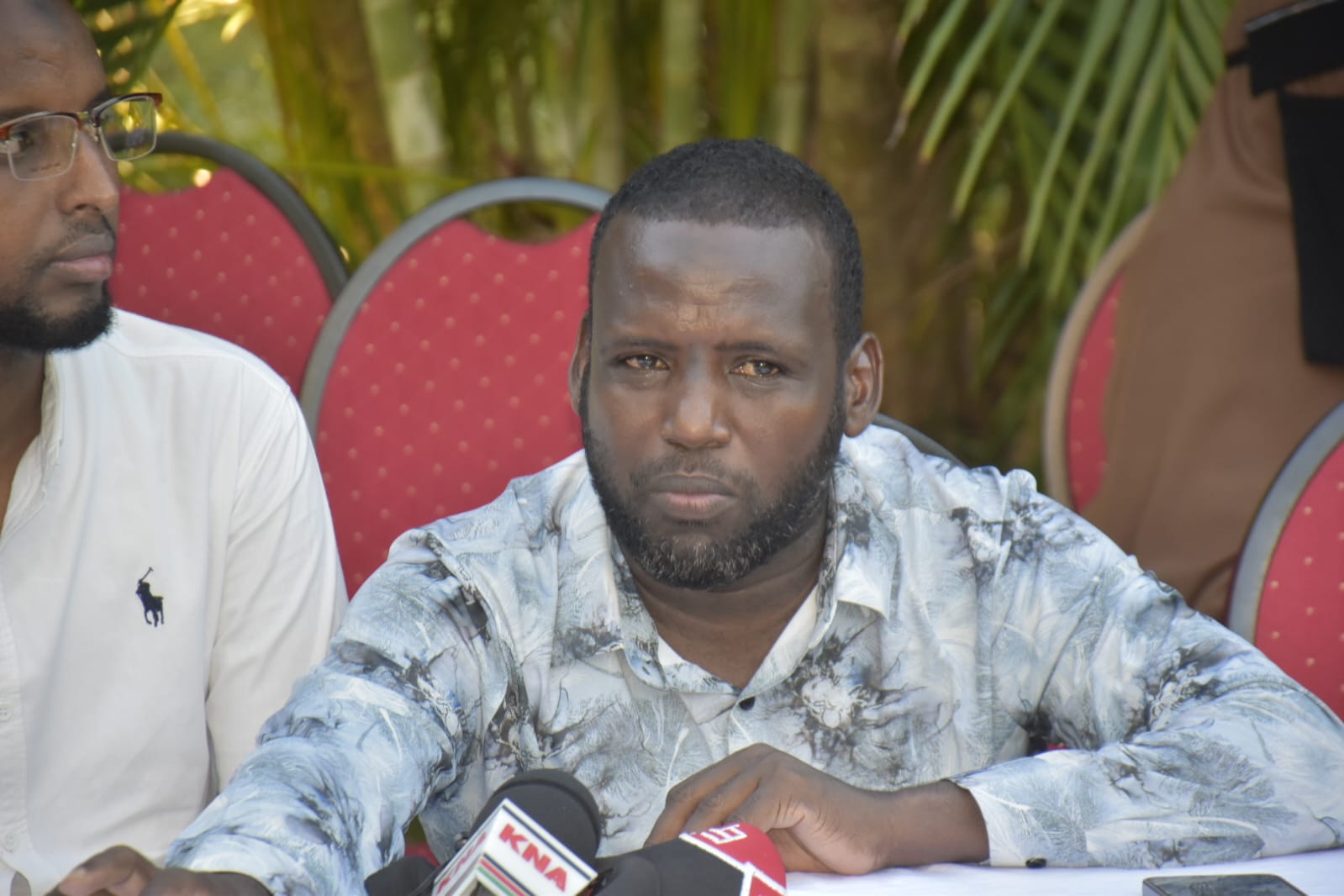 Abdi Ibrahim a youth from Balambala constituency speaking to
the press at a Garissa hotel/STEPHEN ASTARIKO
Abdi Ibrahim a youth from Balambala constituency speaking to
the press at a Garissa hotel/STEPHEN ASTARIKO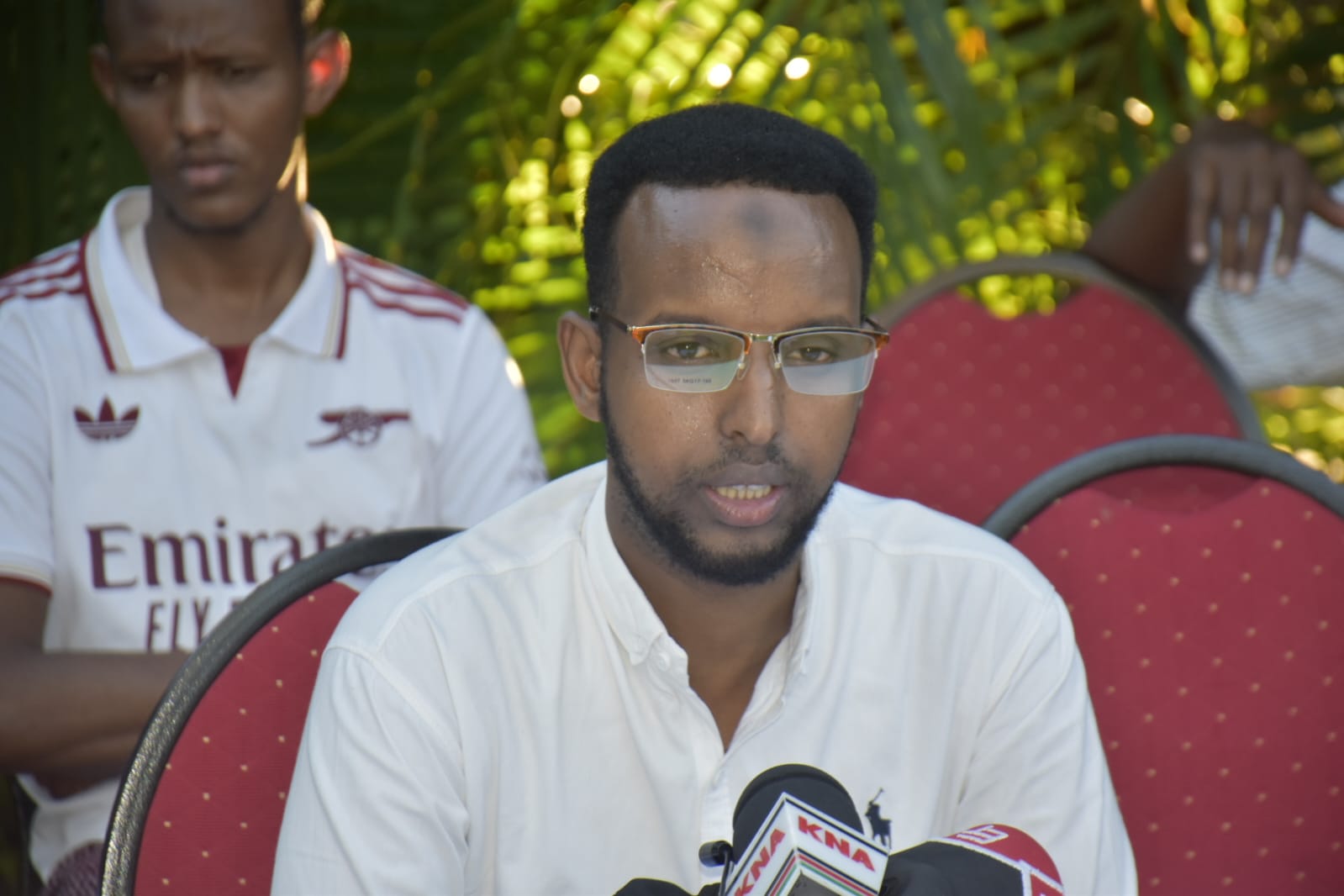 Arab Said, Saka ward aspirant speaking to the press/STEPHEN
ASTARIKO.
Arab Said, Saka ward aspirant speaking to the press/STEPHEN
ASTARIKO.
A section of leaders from Garissa County has issued a strong appeal to the National Registration Bureau to urgently fast-track the processing and issuance of national identity cards.
The leaders have warned that prolonged delays could disenfranchise thousands of eligible voters ahead of the upcoming electoral cycle.
Speaking at a press briefing at a Garissa hotel, the leaders, led by Balambala constituency parliamentary aspirant Ismail Arale, expressed deep concern over the slow pace at which identity card applications are being handled.
They noted that the situation risks locking out many residents from participating in the democratic process.
They emphasized that delays in ID issuance have already affected thousands.
Without national identity cards, citizens cannot register as voters, a requirement overseen by the Independent Electoral and Boundaries Commission (IEBC).
The concerns come just as the IEBC rolls out the Enhanced Continuous Voter Registration (ECVR), a 30-day nationwide exercise that officially began on Sunday and is set to run until April 28, 2026.
The initiative aims to boost voter enrolment ahead of the 2027 General Election scheduled for August 8.
Arale revealed that more than 2,700 applicants in Balambala alone have yet to receive their identity cards, despite some having applied nearly two years ago.
According to him, many applications remain marked as “pending” on official portals, with no explanation provided.
“In Balambala constituency, for the last two years, there has been registration of ID cards. Up to now, none of those IDs have been processed and given back to the applicants. Most of those application forms are still lying in the registration offices in Balambala and Garissa Town, and they are never processed,” Arale said.
He added: “So the question is, what is the reason that most of these young people who want to vote today and register themselves do not have that opportunity because their ID cards have not been processed?”
Arale noted that the leaders had convened the press conference not only to highlight the crisis but also to mobilise the community, especially young people, to take part in voter registration.
He urged the youth, often referred to as the “Genzs” to seize the opportunity to influence the country’s leadership through the ballot.
He reflected on past unrest in the country, where young people, frustrated by lack of representation, resorted to protests that led to loss of lives.
He stressed that the current voter registration exercise offers a peaceful and powerful alternative for achieving change.
“Your voter’s card is your weapon of change,” he said, calling on youth to register in large numbers and make their voices count.
Beyond the ID delays, the leaders also highlighted logistical challenges that could undermine the voter registration exercise in the region.
“Due to the largely pastoralist lifestyle of our people, many residents are constantly on the move in search of pasture and water. This mobility makes it difficult for them to access fixed registration centres,” he said.
“To address this, we urge the IEBC to deploy mobile registration units and provide adequate transport and logistical support to its staff. We are also calling for the use of solar-powered equipment to mitigate frequent power and battery failures in remote areas,” he added.
Arale further stressed the importance of digital and audio-based voter education campaigns to reach young people, particularly in rural and underserved areas.
He noted that while urban youth are actively registering, thanks in part to digital awareness campaigns, many in northern Kenya remain underrepresented due to lack of access to such information.
Mohamed Ibrahim, an aspirant for the Garissa Township parliamentary seat, echoed the call for expedited ID processing.
He emphasized that acquiring a national ID is the first and most critical step toward voter registration and broader civic participation.
Ibrahim shared a personal example, revealing that his daughter had been unable to join university on time due to delays in obtaining her ID.
He described this as a clear indication of the far-reaching consequences of the current backlog, which extends beyond voting to affect access to education and other essential services.
He urged the government to expand ID registration services through centres such as Huduma Centres and to ensure timely issuance of the documents.
Additionally, he called on the IEBC to introduce mobile voter registration units to reach remote and nomadic populations more effectively.
Hassan Somane, a youth and aspirant for the Saka Ward, underscored the urgency of resolving the ID issuance delays, particularly in Balambala, where many applications from the previous year remain unprocessed.
He warned that failure to act promptly could result in many eligible citizens missing out on the ongoing voter registration exercise.
Somane encouraged all eligible Kenyans to participate actively in the registration process, noting that it is a crucial opportunity for citizens to shape the country’s future through democratic means.