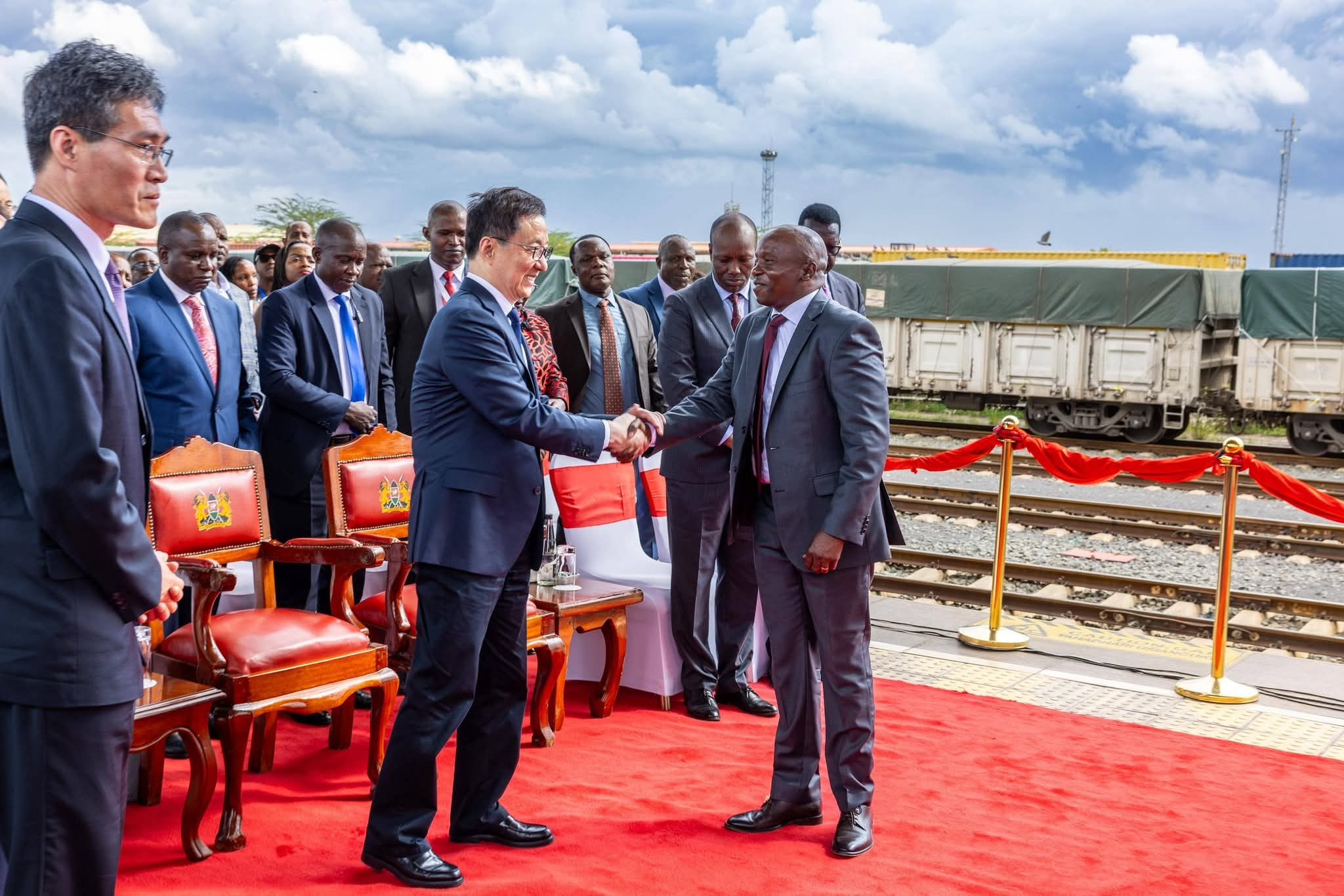
Both countries are moving to deepen trade ties and accelerate the implementation of duty-free access for Kenyan exports to China.
Han, who met President William Ruto on March 24, presided over the signing of four cooperation agreements.
They included an early harvest deal aimed at fast-tracking trade benefits under the zero-tariff framework.
The visit underscores Beijing’s renewed push to strengthen economic ties with Africa through high-level engagements and trade incentives.
Officials said a key focus of the visit was the rollout of zero-tariff treatment for selected Kenyan exports.
The move is expected to reshape trade flows between the two countries.
The tour, which also includes stops in South Africa and Seychelles, represents the latest high-level exchange between China and Africa.
It came hot on the heels of a recent tour by Foreign Minister Wang Yi, in line with China’s annual tradition to make its first foreign tour in Africa.
The initiative was marked by a series of events in Nairobi, including a zero-tariff export products exhibition and business forum at the GTC Marriott.
VP Han, together with DP Kithure Kindiki, also flagged off of a freight train symbolising expanded trade logistics between Kenya and China.
Analysts say the move could be a game-changer for Kenya’s export sector if fully implemented.
“Kenya- China relations continue to grow, for the mutual benefit of both countries,” Kindiki said.
"The zero-tariff market access for Kenyan tea, coffee, avocado, nuts and flowers is expected to balance trade between our two countries."
For the Ruto administration, the new arrangement would “create an export-led economy and move Kenya a step further towards first world economic status ambition.”.
The government believes that by eliminating tariffs on Kenyan goods entering the Chinese market, products would be more competitive.
The agriculture and manufacturing sectors are expected to thrive with the opening of access to one of the world’s largest consumer markets.
“The true and enduring friendship between Kenya and China has resulted in China granting Kenya access to the Chinese market duty-free,” Kindiki said.
China’s diplomatic approach emphasises construction, “much as certain countries want to destroy”.
China also positions itself as advocating peace and shared development while certain countries wage wars, wreaking havoc on the region.
Beijing further draws a sharp contrast that, while unilaterally waiving tariffs, certain countries are imposing them, disrupting the global economy.
China further believes it “takes concrete actions to fulfil its commitments while certain countries pay lip service.”
It cites the bid to expedite the implementation of zero tariff between China and Kenya, at a time when the US is dragging on the renewal of AGOA.
Observers note that China is positioning itself as a key economic partner for African countries.
This comes at a time when global trade tensions and shifting geopolitical dynamics are reshaping alliances.
The acceleration of zero-tariff implementation is seen as part of that strategy.
It is aimed at strengthening South-South cooperation and boosting intra-developing world trade.
However, experts caution that the success of the initiative will depend on how effectively both sides address structural challenges that have historically limited Kenya’s exports to China.
While the removal of tariffs lowers market entry barriers, Kenyan exporters still face hurdles including product standards, certification requirements, logistics costs and limited market intelligence.
To maximise the benefits, stakeholders say Kenya must identify products with strong demand in China, improve quality standards and invest in packaging and branding to meet consumer expectations.
There are also calls for the two countries to deepen cooperation beyond trade by harmonising standards, improving logistics systems and expanding financial linkages.
An innovative financing and payment system, including greater use of the Chinese yuan in bilateral trade and expansion of cross-border payment platforms, has been championed.
For Kenya, the visit comes at a critical time as the government seeks to boost exports, narrow the trade deficit and attract foreign investment.
China remains one of Kenya’s largest trading partners, but the relationship has been characterised by imports from China far exceeding exports.
The zero-tariff framework is expected to help address the trade imbalance by creating new opportunities for Kenyan producers, particularly small and medium enterprises seeking to access global markets.