Nearly everyone has an inspiring, albeit ridiculous, story of how liquid courage paved the way for their relationship, job or business venture.
Though my drinking days are well behind me (I’d like to be dramatic but the long story short is that it simply wasn’t for me and my brain chemistry), I can attest that uninhibitedness frequently caused by one too many drinks is also partly responsible for the connections on a night out.
However, what happens when you take out the social lubricant from the equation?
For one, you’re bound to wind up like me — brazenly asked to leave the function due to lack of participation after turning down having a shot poured into your tumbler (yes, this actually happened).
Ironically, being shamed for not indulging when you’re newly sober and navigating the great outdoors of Nairobi is like a hazing ritual when you’re newly joining a group.
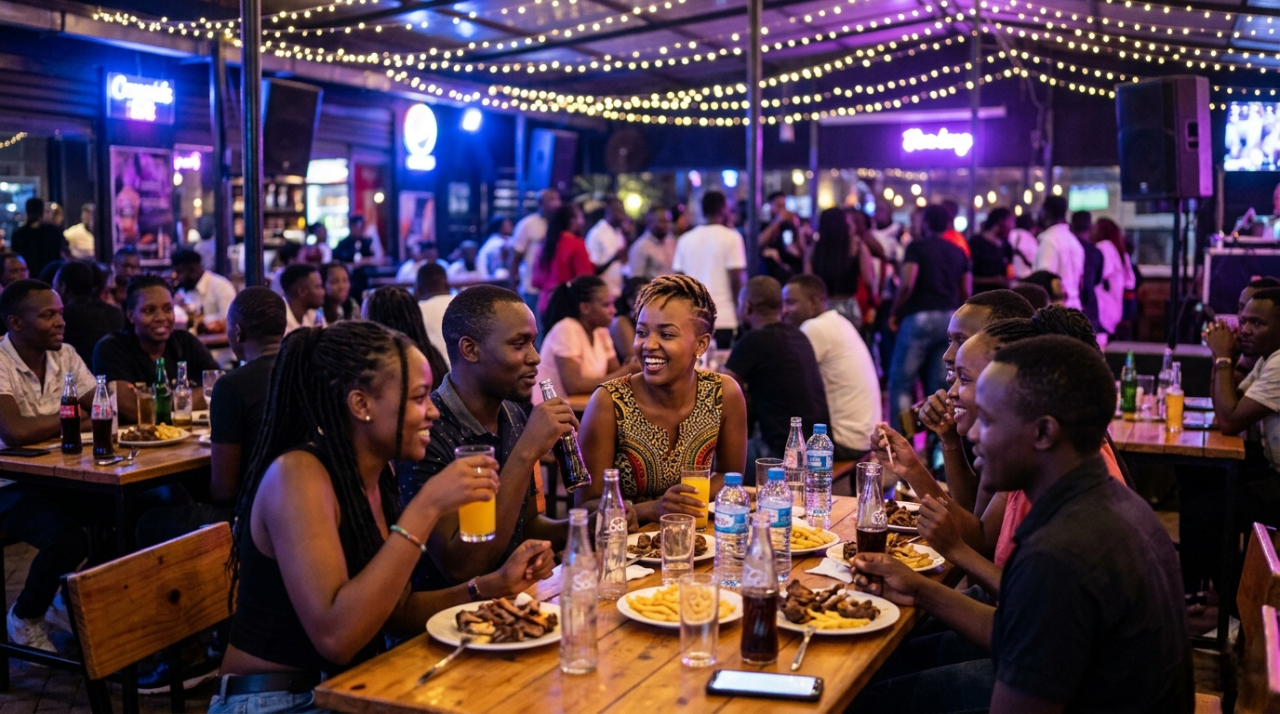
But once you settle into the groove of sober partying, you’ll find that you are attracted to the pulsating energy of the club or event scene. And that allure is thanks to the people and how you socialise.
I may be biased, though, because I view human interaction as a social experiment in constant flux.
I recognise how that may have undertones of psychoanalysis, but genuinely speaking, I simply find it fascinating, more so observing people let their hair down in party environments.
PSYCHOLOGY OF SOCIALISING
I’ll be honest, I used to be somewhat reliant on having a few drinks when attending social gatherings (this is referred to as dependence, not addiction, before anyone feels the need to judge).
It dialled down the prefrontal cortex chatter, and amped the volume of my inner party girl, channelling her desire to speak to every new face I’d come across.
Without alcohol as a crutch, you are thrust back into using your innate social skills to stir connections in the wild.
Additionally, you are faced with the reality of a few impeding factors; for example, an environment rigged against conversation.
An enthusiastic exchange could easily be miscommunicated because of the loud music pouring out of all corners of the club or event space.
Someone could excitedly be yelling, “Hey, do you want to go and rob the bar?” but you interpret it differently and giddily nod “Yes”.
Such occurrences, I’ve found, require you to lean into non-verbal cues, such as reading body language or facial expressions.
This looks like offering a reassuring smile to someone who already looks burnt out yet it’s just the beginning of the night, or linking fingers with the girl dancing next to you because she whispered “I need emotional support”.
It’s less of what you say and more of what you do that is set to drive a conversation or spark a connection.
Inebriation often masks anxiety. Being sober allows you to register it, sit with it and redirect it.
It is natural to be self-conscious around new people, more so when you’re not partaking and have been in previous, laughable situations (I’m over it, but it still serves as a point of reference) where that happens to be the lingering topic of conversation.
On the other hand, that apprehension is what has drawn me out of my comfort zone and pushed me towards interacting more openly with those around me, particularly feeding into those who express genuine curiosity towards my preferred lifestyle.
I’ve also realised that accelerated intimacy, fuelled by trauma dumps at the end of the night when the music is significantly less loud, rarely happens when sober.
There is no crime in sharing with a stranger on the dance floor or by the bar or tucked away in a dimly lit corner (I’m guilty of all three).
And as cathartic as it often feels, it can also leave you wondering why you were a slave to your own vulnerability.
LIFE IS WHAT YOU MAKE IT
When I chose to turn sober partying into my reality, I quickly came to the conclusion that there is no perfect permutation of factors that contribute to a great night.
Some nights, I leave the function early, still struggling to hear myself think over the phantom bass ringing in my ears, and my social battery is totally drained.
And other nights, I am present until close, relishing in the conversations and connections made throughout the night.
Socialising is at its ‘max’ whenever you go out sober; it is demanding of all of your senses and skills.
But that doesn’t strip the fun away. Every night still promises to be messy, hilarious, occasionally mortifying or profoundly alive, or perhaps a dizzying, incredible mix of it all.
The lack of beer goggles may expose you to all the shenanigans people are propagating, and you may experience resounding clarity. But remember, everyone’s there to just have a great time.
This is for all those who want to approach sober partying healthily, or want to give it a go.
Borrowing from the immortal words of Tom Hanks’ Forrest Gump, “Sober partying (life) is like a box of chocolates — you never know what you're going to get.”