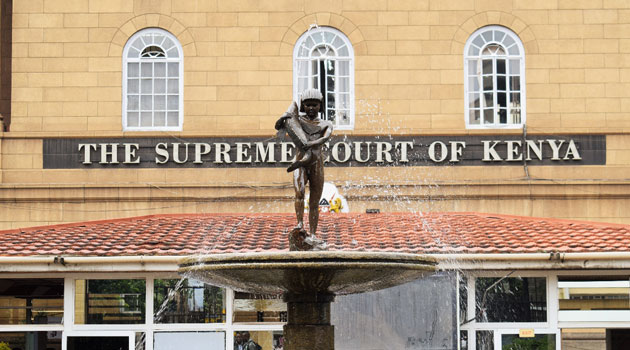
 Supreme Court/FILE
The Salaries and Remuneration Commission has moved to challenge a Court of Appeal ruling that upheld a taxable car allowance for judges, terming the decision unconstitutional and warning of a burden on taxpayers.
In a statement issued on March 26, 2026, in Nairobi, the commission said it will file an appeal at the Supreme Court of Kenya following the judgment delivered on March 25.
A five-judge bench of the Court of Appeal of Kenya dismissed SRC’s challenge and affirmed that judges are entitled to the allowance for the purchase of private vehicles, bringing to a head a long-running dispute over judicial benefits.
“The ruling is an unconstitutional overreach that undermines SRC’s mandate and places an undue burden on the Kenyan taxpayer,” the commission said.
The case stems from SRC’s July 12, 2021, decision to revoke the allowance, which had evolved from a pre-2010 duty-free car grant for judges.
The move was challenged in court by petitioner Peter Mwangi Gachuiri with the backing of the Kenya Judges and Magistrates Association and the Judicial Service Commission.
In a May 24, 2024 judgment, the High Court ruled that the benefit was protected under Article 160(4) of the Constitution, quashed SRC’s revocation and ordered payment. The appellate court has upheld that decision.
The commission, however, maintains that the allowance was unlawfully introduced without its involvement, arguing that Article 230(4)(a) gives it exclusive authority to set and review remuneration and benefits for state officers.
“SRC’s mandate was unlawfully usurped when the Taxable Car Allowance was introduced without its involvement,” the statement said.
SRC also raised concerns about the financial implications of sustaining the benefit, warning that it amounts to double compensation since judges already receive official transport.
“Continued disbursement of the allowance will result in an additional drain of more than Sh2.5 billion from the public purse every four-year period,” the commission said.
It cautioned that the ruling could trigger similar demands from other state officers on grounds of equity, potentially increasing public expenditure.
The Court of Appeal rejected SRC’s arguments on fiscal sustainability, stating that constitutional protections of judicial benefits cannot be overridden by budgetary concerns.
The bench held that once a benefit has accrued, it is protected and beyond SRC’s reach.
“Where a benefit has already accrued and is thus ringfenced by Article 160(4), that benefit is beyond the reach of the SRC,” the judges ruled.
The court also dismissed claims of conflict of interest after SRC sought the recusal of judges handling the matter, arguing they stood to benefit financially.
It applied the doctrine of necessity, noting that recusal would paralyse the justice system, and maintained that judges are bound by their oath to act impartially.
“Judges are not autocrats but are obligated to be faithful to the law and to apply it impartially,” the bench stated.
SRC, however, said allowing judges to determine a matter in which they have a direct financial interest raises ethical concerns.
“This ethical breach strikes at the very foundation of judicial impartiality,” the commission said.
The commission further cited an opinion from the Office of the Attorney General supporting its earlier decision to revoke the benefit, maintaining that tax exemptions for state officers are unconstitutional under Article 210(3).
Despite the court rulings, SRC said it remains committed to pursuing the matter to its conclusion.
“SRC remains unwaveringly committed to upholding the Constitution and ensuring the prudent, equitable and transparent management of State officers’ remuneration and benefits,” the statement said.
The appeal to the Supreme Court is expected to centre on constitutional interpretation, judicial ethics and the broader implications of the ruling on public finance.