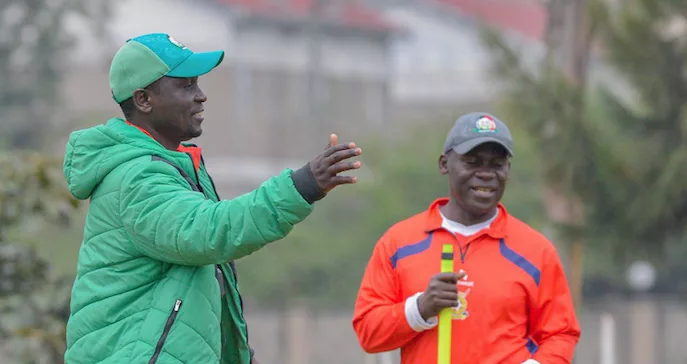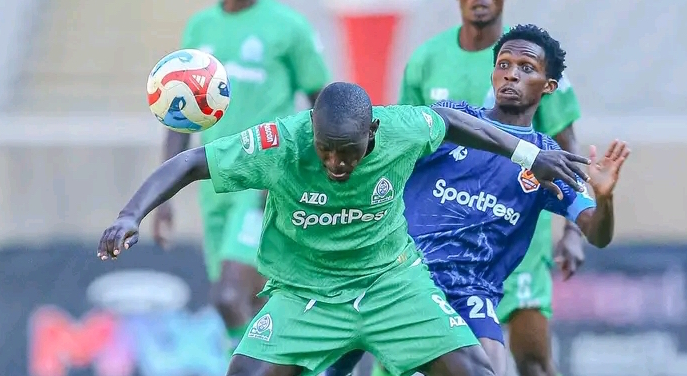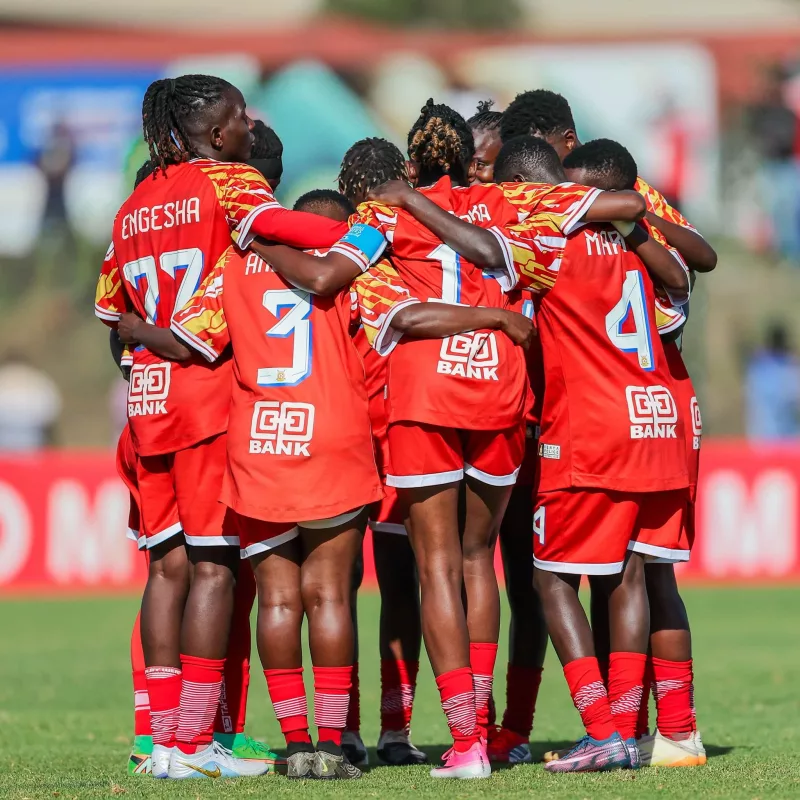
 Anthony Akumu in action for Harambee Stars/HANDOUT
Anthony “Teddy” Akumu is one of Kenyan football’s most battle-tested midfield figures, a disciplined enforcer whose career has spanned continents and defined consistency in the heart of the pitch.
For over 10 years, Akumu has been the quiet anchor in Kenya’s midfield narrative—absorbing pressure, distributing rhythm and stitching balance into the Harambee Stars’ play.
His stellar journey traces a powerful arc from the narrow, dust-lined lanes of Mathare shanties to the grand, roaring amphitheatres of professional football across Africa, Asia and the Middle East.
The rhythm of Mathare shaped him: fast decisions in tight spaces, physical duels that demanded courage and a mental toughness that would later become his signature in midfield battles far beyond Kenya’s borders.
“Mathare taught me to think fast. That harsh environment built my mentality more than any academy ever could,“ Akumu said.
“In Mathare, you learn courage early. There is no luxury in hesitation. I didn’t just learn to play football there—I learned to survive under pressure. You grow up understanding that every split decision you make in life matters, because mistakes are costly.”
As his talent matured, so too did his footballing identity. He evolved into a deep-lying midfield anchor—composed, tactically aware and capable of dictating the tempo with understated authority.
Coaches saw in him not just a player who could break opposition lines, but one who could quietly stitch a team together, offering balance where chaos threatened to erupt. That reliability became his currency, earning him opportunities that carried him beyond familiar shores.
“My talent showed itself early. While still in high school, a coach encouraged me to try out for Gor Mahia. I was just 17. I was nervous at first, but I gathered my courage and went for it—and I made it,” he said.
The move thrust him into the epicentre of elite football. Across the Zambian Super League, the South African Premiership, the Japanese football ecosystem, and later the Middle Eastern stage, Akumu’s name became synonymous with professionalism.
Each league added a new layer to his game—discipline sharpened in Zambia, tactical intensity refined in South Africa, technical awareness expanded in Japan, and adaptability tested in the Middle East.
“Each country challenged me differently. In Zambia, I picked up discipline, in South Africa, I absorbed the physical demands and in Japan, I improved my speed of thought on the pitch,” said Akumu.
“Wherever my career took me, I realised that talent by itself was never enough. True success came from the professionalism I carried both on and off the pitch.”
Through every transition, he remained anchored to the same core: a midfielder who understood that control of space often mattered more than moments of spectacle.
Yet his story is not defined solely by club journeys. On the international stage, he has stood as part of Kenya’s midfield spine for over 10 years, wearing the national colours in qualifiers, regional tournaments, and high-pressure encounters where pride and expectation converge.
In those moments, he has often embodied calm amid storm—offering structure when games threatened to unravel, and experience when youth and urgency collided.
What makes his career particularly compelling is not just longevity, but evolution. Few players maintain relevance across such varied football cultures without reinventing themselves.
 Anthony Akumu in Kaiser Chiefs colours/HANDOUT
Akumu has done so with quiet intelligence, never seeking the spotlight, yet consistently commanding respect from teammates, coaches, and opponents alike.
His influence is often felt more than seen—measured in interceptions, positional discipline, and the invisible architecture of midfield control.
From Mathare’s fragile pitches to stadiums lit by continental expectation, his journey reads like a testament to persistence.
It is the story of a footballer who did not simply rise, but adapted, endured, and sustained himself at levels where many fade. And in that continuity lies his true legacy: not just a path travelled, but a standard maintained.
Born on October 20, 1992, in Rachuonyo, Homa Bay County, Akumu grew up in a modest family of five before his life shifted to Mathare, Nairobi County, where football became both escape and identity.
There, alongside his brothers, he played using homemade balls—raw beginnings that would later define a career built on resilience rather than privilege.
“It wasn’t always smooth for me. There were days my elder brother would even tell me to stay away from football completely. He felt I was starting to lose focus on my studies,” Akumu said.
His early education at Maina Wanjigi Secondary School in Eastleigh, Nairobi, coincided with the rise of his football reputation. Even then, his game was marked by discipline, physical presence, and a rare sense of tactical maturity for his age.
Akumu’s foundation was shaped at the Mathare Youth Sports Association, a renowned development ground that has produced some of Kenya’s most successful footballers.
It was here that structure met raw hunger, turning a slum-born talent into a professional prospect.
“I travelled twice with the MYSA Under-12 and Under-16 teams for tournaments in Norway, and that experience really shaped the direction of my career,” Akumu said.
"Football was what we had," he once reflected. "It was survival, it was hope, and it was direction."
After maturing through the MYSA ranks, his breakthrough came at Gor Mahia in 2010, where he quickly rose into prominence after high school.
In Nairobi’s high-pressure football environment, he matured into a reliable defensive midfielder, helping the club establish domestic dominance.
"Gor Mahia gave me my first real platform," he said. "That is where I understood pressure, expectation, and responsibility."
In 2014, he moved abroad to Sudan with Al Khartoum, marking the beginning of a long international journey that would redefine his career trajectory.
Two years later, he joined ZESCO United, where he became part of a dominant squad, winning three Zambian Super League titles and regularly featuring in continental competitions.
His success in Zambia opened the door to South Africa’s top flight with Kaizer Chiefs in January 2020, a move that reportedly included a significant signing package and a monthly salary that placed him among Kenya’s highest-earning footballers at the time.
According to reports, Akumu signed a three-year deal running until June 2023, including a substantial signing fee and a salary of about Sh 1.5 million per month.
However, his time in South Africa proved challenging, with limited starts and just 47 appearances across competitions before his eventual departure.
"Not everything went the way I wanted," he later admitted. "But I learned a lot about mental strength and competition at the highest level."
After leaving Chiefs, Akumu’s career took him further across Asia and the Middle East, including a spell at Sagan Tosu in Japan, followed by a stint in Iran, before settling at Nejmeh SC in Lebanon, where he continues to play alongside fellow Kenyans Masoud Juma and Austin Odhiambo.
"Every country I have played in has shaped me differently," he said. "You either adapt, or you fall behind."
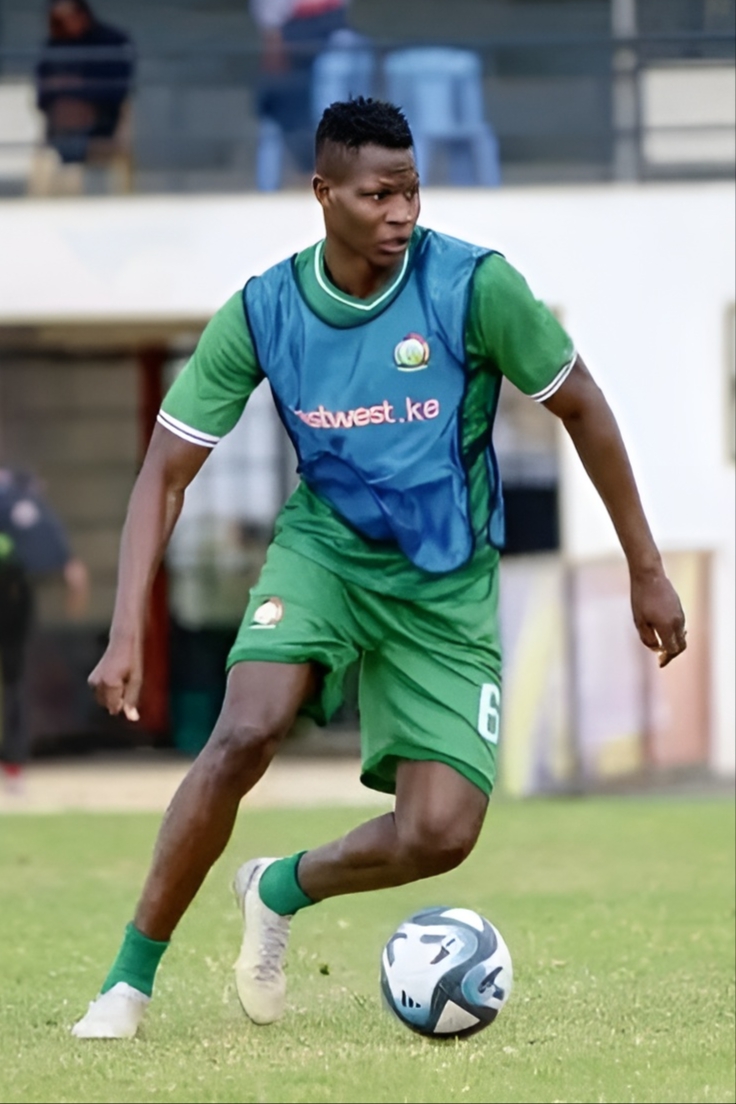 Anthony Akumu during practice with Harambee Stars/HANDOUT
 On the international stage, Akumu has become a central pillar of the Harambee Stars, earning over 55 caps since his debut on January 5, 2011, against Sudan.
Known for his defensive discipline, positional intelligence, and leadership, he has remained a consistent figure across multiple national team cycles.
Even during periods when he was unattached at club level, Akumu’s professionalism and fitness standards ensured he remained a trusted figure within the Harambee Stars setup under various coaches, including Engin Firat.
His reliability made him a recurring selection in key campaigns, particularly during the 2025 Africa Cup of Nations qualifiers, where he once again carried the burden of experience in a transitional squad.
Yet football, in its cruel balance, offered both pride and pain. Kenya’s failure to secure qualification after a decisive draw against Zimbabwe in late 2024 became a defining emotional moment for the midfielder.
Akumu later reflected on the disappointment with raw honesty, admitting, “Losing that qualification felt like the door closing on a dream I had worked for many years to reach again.”
The result not only ended Kenya’s hopes but also forced him into deeper reflection about his international future. He has previously acknowledged the weight of time and opportunity in his career, especially after missing out on the final squad for the 2019 Africa Cup of Nations despite being in the preliminary team.
That earlier setback, combined with the 2025 disappointment, shaped his outlook on longevity at the top level.
“After missing AFCON in 2019, I told myself I would fight again. The 2025 campaign felt like my last real chance,” he has admitted in reflection.
"Those moments stay with you," he reflected. "But they also push you to keep going."
Despite the heartbreak, Akumu has not faded from the international stage.
Instead, he has continued to lead from the front during the 2026 FIFA World Cup qualifiers, where his experience has remained vital in stabilising Kenya’s midfield structure.
His recent displays against Gabon and Gambia demonstrated that, even in the twilight of his career, he still carries the grit and game intelligence required at the elite international level.
“In international football, experience matters just as much as energy,” he once said. “I try to bring calmness when the game becomes chaotic. That is my role now.”
Those words continue to define his evolution—from a dynamic young prospect to a stabilising force in the heart of midfield.
"I have always tried to stay ready for Kenya," he said. "Even when things are not perfect at the club level."
In October 2023, he scored his first international goal in a 2-2 draw against Russia, a rare but memorable milestone in a career built more on control than goals.
"It was special," he said. "Because it came for the country."
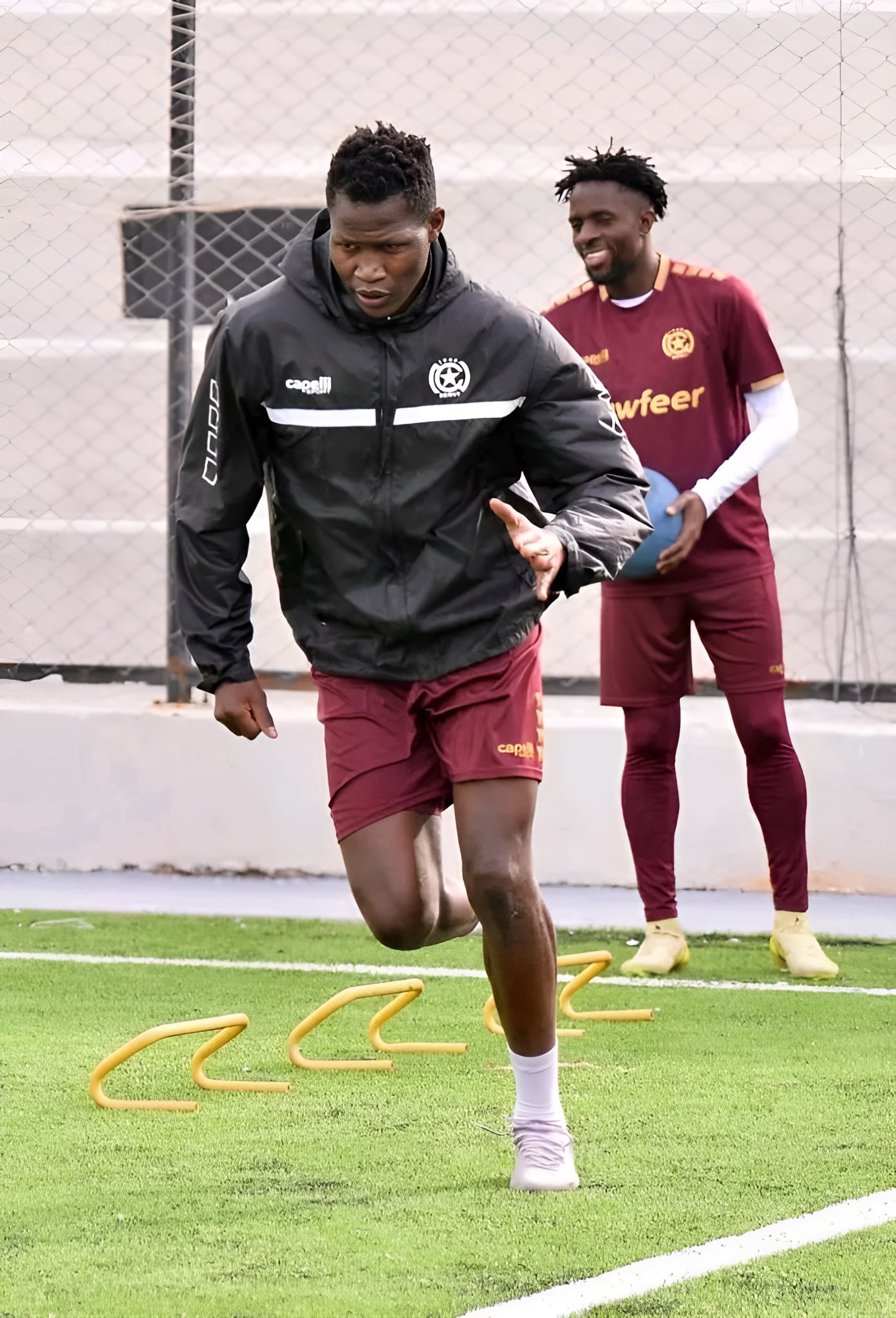 Anthony Akumu goes through a drill as teammate and compatriot Austin Odhiambo looks on during a Nejmeh FC training session/HANDOUT
 Beyond statistics, Akumu’s value has always been in leadership. He is often among the first players to arrive in national team camps and has earned a reputation as a stabilising presence in midfield.
"You don’t need to talk too much to lead," he said. "You show it in how you train and how you play."
That leadership was reinforced under the late coach Engin Firat, who challenged him to take greater responsibility within the squad. Their final conversation in March 2026—just hours before Firat’s sudden death at Istanbul Airport—left a lasting emotional imprint.
"He called to check on me," Akumu recalled. "He told me to stay ready and keep fit. He said we would continue soon."
Hours later, the news of Firat’s passing reached him.
"We had just spoken," he said quietly. "It didn’t feel real."
Despite grief and uncertainty, Akumu remains focused on his club ambitions at Nejmeh SC and continues to embrace a senior leadership role within the squad.
"This is a project I believe in," he said. "We want to achieve something big here."
With a career spanning Kenya, Sudan, Zambia, South Africa, Japan, Iran, and Lebanon, Akumu’s football journey stands as a rare example of longevity shaped by adaptation rather than comfort.
From Sh1.5 million monthly highs in South Africa to rebuilding phases abroad, his story reflects both the rewards and realities of professional football.
"I still feel strong," he insisted. "I still have something to give."
Amid escalating tensions in the Middle East, Harambee Stars midfielder Akumu has safely landed in Nairobi after a dramatic evacuation from Lebanon.
The veteran midfielder was among a group of Kenyan internationals—alongside Austin Odhiambo and Masoud Juma—who were forced to flee Beirut as the security situation deteriorated sharply.
Explosions reported in proximity to residential zones triggered urgent action, prompting the indefinite suspension of the Lebanese Premier League. Nejmeh SC swiftly sanctioned the evacuation of foreign players as safety concerns reached critical levels.
The trio’s exit through Egypt marked a sudden and unsettling halt to their season, which had only just begun in August 2025. What was expected to be another campaign abroad instead dissolved into a race against uncertainty and instability.
Now back in Nairobi, the players are focusing on regaining full fitness independently while awaiting further updates on the future of football in Lebanon.
Their return offers timely relief for the Harambee Stars technical bench, restoring key national team personnel ahead of upcoming international duty.
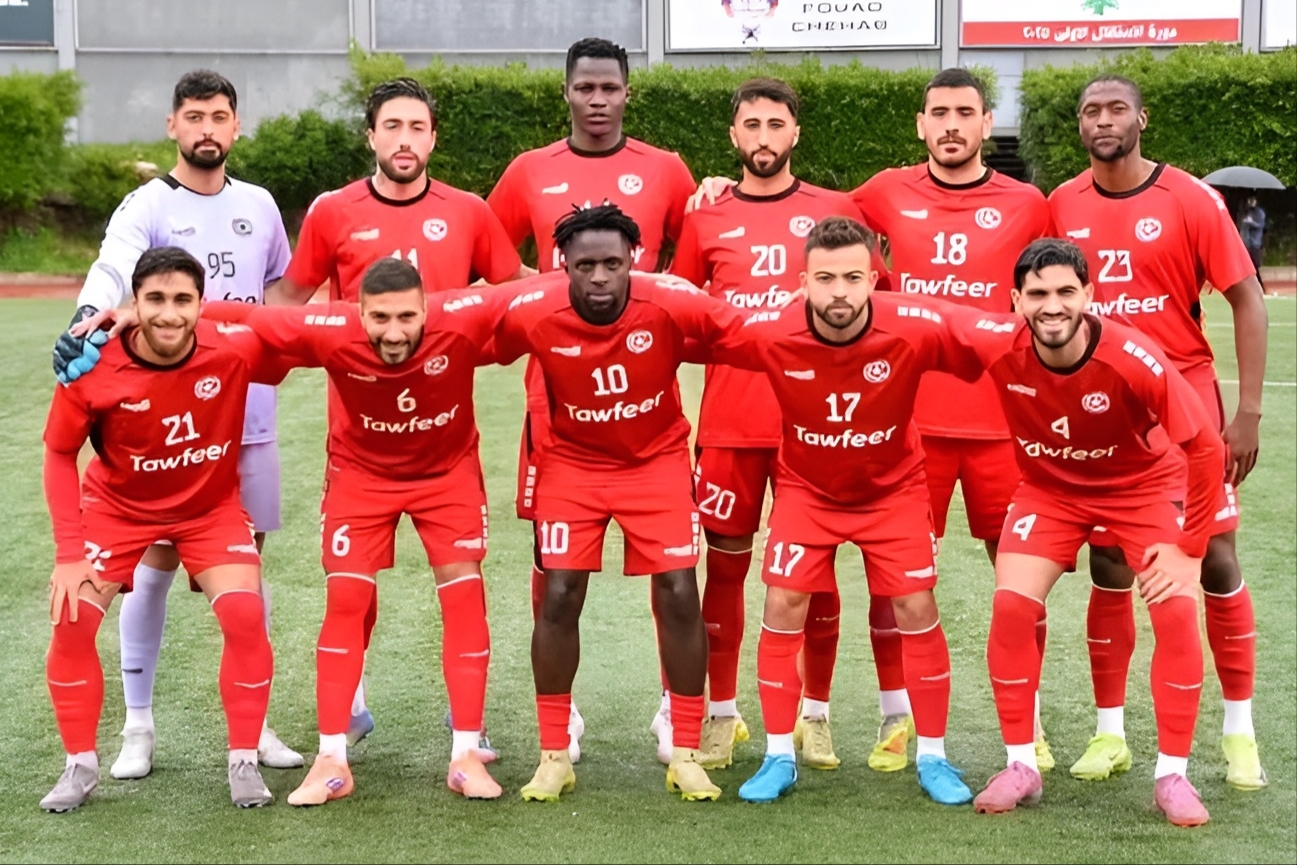 Anthony Akumu (3R) with Nejmeh SC teammates before a match, alongside compatriots Masoud Juma (far right) and Austin Odhiambo (centre: front row)